
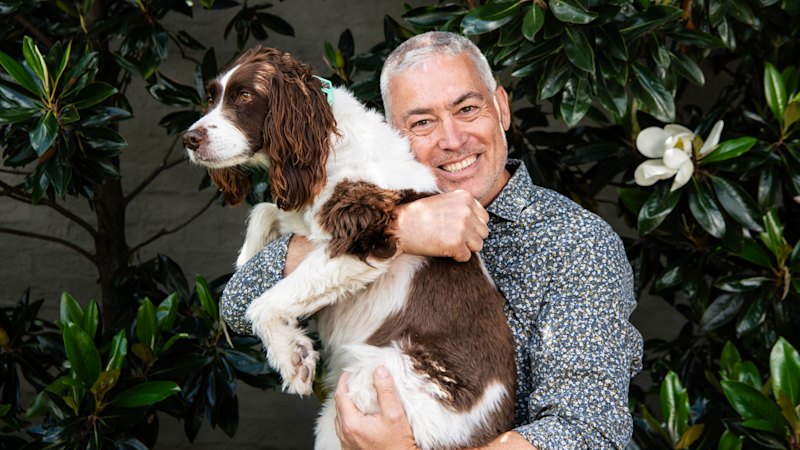
November 19, 2026 — 12:15pmA once-a-day pill that reduces levels of the stress hormone cortisol in the brain is offering hope to older people living with Alzheimer’s disease, with early trial results revealing it may slow progression of the disease by up to 30 per cent.Emestedastat, developed under the brand name Xanamem, works by blocking production of cortisol in key areas of the brain linked to the progression of the disease.Richard Davies, who was diagnosed with young onset dementia last year. He is pictured at home in Annandale.Steven SiewertThe trial, involving 247 patients in Australia and the US with mild to moderate disease over a 36-week course of treatment, did not record a statistically significant benefit in the overall trial group.However, participants aged over the median age of 75 – representing half of the group – experienced a slowing of progression of the disease by 30 per cent by the end of the trial.Dr Steven Gourlay, CEO of Australian biotech company Actinogen, which is developing the drug, said the results in over-75s compared favourably with those of recently approved monoclonal antibody treatments for Alzheimer’s, which reduce progression by between 22 and 27 per cent.“Nobody’s really developing anything for the older patients who are a bit more severe and more advanced,” he said. “Our drug probably is having an effect of lowering inflammation in the brain because patients who are older also have higher markers of inflammation.”He acknowledged it was disappointing the drug didn’t show the same benefit in younger patients, but pointed to the benefits of a low-dose oral tablet that would cost significantly less and have fewer side effects than current therapies.Davies believes he was unlucky to develop Alzheimer’s but is determined to live life to the full and stay healthy as long as possible.Steven SiewertProfessor Michael Woodward, honorary medical adviser for Dementia Australia, said it was typical for dementia drug trials to have mixed results, but the findings could help shape the next phase of trials.“We know that cortisol is really important for dementia,” he said. “And we know that blocking it is a way of preventing some of the changes we see in Alzheimer’s.”The results come hours after it emerged that University of Sydney researchers have developed experimental nose drops that can boost cognition and prevent memory loss in mice carrying genetic mutations for Alzheimer’s disease. The nose drops use mRNA technology and bypass the blood-brain barrier, which is a major obstacle to many drugs entering the brain.The development comes at a time of heightened activity and breakthroughs in treating Alzheimer’s disease, following decades in the wilderness.World-first drugs that actively interfere with the progression of Alzheimer’s disease were approved in Australia last year, along with a pioneering blood test for diagnosis. The monoclonal antibodies donanemab and lecanemab work by reducing the build-up of amyloid beta “plaque” in the brain, which is a hallmark of Alzheimer’s disease.Other drugs in development target tau: tangled clumps of abnormal protein that build up in brain cells and disrupt signalling between neurons and cell transport. There is debate over whether amyloid beta or tau is the main driver of the disease.Xanamem is different because it targets another marker of Alzheimer’s disease in the brain: cortisol. While cortisol production is normal and necessary, the hypothesis is if levels remain high for a long time, it can become toxic to neurons in the brain.Dementia Australia advocate Richard Davies says donanemab should be subsidised.Steven SiewertResearch has shown a link between high cortisol levels and cognitive decline, along with other diseases. Prolonged raised cortisol has also been shown to be associated with the development of amyloid beta plaques.Sydneysider Richard Davies, 61, was diagnosed with young-onset Alzheimer’s disease last year. He had to leave his job but stays active and social with a positive mindset, while keeping a keen eye on the latest scientific and medical developments.“I’m seeing genuine progress in the field and there’s certainly plenty of work going on,” he said. “The upside is that the science and medicine is getting better all the time.”A Dementia Australia advocate, Davies has been treated with donanemab, which costs tens of thousands of dollars and he believes should be subsidised.“Donanemab is not perfect and it’s not a cure but I’ve seen an amelioration of my sense of confidence and maintaining a good understanding of my world,” he said.The nose drops used in the University of Sydney study were inspired by the science fiction story Flowers for Algernon, in which scientists artificially increase the intelligence of mice and a man.Study author Professor Greg Neely said the drops blocked cognitive decline and dementia in mice. “We think this drug may be able to convert a dementia sensitive participant into a dementia resilient one,” he said. Human trials are the next step.Patients who took part in the double-blind, placebo-controlled trial for Xanamem received either a 10mg dose or a placebo daily.The next trial is expected to involve 700 patients and get underway mid-next year, with the company hoping to get the drug to market in 2030.If this story has caused concerns or you need someone to talk to, call the National Dementia Helpline 1800 100 500 (24 hours, 7 days a week) or visit dementia.org.au for live chat and email options.Clair Weaver is a senior writer at The Sydney Morning Herald.From our partners
Daily pill to block cortisol offers hope for older people with dementia
Full Article
Original Source
Read the full article at Smh →KhanList aggregates and links to publicly available news content. We do not host full articles from third-party sources. Always verify important information with original sources.