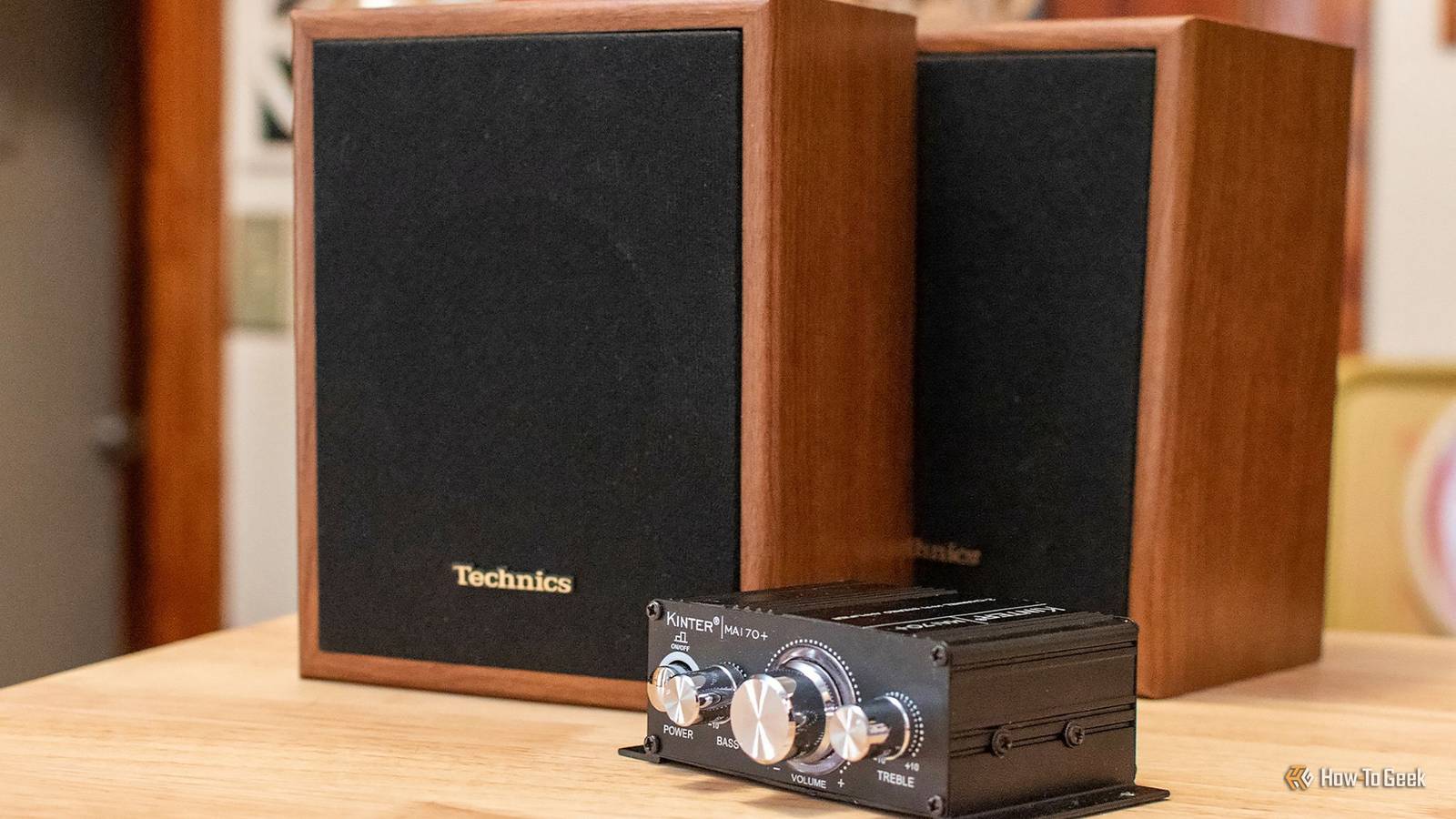
Published Jul 30, 2026, 8:15 AM EDT Aggy is a veteran writer and editor in the technology and gaming space. Having served as a Managing Editor for high-traffic digital publications, alongside being an editor and consultant for over a dozen sites. Aggy's published work spans a wide and respected array of tech and gaming outlets, including WePC, Screen Rant, How-To Geek, Android Police, PC Invasion, and Try Hard Guides. Beyond editorial work, Aggy's direct experience in the tech sphere extends to app development. Aggy has published two games under Tales and is always eager to learn and do more. He also likes working on computers and researching in his spare time. He knows about Windows, Linux, Audio, Video, and much more. Most people chasing better audio head straight for a DAC upgrade. It's the obvious move when your music sounds flat or cluttered, and the marketing around premium converters makes it easy to believe you're leaving quality on the table by using the chip built into your motherboard. The thing is, that chip is almost certainly not your problem, but your amplifier is a different story. Cheap chips already handle audio conversion Getting audio out of a computer used to be genuinely hard and at one point required expensive, finicky hardware and serious engineering effort. That's no longer true because the technology became cheaper over time and can now be put on a tiny chip. So the problem of converting digital audio to analog has basically been solved and solved at a price point that would have seemed impossible decades ago. Your phone charger adapter can do it, and your motherboard can do it, and they do it well. Expensive standalone DACs do exist, and they do measure better. The problem is that none of that extra quality has anywhere to go. The cheap chips have already gone past what human hearing can actually use. Any distortion or noise that a premium unit gets rid of was already sitting below the level of your room's ambient noise or buried inside the music itself. There's nothing left to clean up that your ears could ever hear. You could always just turn up the volume because that can sometimes make things clearer, but you'll quickly reach the limit where things sound clearer and muddier. If you've ever used expensive equipment, you know that there is a noticeable difference between cheap and expensive. But once you get into higher price ranges, the difference isn't that big. We'll never claim there is no difference at all; there isn't so much that it feels like a whole new category to the average person. The issue with DACs is that companies don't want to pay more for an upgrade you can barely hear. There's also no guarantee a new DAC will sound any different at all. You may be hearing something else besides the DAC. It could be a volume difference, a placebo effect, or maybe just the expectation of improvement. Put your money into a good amplifier Matching impedance and power makes the real difference Many people assume a DAC is the only fix for bad audio when something else is causing the problem. That budget that could be used in a DAC is better spent on your amplifier, which is where it actually matters. Headphones and speakers need precise, stable voltage and current delivered across the whole frequency range. That's a job the amp has to do well. One of the biggest culprits for bad sound in a headphone setup is output impedance mismatch. When an amplifier has a high output impedance, it forms a kind of voltage divider with your headphones, and since a headphone's impedance isn't flat across frequencies, the voltage reaching your drivers ends up fluctuating in ways it shouldn't. So you get poor electrical damping where the driver can't stop moving cleanly when the signal stops, which gives you that loose, bloated bass and smeared transients. A good rule of thumb is to keep your amplifier's output impedance under one-eighth of your headphone's minimum impedance. Credit: Andrew Heinzman / How-To Geek A good, low-noise amp with near-zero output impedance makes a real difference in dynamic range and driver control. Even headphones that look easy to drive can need more than their average power during loud peaks, so headroom matters more than people think. To make it easy, pair a cheap, clean digital source with a solid dedicated amplifier. A USB-C dongle already does DAC duties perfectly well, so you don't need to spend anything extra there. Plug it into a decent standalone amp that can push over two watts per channel into 32 ohms. Your headphones will get the current, voltage, and damping they need, and you're not overpaying. High-end specs rarely change what you hear Most of those expensive features are already solved Credit: FiiO High-end DACs look impressive, coming with ultra-precise clock synchronization, discrete output stages, and advanced power filtering. Marketers claim these parts catch tiny timing errors and electrical noise that cheaper hardware misses, supposedly unlocking hidden details, better imaging, and a wider soundstage. It would be fair to say that everyone hears differently, so we're not saying that the people who hear the differences are wrong. Instead, the average person who isn't actively listening for tiny changes won't notice a thing. When you consider jitter, which is blamed for degraded sound quality, you start to see that. Jitter was a legitimate concern back when S/PDIF connections were the norm, but digital audio now runs on asynchronous USB, where the DAC uses its own internal clock to pull data independently of the computer feeding it. That design change essentially solved the problem. Today, even budget DACs keep jitter between 10 and 20 picoseconds, which isn't something you're going to notice. There is also an idea that discrete output stages are better than integrated circuit op-amps. The argument is that cramming everything onto a small chip forces compromises, but that's not always true. When all the components share a single silicon substrate, you get near-perfect matching and uniform temperature behavior. Discrete circuits can bring in parasitic interference, component variation, and uneven heating that actually hurt performance. You could point out tiny technical differences, but it's hard to justify buying it when a piece of gear costs way more for a change that you can't hear. Higher-end DACs technically perform better, but the improvement isn't big enough to worry about. It's up to you None of this means expensive DACs are broken or that the people who prefer them are imagining things. Listener perception is real, and if a piece of gear makes you enjoy music more, that's great. That said, if you're spending money hoping for a clear, audible improvement, the amplifier is where that investment actually shows up in your listening. Get your output impedance matched properly, get enough headroom for peaks, and let a cheap, clean digital source handle conversion. Sony STRDH190 Sony's STRDH190 combines just the right features with excellent sound quality and an affordable price to earn our pick as the best stereo amplifier for most people.
Expensive DACs are pointless in 2026, get a good amplifier instead
Full Article
Original Source
Read the full article at Howtogeek →KhanList aggregates and links to publicly available news content. We do not host full articles from third-party sources. Always verify important information with original sources.