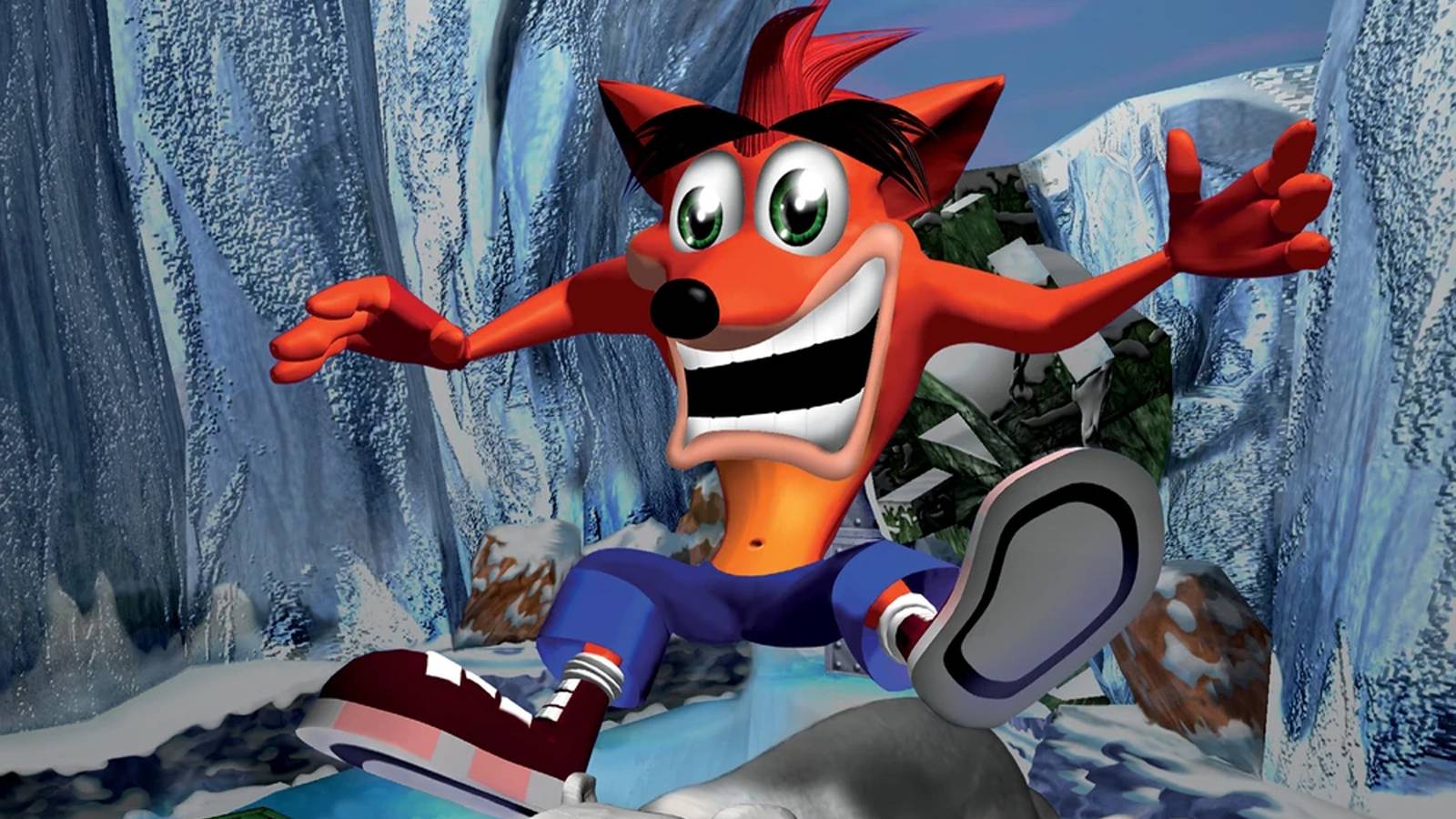
Published Jul 30, 2026, 10:00 AM EDT Ben Brosofsky has been writing for Screen Rant since 2022 and editing since 2024. He graduated from Vanderbilt University with a Bachelor's in Cinema & Media Arts. Writing serves as a much-needed distraction from tackling a backlog of Steam games that will never be surmounted. The original PlayStation had plenty of great platformers, but not all of them still feel fantastic to play today. Many developers were still figuring out how to approach movement and camera controls in 3D environments, and while a little clunkiness in an RPG is no big deal, the same roughness around the edges could completely sink a platforming experience. Luckily, there are still some key PlayStation platformers that knocked it out of the park. Even without the presence of Mario or Sonic on the system, the PS1 found its footing with its own fresh faces. Today, these games still set a standard for creativity and fun that newer platformers should strive to match. 5 Klonoa: Door To Phantomile Klonoa: Door to Phantomile never made much of a splash outside of Japan, but it wasn't due to any lack of quality. While the 2.5D platformer didn't lean into the edge of Crash Bandicoot or the ambition of Spyro the Dragon, it was laser-focused on delivering on its own potential to the fullest possible degree. The core gameplay and presentation of Klonoa is undeniably simple, but there's a cleverness to the way the cat-like mascot moves through the world and overcomes its challenges. Although the ability to grab and throw enemies isn't entirely unique, the 2.5D style lets them be thrown into the background or foreground of the stage, playing into the game's light puzzle elements. These days, original PlayStation copies of Klonoa: Door to Phantomile are disturbingly expensive, so it isn't the most convenient title to play on original hardware. If you ever get the chance, though, you can rest assured that its charms are just as compelling today as they were when it originally released, and the cutesy art style (which failed to win over some Western audiences at the time) has proven timeless in a way that doesn't apply to some of the PS1's more realistic games. More conveniently, the remastered Klonoa Phantasy Reverie Series brought the games to modern platforms in 2022. 4 Oddworld: Abe's Exoddus From the start, the Oddworld series was totally unlike any other platformers on the market. While the platforming itself was good, the innovation in other aspects took the concept even further. From its breathtaking, moody visuals to its tough, puzzle-oriented approach, it was incredibly easy to get sucked into Oddworld: Abe's Odyssee in a way that made other platform games feel like trivial pieces of entertainment. Abe's Odyssee is just as good today as ever, and its atmosphere might still make it the best game in the franchise. In terms of a game that's "great to play," though, the sequel, Oddworld: Abe's Exoddus, is unmatched. Abe's Exoddus takes the foundation of the original and stretches it into a more varied and consistently fun adventure, heavily assisted by the introduction of a quicksave function. Oddworld: Abe's Odyssee and Abe's Exoddus were re-imagined in Oddworld: New 'n' Tasty! and Oddworld: Soulstorm, respectively. The new takes on the classic stories offer their own charms, but the PlayStation classics remain the definitive versions, especially in the case of Abe's Exoddus. If every other platformer has started to feel like more of the same, it's definitely time to appreciate how much Oddworld reinvented the wheel. 3 Crash Bandicoot 2: Cortex Strikes Back Crash Bandicoot experienced a modern resurgence with the Crash Bandicoot N. Sane Trilogy, but the remade versions shouldn't take precedence over revisiting the original classics. With levels focused on forward momentum and challenging jumps, precision is of the utmost importance in Crash Bandicoot, and the physics of the original games are perfect in a way that the N. Sane Trilogy struggles to recreate. Despite its 3D presentation, the mechanical nature of Crash Bandicoot often feels closer in line with a traditional 2D platformer, and there's an argument to make that it's closer to the trials of the original Super Mario Bros. than Super Mario 64 does. At the same time, the series takes full advantage of the PlayStation's possibilities, with vibrant, imaginative environments and stylish character designs that lean into the low-poly look. The original PS1 trilogy is great throughout, and there's a reasonable argument to make for any of the three as the best in the franchise. It's particularly hard to go wrong with Crash Bandicoot 2: Cortex Strikes Back, though, as the second game refines the strengths of the first without losing track of the core focus on platforming. Crash Bandicoot: Warped might be even more imaginative, but its sheer variety arguably leads to a little less consistency. 2 Ape Escape The original Ape Escape naturally feels a bit clunkier than its PlayStation 2 successors, but it's still a true contender for the competitive title of the best game in the series. It's hard to overstate how innovative and unique Ape Escape was at the time of its release, throwing away plenty of older platform genre conventions in favor of a creative take on rounding up lost primates. Most notably, Ape Escape was the first game in history to require a Dual Analog or DualShock controller, well before the use of two analog sticks would become a universal standard for 3D platformers. In Ape Escape's case, it was to facilitate a unique control scheme. The left analog stick controls the player character's movement, unsurprisingly, but the right is put to more specific use in controlling the game's wide variety of gadgets. Today, the best reason to revisit Ape Escape today rather than jumping straight into the sequels is the atmosphere. While Ape Escape 2 embraced a more typical cartoon flavor, the original game has a slightly less Saturday morning mood, giving it a flavor that's hard to find elsewhere. We can only hope that the Ape Escape series will return with a new entry some day, but even if it never does, the original will always be there. 1 Spyro: Year Of The Dragon It's impossible to talk about PlayStation platformers without bringing up the Spyro series. While Crash Bandicoot opted for a more linear approach, Spyro the Dragon took on a scope more comparable to Super Mario 64 or Banjo-Kazooie, littering large levels with collectibles to pick up and secrets to uncover. To start with, Spyro simply feels good to play, with responsive controls and a distinct sense of personality in Spyro's movement. The first game set the tone for plenty of other PS1 platformers to follow, like the surprisingly good 102 Dalmations: Puppies to the Rescue, which mimics its approach somewhat shamelessly. Things kicked into overdrive with Spyro: Year of the Dragon, which delivered a great balance of memorable levels and large roster of playable characters. While you can't go wrong with any of the games, Year of the Dragon remains the most impressive on some level, showing off just how seriously each sequel approached the idea of taking the series further than before. The original Spyro trilogy has been thoroughly remastered in the modern era via the Spyro Reignited Trilogy, which received its own sufficient acclaim. For my money, though, the original experiences remain unmatched. The simplicity of Spyro's graphics on the PlayStation remains more evocative than the candy-colored remaster, suggesting a world of mystery and wonder that stretches beyond the confines of the playable levels. Brand Sony Original Release Date September 9, 1995 Original MSRP (USD) $299.99 HDR Support No Weight 3.2lb (1.5kg)
5 PlayStation 1 Platformers That Are Still Great To Play In 2026
Full Article
Original Source
Read the full article at Screenrant →KhanList aggregates and links to publicly available news content. We do not host full articles from third-party sources. Always verify important information with original sources.