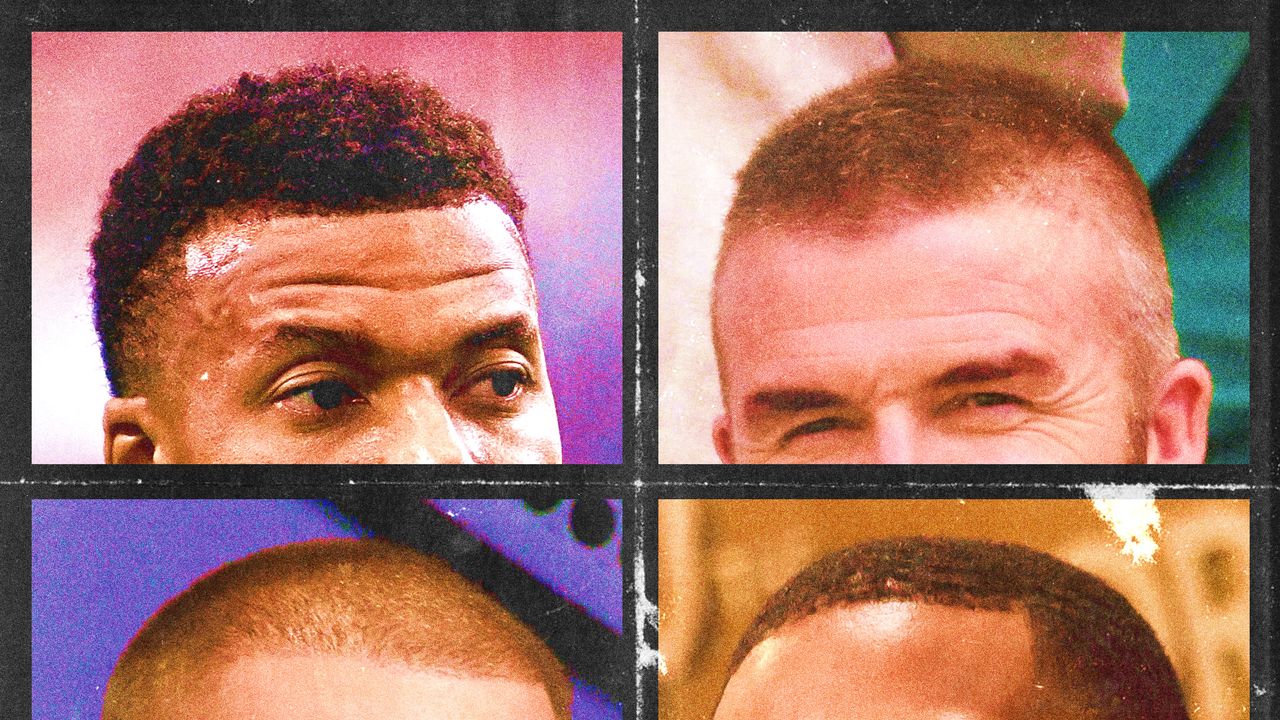
Ask any barber for a fade, and they’ll almost immediately get straight to work. Operative phrase: almost immediately. You see, the fade isn’t just one singular type of haircut. While the general technique remains constant—that is, gradually making the hair shorter as it goes down the side and back of the heads—there are many variations on the form. And the type of fade you choose should depend on your face and head shape, desired vibe personal preferences, and hair texture.“From a barber's perspective, the biggest difference is where the graduation begins,” Aaron Chan, cofounder of Kings Domain barbershop in Melbourne, Australia. “The higher you move the fade, the more contrast you create.”The four most common styles are a low fade, mid fade, high fade, and taper fade. There are of course variations within those general categories—drop fades and burst fades, for example—but for a classic look, that foursome is what you’ll want to stick to.Though longer hair might be the trend now—as demonstrated by the recent hairstyles of numerous A-listers like Connor Storrie, Oscar Isaac, and Jay-Z—the fade is a reliable standby that can be modified to play off of shifting trends. But the key to getting a really good one is to know exactly what to ask for. So we asked experts to break it down by style.Low FadeEmma McIntyre/Getty ImagesA low fade provides a “softer, more classic finish,” Joey Scandizzo, another cofounder of Kings Domain, says. This style of fade starts right above the ear and is well-suited for those with longer face shapes. Because the blending is done towards the lower portion of the hair, it helps to create a fuller face shape for those whose heads are more narrow.Mid FadeBSR Agency/Getty ImagesThe most flattering style of fade, this option starts the blending around the temple. Scandizzo recommends the mid fade for those with textured crops, side parts, pompadours, or pretty much any longer hair style because it’s not as dramatic of a look. It “creates enough definition without becoming the focus of the haircut,” he says. And as Chen notes, the mid fade is the most versatile for a variety of hair textures, and offers more flexibility when tailoring to the style of a client.High FadeAmy Sussman/Getty ImagesUsually reserved for super-short hairstyles, the high fade is the most dramatic of the category because there’s a more apparent contrast between the short hair and the slightly longer hair. This style of fade is better suited for rounder faces because it creates the illusion of a longer head. High fades were wildly popular five or 10 years ago, Scandizzo says, but they’ve become slightly less common because of a wider shift towards “more natural-looking blends.” He adds that, among his clients, there’s now a greater desire to have hair that grows out well, requiring fewer touch ups so that hair “feels effortless rather than overly sculpted.”Taper FadeKarwai Tang/Getty Images“Taper fades work beautifully for clients wanting a polished, professional look without dramatically changing their silhouette,” Scandizzo says. The most subtle of them all, his option is better suited for slightly longer styles where the natural shape of the hairstyle is kept intact while there’s a slight graduation in length along the sidelines and neck up to the rest of the ‘do just to keep everything neat and tidy. (Think of it as the antithesis of the mullet.)What makes a great fade?The quality of a fade depends on whether there’s a noticeable point on your scalp where there’s a stark difference in length. If there’s almost a distinct line separating the hair where the top is longer and the bottom shorter, then that’s not a great fade—which is where blending comes into play.“The blending phase is where the magic happens,” Chan says. “I don't rush removing guidelines because every small adjustment affects the final result. I'll also spend extra time checking the haircut from multiple angles under different lighting because what looks perfect from one side may reveal imperfections from another.”Nowadays people requesting a fade are less likely to pick a number and haircut off a board and more willing to let their barber tailor the overall cut to them. That shouldn’t stop you from taking a picture of a fade you like—maybe even from this article—to show your stylist. But remember: What looks good on the longer face of Justin Bieber, may come out totally different on your own dome. So don’t be afraid to have a conversation with your barber.
Everything You Need to Know About Fade Haircuts
Full Article
Original Source
Read the full article at Gq →KhanList aggregates and links to publicly available news content. We do not host full articles from third-party sources. Always verify important information with original sources.