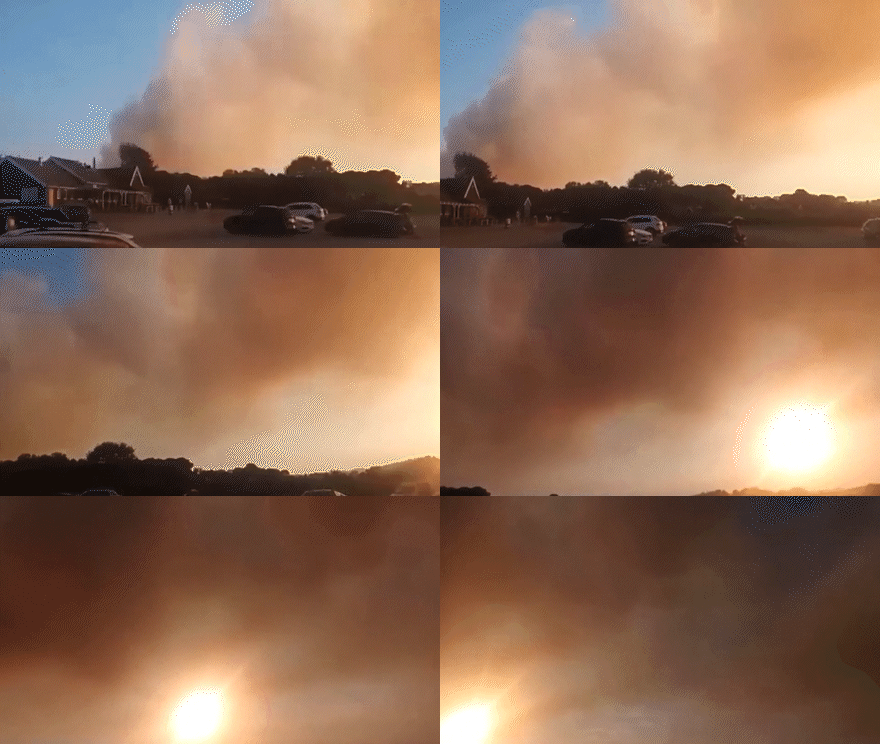
A major incident has been declared as firefighters battle a large heathland blaze on the Suffolk coast, only four miles from the Sizewell B nuclear plant. Suffolk Fire and Rescue service said there is currently no risk to the power station from the blaze, but added that it was a “live” situation. “At this time there is no current risk to Sizewell B, due to the distance from the fire and the direction it is travelling (easterly),” it said earlier today. Shorts “However, this is a live and dynamic situation and as a result any further updates will be shared accordingly.” Everything we know as 247 acres still ablaze The fire service was called to reports of the wildfire at Dunwich Heath, near Leiston, shortly after 5:30pm on Wednesday. Crews remained at the scene on Thursday morning, and as of 12pm on Thursday around 90 firefighters and 14 fire engines were on site. Homes and 200 caravans at a nearby holiday park were evacuated overnight, but it is unclear how many people have been displaced so far. No injuries have been reported. A firefighter tackling the blaze on Dunwich Heath (Photo: Suffolk Fire and Rescue Service/AFP) The fire is still not under control and an area of 247.1 acres (100 hectares) – equivalent to about 140 football pitches – is ablaze. The fire service said a major incident had been declared “due to the size and complexity” of the blaze. People have been urged to avoid the area where possible and keep windows and doors closed. Leiston is about four miles away from Sizewell B, but firefighters have said there is not thought to be any danger to the nuclear power station at this time. The wider context Half of England is now officially in drought, and the UK Health Security Agency had issued an amber heat-health alert for the East Midlands, the east and south-east of England and London, to remain in place until 9am on Thursday. The agency has warned that rising temperatures could increase health risks, particularly for vulnerable groups. The fire service was called to reports of the wildfire at Dunwich Heath, near Leiston, shortly after 5:30pm on Wednesday (Photo: Joe Giddens/PA Wire) Before this year, the record was five days in which temperatures were at or above 35°C, set in 1976 and matched in 2020. Temperature records have tumbled throughout the summer, with heatwaves in May and June both recording new highs for the time of year. The UK is increasingly suffering from the impacts on lives, livelihoods and landscapes of extreme weather such as droughts and severe heatwaves fuelled by human-caused climate change, mostly as a result of burning fossil fuels. The UKHSA said it “is likely that 2026 could see the highest number of heat-associated deaths on record”, surpassing the number seen in 2022 when the agency started studying them. There have been almost double the number of excess deaths caused by heatwaves so far this year than all of last summer, the data shows.
Everything we know about huge wildfire in Suffolk just four miles from nuclear plant
Full Article
Original Source
Read the full article at Inews →KhanList aggregates and links to publicly available news content. We do not host full articles from third-party sources. Always verify important information with original sources.