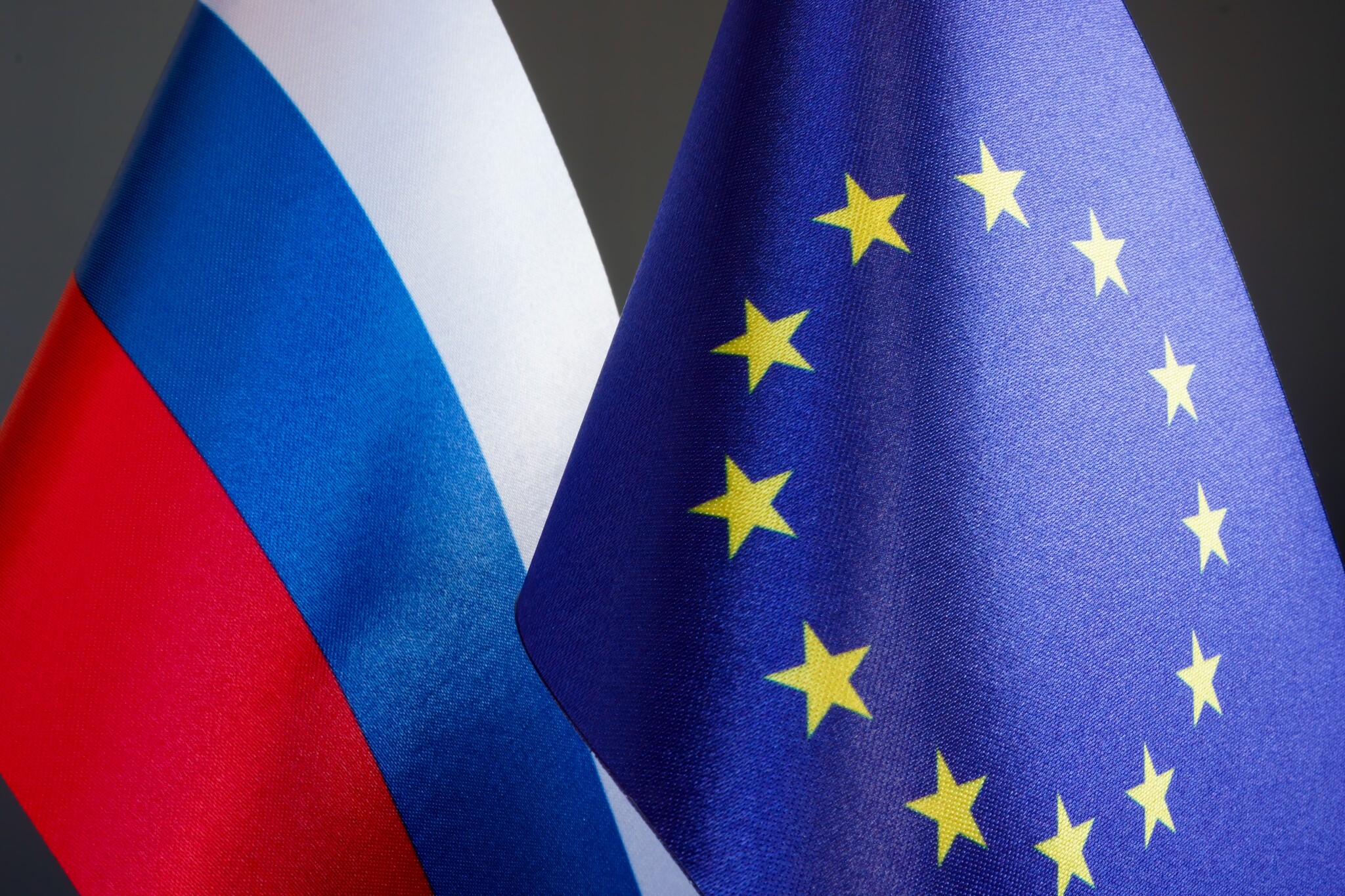
The European Union continues to tailor its sanctions net around Russia’s war effort. On July 23, Brussels rolled out its 21st package of economic sanctions targeting Russia. This package, the European Union’s largest so far, comes at a critical moment — compounding economic pressure as Moscow struggles to fend off rising inflation, low growth, shrinking demand for bonds, and continuing Ukrainian strikes on critical economic infrastructure. This package seems targeted to buttress and close gaps in the European Union’s existing sanctions architecture: preventing the expiration of the $44 per barrel oil price cap, targeting corporate enablers of sanctions evasion in China and beyond, and designating financial institutions facilitating illicit payments. However, in many ways, the resulting package takes two steps forward and one step back — with half-measures stymieing effectiveness of notable new measures. EU Targets Russian Use of Crypto, Gold, Diamonds Russia has increasingly turned to opaque non-fiat payment methods — like cryptocurrency, gold, and diamonds — to evade Western banking and financial restrictions. A single Russia-based exchange, Garantex, handled more than $60 billion in cryptocurrency for sanctioned actors before closure in spring 2025. The European Union’s 21st sanctions package targets these sectors directly — rolling out sanctions on Russia-linked gold and mineral companies, transaction blocks on 14 crypto-related service platforms, and a new mechanism through which an enabling country could face a total, state-level ban on its crypto-asset services. This mechanism’s most likely target, Kyrgyzstan, has hosted multiple providers linked to Russian sanctions evasion and launched a state-backed stablecoin (USDKG) that shares a name with a proposal mentioned in leaked chats from a professional sanctions evasion company, A7. Simultaneously, the European Union imposed sanctions on subsidiaries of A7 operating in Africa. However, Russia maintains many paths to evade sanctions. This package excludes multiple entities identified by investigative journalists as likely components of A7’s network — such as the UAE’s Favnir LLC-FZ and Mongolia’s Golden Silk Road LLC. A built-in wind-down period for the enactment of some EU sanctions, while useful for giving Western companies time to divest, also gives newly-listed entities a chance to transfer their assets and business — sometimes about a month’s grace period. And efforts to adapt are par for the course. Kyrgyzstan’s First Deputy Prime Minister, for example, told reporters in July that Bishkek was already “looking for alternative ways to interconnect [Russian and Kyrgyz financial] systems” to circumvent sanctions-related limitations on Russian bank cards. Internal EU Frictions Delayed Package and Softened Sanctions The European Union adopted its 21st sanctions package over six weeks after publishing its draft proposal for the package. Greece, in particular, refused to approve LNG export restrictions that would hit its own shipping industry. This opposition, among dissent from other states, stonewalled the entire package, which required unanimity for adoption. Ultimately, the European Union achieved consensus by watering-down at least five measures slated for inclusion — shielding Russian Orthodox Patriarch Kirill from sanctions, maintaining pathways for Russian soldiers to visit the European Union, and exempting EU services transiting Russian LNG abroad from restrictions. Due to the frictions, an unidentified EU official told reporters that this 21st package may be the European Union’s last. Instead, EU members may move toward increasingly unilateral action — which could significantly reduce the force behind each sanction. The combined weight of the 27 EU members’ sanctions is key to their impact. Close Loopholes and Increase Unity Another central limitation to the effectiveness of the 21st sanctions package is its lack of support from complementary U.S. sanctions. Disunity in enforcement weakens pressure on sanctions targets and allows for jurisdictional arbitrage. Washington should adopt key EU provisions — including equivalents to the European Union’s new cryptocurrency blocking mechanism and targeting of financial institutions enabling sanctions evasion. U.S. officials have already identified the potential for sanctions exposure through routes targeted in the 21st package; it is time to pair risk with enforcement. Washington should also coordinate with EU partners to push forward future joint measures — stressing the importance of continued and compounded pressure. As Western sanctions regimes move toward closing increasingly contentious and challenging loopholes, unity and broader advocacy is critical to maintaining momentum. Angela Howard is a research analyst at the Center on Economic and Financial Power (CEFP) at the Foundation for Defense of Democracies (FDD). For more analysis from Angela and FDD, please subscribe HERE. Follow FDD on X @FDD and @FDD_CEFP. Follow Angela on X at @angela__howard. FDD is a Washington, DC-based, nonpartisan research institute focusing on national security and foreign policy.
EU’s New Russia Sanctions Target Evasion Mechanisms, But Enforcement Challenges Remain
Full Article
Original Source
Read the full article at Fdd →KhanList aggregates and links to publicly available news content. We do not host full articles from third-party sources. Always verify important information with original sources.