
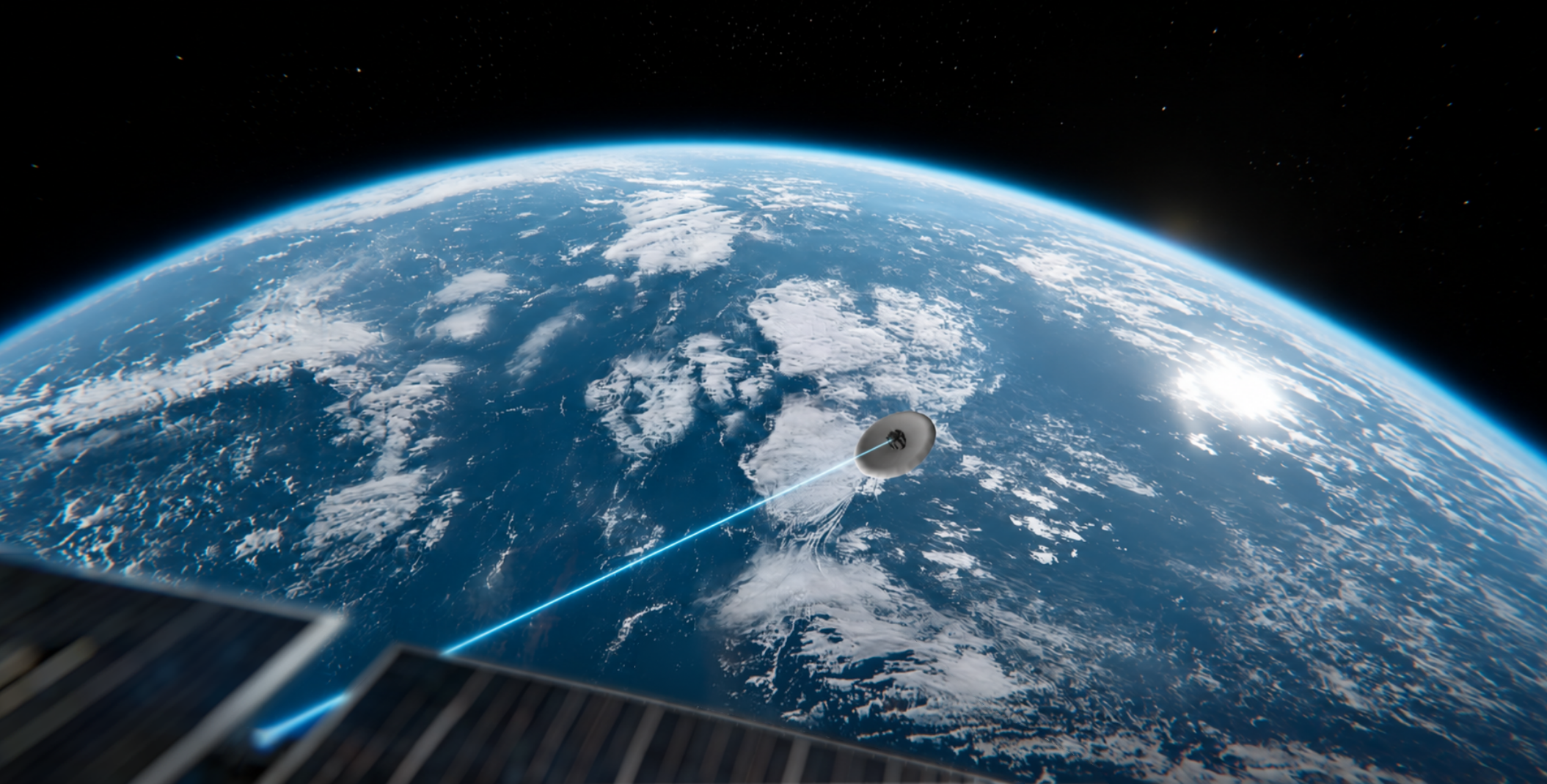
Future wars may not be decided by who owns the most satellites, but by who can keep communications alive when every signal is under attack. The war in Ukraine has changed how the EU thinks about space. Satellites are no longer viewed primarily as tools for navigation, weather forecasting or civilian telecommunications. “The scale and character of space capabilities employed in Ukraine mark a step change in space-enabled warfare,” said Major Callum Gaskell in a column published by the Royal United Service Institute (RUSI). Satellites have become a critical military infrastructure. They enable intelligence gathering, drone operations, battlefield coordination and secure communications. As electronic warfare intensifies, satellites have become a strategic imperative. “ISR [Intelligence, Surveillance and Reconnaissance] satellites combined with GPS guided munitions have allowed Ukraine to locate, identify and strike Russian assets, including those deep within Russian territory,” Gaskell said. The EU tries The EU’s flagship response is IRIS², a multi-orbit satellite constellation designed to provide secure communications for governments, defence and critical infrastructure. According to European Commission spokesperson Thomas Regnier, the project reflects a broader strategic reassessment. "The Commission recognises the strategic importance of a sovereign, secure and robust European satellite connectivity capability for the EU's resilience and autonomy, hence the very fast development of IRIS² supported by the co-legislators," Regnier told EUobserver. The European Commission and the SpaceRISE consortium signed an implementation agreement to roll out IRIS² in August, adding 66 satellites into low Earth orbit to bring the main constellation to 348 satellites. The constellation is scheduled to become fully operational in 2029. Until then, the EU is relying on GOVSATCOM, a programme that pools satellite capacity from Member States and private operators to provide secure government communications. "GOVSATCOM is designed to provide secure and resilient satellite communication capabilities by pooling and sharing existing satellite resources from various member states and private operators," Regnier said. The strategy reflects an important shift in European thinking. The continent has long been a major space power. Since launching its first satellite in 1965, Europe has built a strong reputation in space engineering and manufacturing. The Ariane 5 launcher became a global benchmark for reliability, completing 82 consecutive successful missions between 2003 and 2017. In 2021, it also carried the James Webb Space Telescope, the largest and most powerful space telescope ever built, into its transfer orbit, a mission the European Space Agency described as a "precise launch".
Europe scrambles to secure its own military satellites after Ukraine’s wake‑up call
Full Article
Original Source
Read the full article at Euobserver →KhanList aggregates and links to publicly available news content. We do not host full articles from third-party sources. Always verify important information with original sources.