
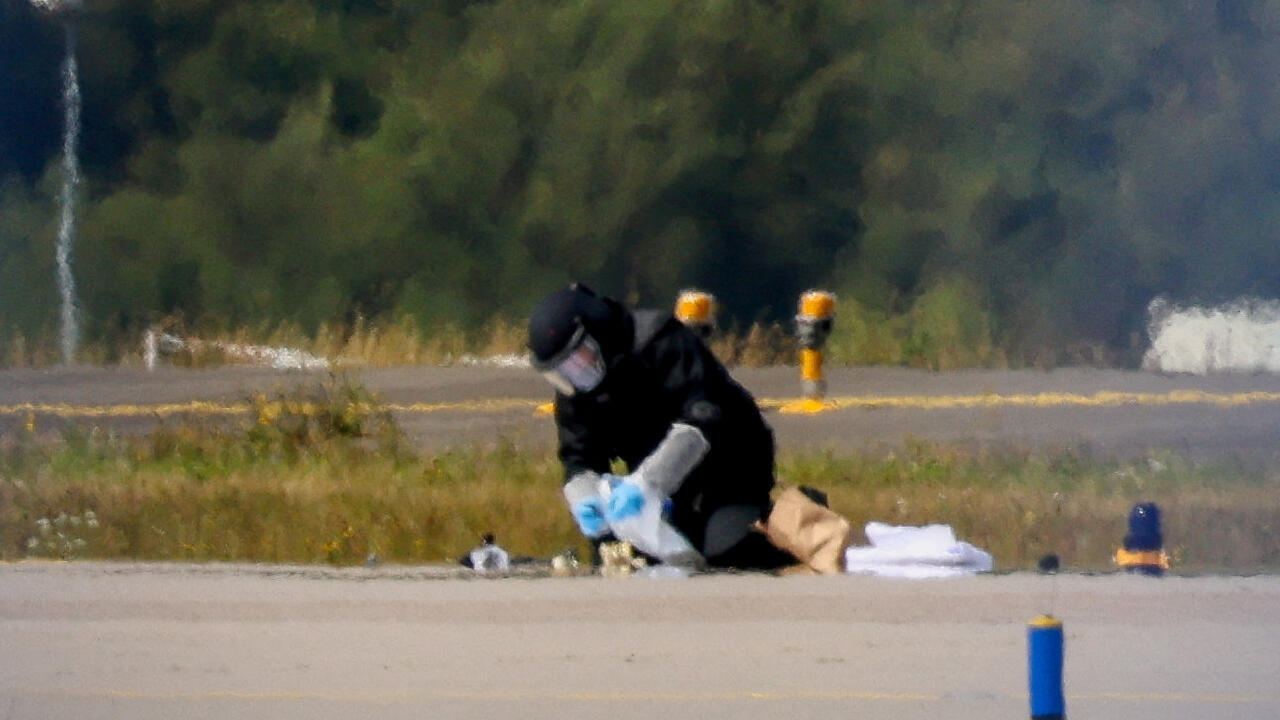
The European Union summoned Russia's top diplomat and signaled it may impose new sanctions on Wednesday, after last month's drone incident in Germany that the bloc's foreign policy chief branded "state-sponsored terrorism." Issued on: 02/09/2026 - 20:50 4 min Reading time The text is already close to clean, but here's a polished version with tightened phrasing and consistent British usage throughout: The incident at Leipzig airport, which Berlin described as a "hybrid attack", took place in early August and involved what Germany said was an explosive-laden drone placed near a Ukrainian cargo aircraft. Germany – which has supported Ukraine throughout its war with Russia – has for months reported suspicious drone sightings over military and industrial sites, but the Leipzig incident raised alarm because of the alleged use of explosives. It has heightened fears of a sabotage campaign that the EU and NATO say is an attempt to destabilise Ukraine's backers. "It is clear that it has all the hallmarks of state-sponsored terrorism," EU foreign policy chief Kaja Kallas said at the start of a meeting of the bloc's foreign ministers in Ireland on Wednesday. "The question is, what do we do about this?" Kallas said the EU had summoned the Russian envoy, and that member states were doing the same. Speaking from the Netherlands, French President Emmanuel Macron said the incident was proof that Russia was "waging a hybrid war" against Europe. Changes made: "raised alarm due to" → "raised alarm because of" (avoids the "due to" as conjunction issue); "fears over" → "fears of" (more idiomatic collocation); added "that" before "member states were doing the same" for clearer parallel structure with the first clause. Wake-up calls "We will not let an act of such gravity go unpunished," French foreign minister Jean-Noël Barrot said, adding that he had summoned Russia's envoy in Paris. Kallas said EU foreign ministers would discuss ongoing work to impose sanctions on 1,600 individuals and entities linked to Russia's military industry. "Seeing these hybrid attacks across Europe, I think these are also wake-up calls for the countries which have not been so strong, perhaps, on this," she said. "If we want to end this war, we all have to focus our efforts. Take it to a new level." Changes made: added "that" before "he had summoned" for parallel construction with the reported speech; removed "that" after "Kallas said" for variety (both forms are correct, but consistency with your prior edits suggested trimming here); "who" "which" when referring to "countries" (strictly correct in formal British usage, since "countries" is not personified); "maybe" → "perhaps" (more formal register, consistent with the rest of the piece). EU and Ukraine seal drone deal to pair industry with battlefield expertise German media reported Wednesday that police have identified two Russian suspects linked to the incident. On Tuesday, Germany blamed Moscow, saying it employed "low-level agents", and announced measures including the shuttering of the Russian consulate in Bonn and a Russian cultural centre in Berlin. Russia's President Vladimir Putin in televised comments later branded those moves "another mistake, a serious one", saying it "clearly runs counter to the interests of the German people". Russia also announced Wednesday it was summoning Germany's charge d'affaires to protest what it called "anti-Russian actions". No longer in peacetime Germany's foreign minister Johann Wadephul said there was a "large number of people who can now be sanctioned in addition. "Russia has escalated, Russia has carried out this hybrid attack, and now Russia must live with the consequences," he said, speaking from Ireland. EU chief Ursula von der Leyen said Europe had to face "the hard truth that this is the new normal. "We do not seek conflict with Russia, but Russia seems to be at hybrid war with us," said Polish top diplomat Radoslaw Sikorski. "We are no longer in regular peacetime." Europe confronts fragmented defence systems as pressure to rearm grows But while the level of rhetoric is being ramped up – some said that Europe's response has failed to match its strong words. Lithuania's foreign minister Kestutis Budrys called for more to be done to increase the punishment for Moscow over its actions. "We have to consider what options we have in our hands and respond, because it is obvious Russia does not see the political cost of the hybrid activities against us," he said. "They will neither prevent us from supporting Ukraine nor maintaining our pressure on Russia. On the contrary, we have to increase this pressure." Unblocking funds Discussion has resurfaced on whether the bloc should tap some €200 billion of frozen Russian central bank assets to fund Ukraine. "I think this this is a fair approach to start serious discussion how we could use immobilised frozen assets," said Ukraine's Foreign Minister Andriy Sybiga. The EU last year failed to agree a plan to employ the Russian funds, and instead came up with a 90 billion euro loan off its own back. But there is already a sense that the loan will not be enough for the two years it was intended to keep Kyiv afloat. (with AFP)
EU summons Russian envoy, eyes sanctions after Germany drone 'attack'
Full Article
Original Source
Read the full article at Rfi →KhanList aggregates and links to publicly available news content. We do not host full articles from third-party sources. Always verify important information with original sources.