
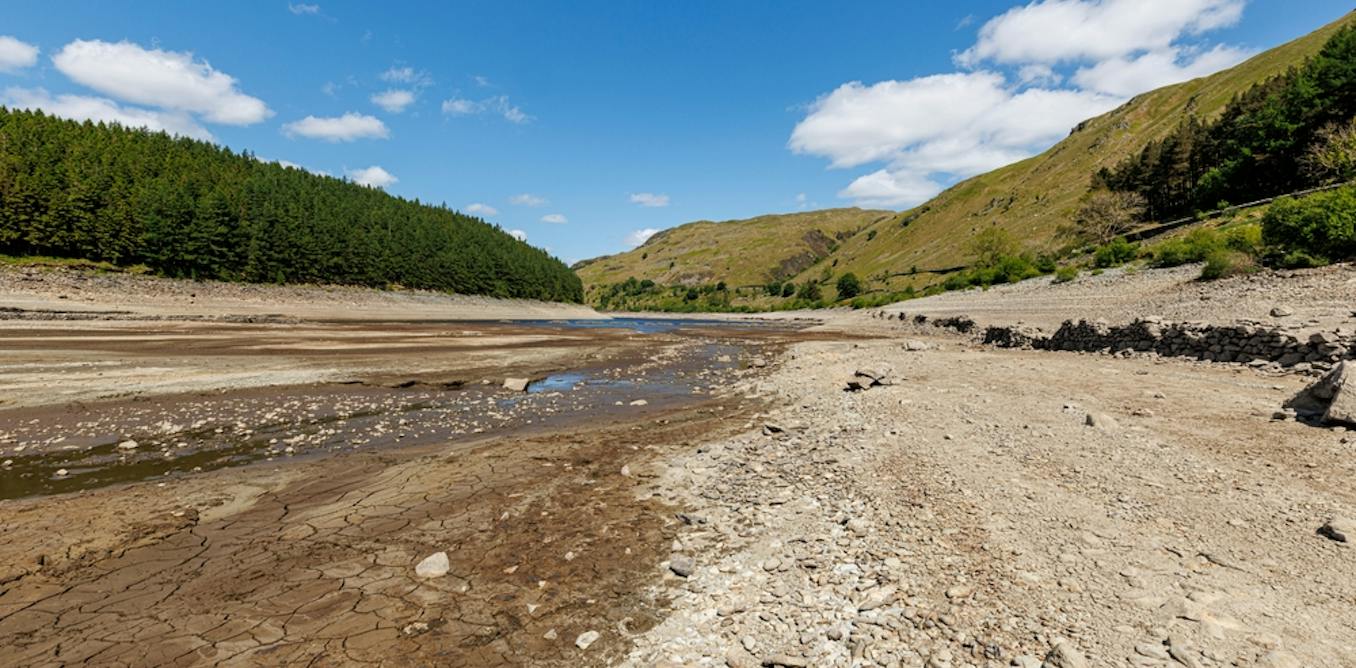
Historically, Great Britain’s most severe water crises have been associated with dry winters. The summer drought of 1976 was made worse by an exceptionally dry preceding winter. More recently, the dry winter of 2021/22 set the stage for the severe summer drought of 2022, especially in chalk aquifers of England. A dry winter in early 2023, including the driest February in 30 years across England, prevented reservoirs in south-west England from refilling, extending hosepipe bans through an entire year and stressing river ecosystems. The drought of 2026 in parts of England and Wales is still evolving, but recent data shows that the very dry summer conditions from June to August have continued. There was below average rainfall, and lingering low river and groundwater levels, into early October. There has also been periods of water scarcity in Scotland this autumn. Catchment areas where there are dry conditions in the winter have the potential to have more severe summer drought conditions next year. However, rainfall in November has started to hit normal levels for the time of year. Why dry winters are important Drought is normally thought of as a summertime phenomenon. Extremely hot weather drives up water demand for crops and public supply, as seen during the widespread hosepipe bans and irrigation water restrictions across England and Wales in the summer of 2026. However, droughts also occur during the cooler winter months when rainfall drops below normal. What happened during the drought of 1976. Because British winters are typically wetter than summers, a winter drought rarely feels like a problem, especially as most of us prefer crisp, dry winter days to cold, wet weather. Yet winter is the critical window when low evaporation and dormant vegetation allow rain to infiltrate through the soil and replenish underground aquifers and reservoirs. When winter droughts occur, the impact often emerges months later in spring and summer as that deficit moves slowly through the hydrological system. This delay is particularly pronounced in regions reliant on groundwater for public supply and river flow, such as the chalk catchments of east and south-east England and the sandstones of the Midlands. Because water takes months or even years to percolate through soil and porous rock, a winter rainfall shortage can impact river flows and groundwater levels the following summer. Groundwater levels in England and Wales, summer (left) and October 2026 (right) The maps show the rank (1 = driest) of the summer (Jun-Aug) and October 2026 groundwater levels. Graph using data from Jonghun Kam and Seunghui Choi, Pohang University of Science and Technology., CC BY-NC-SA Low winter rainfall strongly dictates summer groundwater levels as well as river flow levels, substantially increasing the odds of a summer drought. Seasonal rainfall forecasts for the rest of this winter indicate there will be a recovery from the summer’s drought conditions for much of England and Wales, but a heightened chance for drought to persist in the south, east and northeast. This means that some parts of England could already be banking a hidden water deficit for next summer. Whether winter droughts are becoming more frequent or severe with climate change remains unclear from the historical record alone. However, future climate projections point to a critical shift in how the seasons interact. By 2070, UK winters are projected to become up to 20% wetter, and summers significantly drier. Wetter winters will not eliminate winter droughts. Year-to-year atmospheric variability means dry winters will still occur, and hotter, drier summers are likely to leave soils much drier by autumn. Much early winter rain will be absorbed simply re-wetting dry soils and meeting higher demand, shortening the seasonal window to top up groundwater levels and altering the link between winter rain and summer water supplies. How to deal with winter droughts Summer droughts in England and Wales are becoming increasingly disruptive, not only through agricultural irrigation restrictions and domestic hosepipe bans like those in 2026, but also by hampering river navigation, damaging freshwater ecosystems, and even curtailing electricity generation from power stations reliant on river cooling water, which can drive up energy prices. As water demand rises alongside a growing population and a push for national food security, water planners need to track how winter rains top up the water system as well as summer demand. Society must also shift from responding to summer water shortages to enhancing year-round water storage. This includes building more reservoirs on farms to help supply agricultural crops, actively pumping excess winter floodwater into underground aquifers (an underground layer that retains water), and restoring wetlands to slow runoff from the land. These measures could help mitigate the increasing pressure on our water systems as climate change creates warmer and drier weather more frequently.
England and Wales are in a winter drought – which could make next summer even drier
Full Article
Original Source
Read the full article at Theconversation →KhanList aggregates and links to publicly available news content. We do not host full articles from third-party sources. Always verify important information with original sources.