
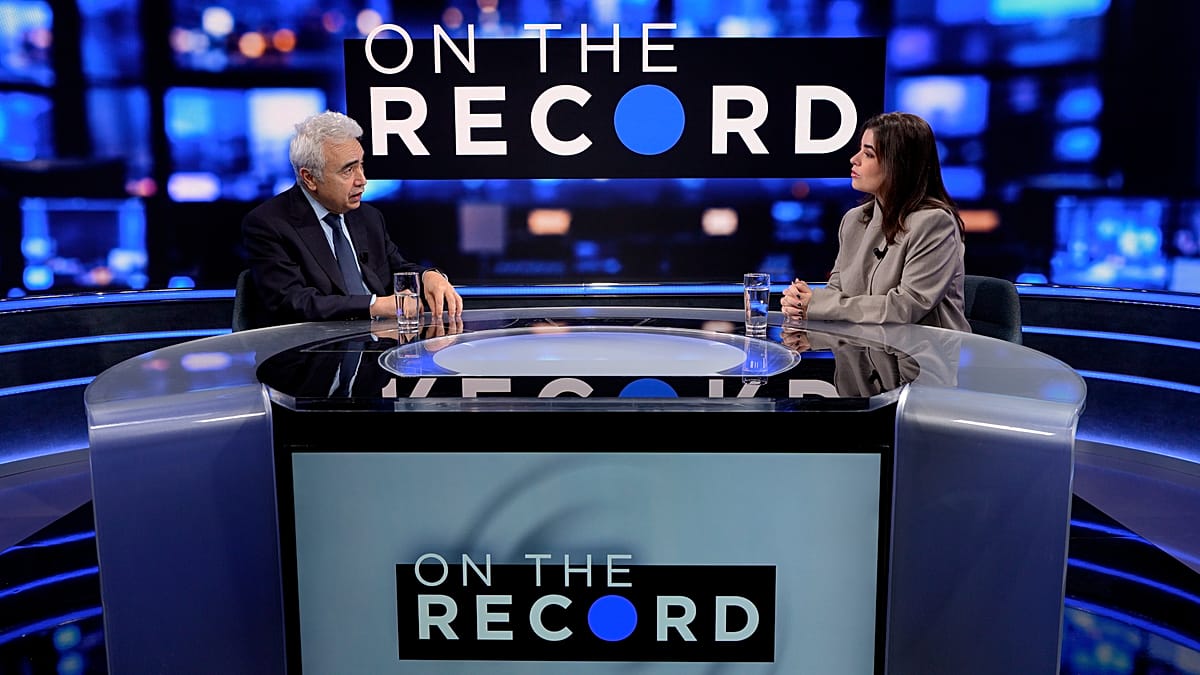
The world should increase electricity's share of final energy consumption to 35% by 2035, International Energy Agency chief Fatih Birol has told Euronews in an exclusive interview, as he urged governments to reduce their reliance fossil ahead of COP31. ADVERTISEMENT ADVERTISEMENT Speaking on On the Record with Maria Tadeo, Birol urged leaders at the climate summit in Turkey this week to accelerate electrification to strengthen energy sovereignty, particularly in the EU, which remains exposed to global energy market volatility despite efforts to diversify away from Russian supplies. The European Commission estimates that disruptions linked to the Strait of Hormuz have added €127 billion to the EU's energy import bill since the start of the US-Israeli war against Iran, while industrial production across the bloc continues to fall. Birol also warned that a prolonged closure of the Strait of Hormuz could have serious consequences for Europe and the global economy, urging governments to prepare for a difficult winter. "If the Strait of Hormuz is closed for a very long time, it would have major implications for the global economy and that of Europe," he said. Birol also played down hopes that a possible US decision to ease restrictions on Russian diesel exports would provide significant relief to European markets. Europe has lost supplies of refined products, including diesel and jet fuel, from the Middle East, while Ukrainian attacks on Russian refineries have further tightened global supplies. Winter is approaching, adding to pressure as demand for both fuels rises. "The amount of diesel which could come from Russia will not be a solution to this problem," Birol said. He acknowledged that additional Russian supplies could offer "some relief" but argued they would not address the structural shortage, particularly given the EU's declining refining capacity. "We lost the Middle East's refined product delivery to Europe. It is not coming," he said. Birol warned that refined product markets could remain tight in the coming months, raising the prospect of fuel shortages if the Strait of Hormuz remains closed. "If the current situation continues, there may be a question of availability in that case," he said. Electrification en route to sovereignty Birol argued that the answer to the EU's recurring exposure to energy shocks lies in accelerating the shift towards domestically generated electricity. "Europe's energy future is electrification," he said, urging the bloc to generate more of its own power from solar, wind, nuclear and hydropower rather than rely on imported fossil fuels. "If Europe wants to remain a sovereign part of the world, if Europe wants to be competitive and clean, the energy future is electrification," he added. Birol criticised Europe's retreat from nuclear power, echoing European Commission President Ursula von der Leyen's description of the shift as a "strategic mistake". Nuclear power accounted for around one-third of EU electricity generation in the 1990s, compared with approximately 15% today, according to Birol. His call for a faster rollout of electric vehicles and heat pumps comes as world leaders gather in Antalya, Turkey, for COP31, where they are expected to agree on a target to raise electrification to 35% by 2035. The European Commission for its part has proposed raising the EU's electrification rate to 46% by 2040, roughly double the 23% level at which it has stagnated over the past decade. Although the 46% figure remains indicative, negotiations on the EU's post-2030 energy framework could turn it into a legally binding target. EU countries broadly support a global electrification target but softened their position in the final COP31 conclusions, agreed on 12 October. A September draft had welcomed the COP31 presidency's proposal to raise electrification to 35% by 2035. However, the final text merely states that the "EU looks forward to discussing" the initiative. The Czech Republic is among the countries sceptical of the proposal, according to a senior Commission official, suggesting that the bloc's own 46% ambition could also face resistance. Speaking to On The Record, Birol argued that the cost of transforming Europe's energy system must be weighed against the economic price of continued dependence on imported fuels. "Energy security is a cost as well," he said, as he urged leaders to aim for consensus on electrification.
Energy boss Birol urges governments to accelerate global electrification at COP31
Full Article
Original Source
Read the full article at Euronews →KhanList aggregates and links to publicly available news content. We do not host full articles from third-party sources. Always verify important information with original sources.