
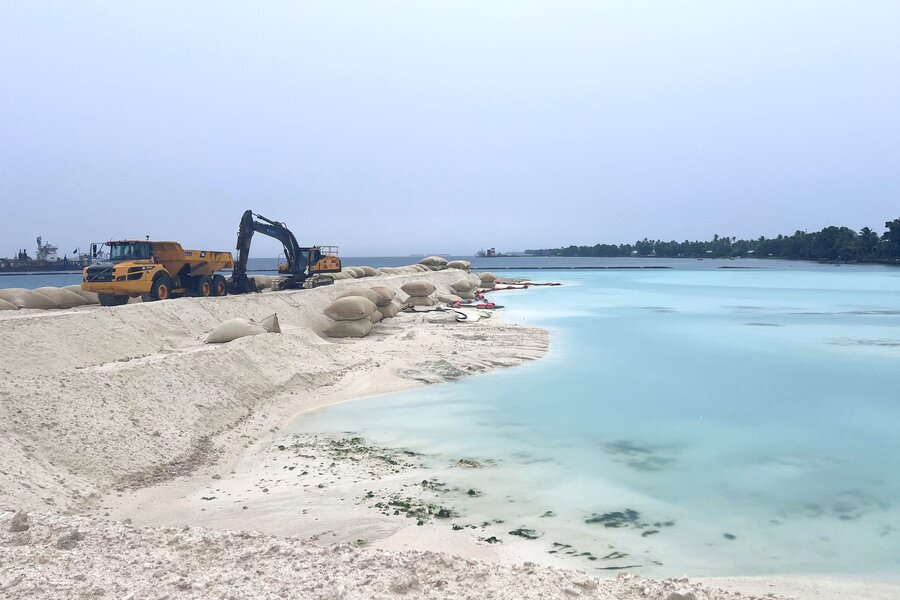
The latest round of global climate talks started this week with a new type of mental focus. Rather than simply seeking more agreements among the 190-plus countries, the 12-day conference in Turkey stresses action, especially on a worrisome climate-related hazard – rising sea levels hitting low-level land. Attendees can easily find an example of practical action on that front, one anchored in a concept of caring for those most vulnerable.Australia is now in its second year of providing visas to hundreds of residents of Tuvalu who want to be prepared to flee their South Pacific country someday. With an average elevation of 6.5 feet, Tuvalu’s residents are already experiencing damage to underground water supplies from a sea-level rise of about 15 centimeters (5.9 inches) in recent decades. No one knows for sure how many people worldwide will be forced to flee submergence due to rising seas. Estimates range from 2 million to 20 million by 2100. But a 2023 treaty between Tuvalu and Australia sets a precedent for hospitality that is both practical action and a model for how carbon-polluting nations can take responsibility for the effects of global warming by ensuring “climate mobility.”The name of the bilateral pact, the Falepili Union Treaty, reflects a Tuvaluan concept of mutual respect and duty of care. More than a third of the country’s residents applied for the first round of 280 visas granted last year by Australia. In addition, Australia and other countries are helping raise acres of land in Tuvalu to ensure many residents can remain out of harm’s way from ocean encroachment. Deepen your worldviewwith Monitor Highlights.Politics with respectGet political stories with respectful analysis.There‘s a world of new ideas in everyBooks newsletter.There‘s more to life, enrich yours withCulture & Learning weekly.Follow humanity‘s discoveries withScience & Nature stories in your inbox.Gain a spiritual perspectivefrom the stories in your inbox.Want to understand the deeper impact of critical events? Learn the Monitor‘s insight.Already a subscriber? Log in to hide ads. “For Tuvaluans to continue to live in Tuvalu and for the international community to take Tuvalu seriously as a site for climate action, global perceptions must shift from an emphasis on loss to a focus on hope, which can drive investment, innovation and collective resolve to address rising seas,” wrote Venu Edwin Pedro, a government worker in Tuvalu, in the Devpolicy Blog.In 2023, the United Nations passed its first declaration on sea-level rise. With Tuvalu possibly becoming the first country to be uninhabitable because of climate change, action has been needed, far more than words on paper. With Australia’s help and a treaty rooted in Tuvalu’s ideals of dignity and caring, the world can learn how to defy predictions of climate doom. ALREADY A SUBSCRIBER? LoginReal news can be honest, hopeful, credible, constructive.The Christian Science Monitor was founded in 1908 to lift the standard of journalism and uplift humanity. We aim to “speak the truth in love.” Our goal is not to tell you what to think, but to give you the essential knowledge and understanding to come to your own intelligent conclusions. Join us in this mission by subscribing.
A model for caring action against rising seas
Full Article
Original Source
Read the full article at Csmonitor →KhanList aggregates and links to publicly available news content. We do not host full articles from third-party sources. Always verify important information with original sources.