
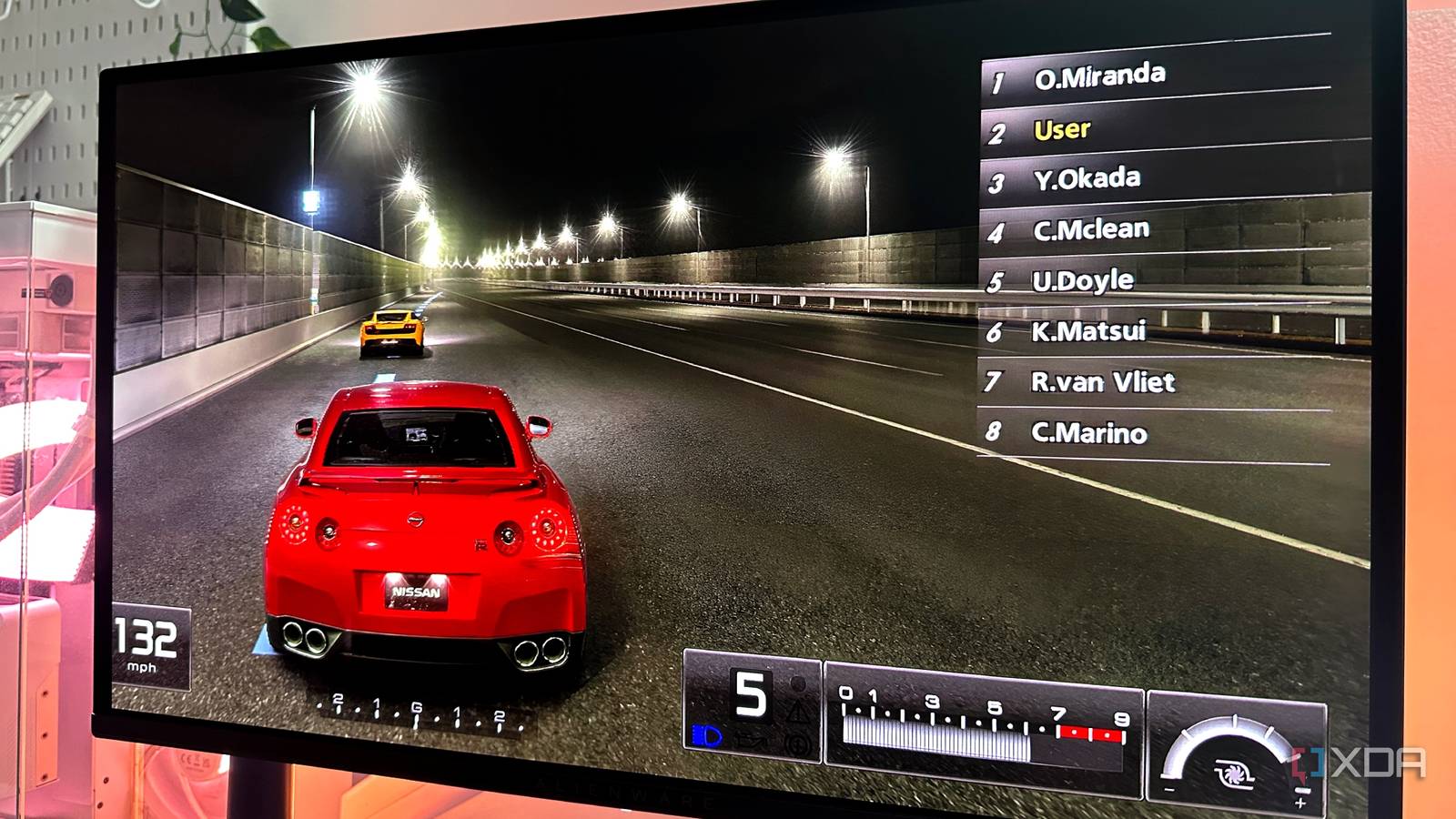
Published Sep 30, 2026, 4:30 PM EDT Gaming has been Samarveer’s greatest passion, and the Literature graduate in him takes immense joy in dissecting games for their themes, messages, and impact. Samarveer holds a deep appreciation of gaming, and considers the platform to be the most immersive and impactful across all media. He can be found engaging with gaming communities online, always ready to debate the finer points of ray tracing or itching to write an 8-page collegiate thesis on any game that impacts him emotionally. It seems like every other day, I find new games to inject DLSS 5 into. Whether it's by forcing DLSS 5 through ReShade or replacing a game's DLSS files with the Neural Rendering variants, it's been an absolute joy to see my childhood games transform in real time. After all, that's what DLSS 5 has been doing — "transforming" old games and basically handing out free remasters. That's exactly what my chain of thought was as I pushed DLSS 5 into my old PS2 and PS3 games, only to realize that the free "Remasters" Nvidia's new expensive tech has been handing out are something emulators have been providing for years now, and that too, for free. Make no mistake — DLSS 5 is remarkably good at making the past look new again, but the PC gaming community has been doing that for years without needing an RTX GPU at all. DLSS 5 is selling more than just "sharper pixels" The real trick is making old-looking games feel new again It's easy to think of DLSS 5 as another glorified upscaler, but that undersells what Neural Rendering is. Instead of taking a lower-resolution image and making it cleaner, DLSS 5 uses AI-generated detail and lighting information to make the final image feel considerably more sophisticated than the underlying render would suggest. Throw DLSS 5 at an older game and you'll immediately understand the difference. Running a 2006 game at 4K will make its jagged edges disappear and lend it a surface layer of cleanliness, but it won't even touch the ancient assets. DLSS 5, on the other hand, effectively reinterprets parts of the image on its way to the screen. That's why my own experiments with Nvidia's Neural Rendering felt like I'd applied a modern visual treatment to my older games. Now, DLSS 5 giving older games a second wind is a completely different direction from using it in future games that will be designed with native support. In that way, the same technology answers a completely different question, only this time, I've already seen it answered somewhere else, and rather effectively at that. Emulation was already breaking those limits RPCS3 has been turning old games into remasters without neural rendering I recently applied DLSS 5 to my old PS3 titles on RPCS3, and yes, it required plenty of hoops to jump through. From finding the right DLL and using ReShade to emulate motion vectors for DLSS 5 to latch on to, DLSS 5 on RPCS3 was rewarding but complicated. There was, however, one thing that stood out rather remarkably for me. After I set up the emulator properly, I realized that RPCS3 itself gave me plenty of GPU-specific emulation options. The original PS3 may never have been able to output anything over 1080p, but RPCS3 immediately runs games at 1440p, 4K, all the way up to 5760p. The emulator also supports in-built upscaling, with support for AMD's FSR. With other features like Anti-Aliasing, 16x Anisotropic Filtering, and having control over which shader to use, it was immediately clear that the emulator was already giving the game a remaster itself. Please ensure you only ever use your own games and dump your own files for emulation on PC. And that's even before we talk about the plethora of patches available in RPCS3 for every single game. Community patches that are already available in the emulator can push compatible games beyond their original 30 FPS targets. Then, widescreen patches remove another limitation. Click on any game, and you'll be able to see mods and patches for better texture filtering and renderer improvements that can clean up the image significantly. Then there are texture packs, shader modifications, lighting tweaks, and other community projects. None of this needs an RTX GPU or a proprietary neural model. The PC simply has more hardware available than the console did. The emulation community has spent years taking games locked to 2006-era hardware and going beyond those limitations. DLSS 5 doesn't do the same thing technically, but the philosophy behind the transformation is more or less the same. Emulators don't really need DLSS 5 DLSS 5 will always be "nice to have" instead of a "need to have" Even with the emulator up and running, I have a whole host of graphical upgrades at my disposal. Games like Gran Turismo 5, Tekken Tag Tournament 2, and Demon's Souls look way better than they had any business looking at on a 2006-built PlayStation 3. I can upscale all the way up to 4K and get cleaner shadows and textures — there's your free remaster, all without losing 50% of your frame rate. I'm not calling DLSS 5 completely pointless. It's certainly remarkable, and I myself can't stop having my fun with it. In fact, DLSS 5 does make a pretty strong case for itself because it gets a lot of the work out of the way. If I'm using DLSS 5 on an old emulated game, I can just have the Neural Rendering layer sit inside the rendering pipeline and handle part of that transformation automatically. That way, I don't really have to hunt down patches, install texture packs, configure the emulator, and then spend an entire evening if something breaks. Of course, if you do put in the work, the emulation community has indeed solved the problem through control (while Nvidia took an inference-based approach). The former approach gives me, the user, the tools to rebuild the presentation myself, while the latter makes the machine understand what that presentation should look like. RPCS3 The future of graphics has a funny habit of looking familiar The emulator community never needed Nvidia to tell it that games could be pushed further than their original versions. DLSS 5 highlights something that PC gamers have understood for a very long time now — a game's original hardware limitations don't necessarily have to define its final form. Once you give enthusiasts enough control, they will spend years finding ways around those limitations. The emulator community never needed Nvidia to tell it that games could be pushed further than their original creators intended because they were already doing it. Nvidia may have found a way to make the process considerably more automatic and (annoyingly) more impressive.
Emulation already solved the problem DLSS 5 is selling, and it did it for free years ago
Full Article
Original Source
Read the full article at Xda-developers →KhanList aggregates and links to publicly available news content. We do not host full articles from third-party sources. Always verify important information with original sources.