
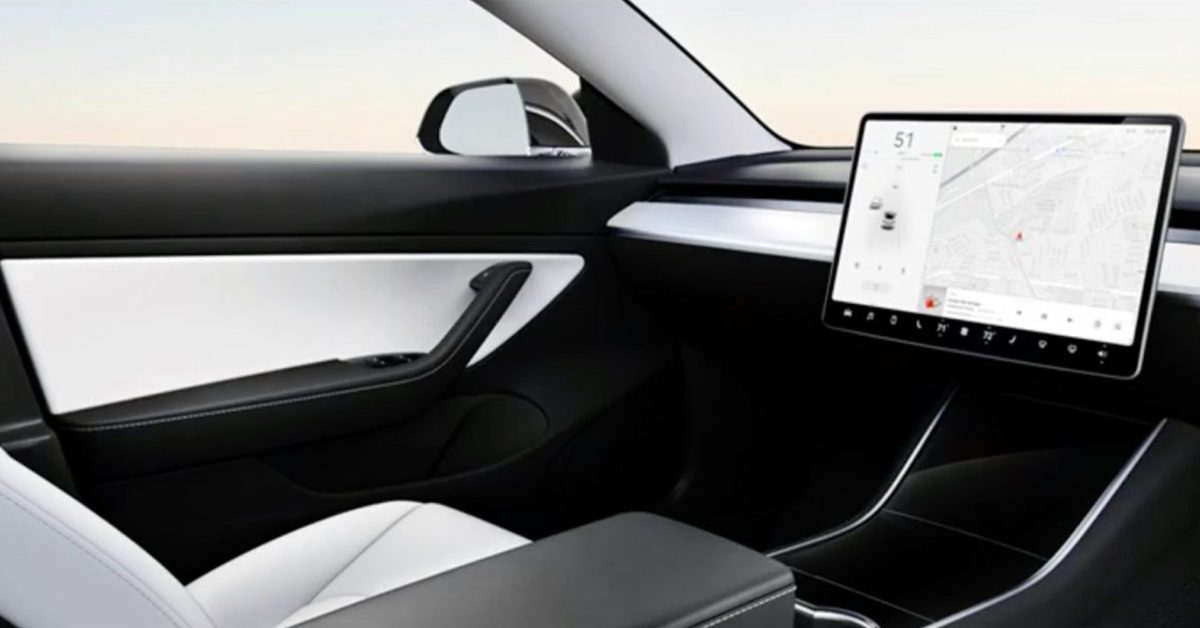
Elon Musk says Tesla plans to build a version of the Model Y with no steering wheel and no pedals, a driverless people-mover he describes as “good for transporting groups of 6 or 7 people.” It’s yet another vehicle nobody asked for, from a company that ended Model S and Model X production this year and is about to end the Cybertruck. And the data says very few car buyers want a car they can’t drive. What Musk said Musk made the comments on stage at the New York Times DealBook Summit on Wednesday. He pitched it as the answer to the Cybercab only carrying two people. “We still need autonomous vehicles if you’ve got 4 or 6, or a whole family,” Musk said, before adding that Tesla plans “an autonomous version of the Model Y that won’t have steering wheels or pedals.” There was no timeline, no price and no word on where it would be built. Six or seven seats points straight at the Model Y L, the stretched three-row Model Y that Tesla launched in the US in July for $61,990, or the regular Model Y with the $2,500 seven-seat option Tesla brought back in January. The Model Y L wasn’t supposed to need to exist Here’s the funny part. When Tesla launched the Model Y L in China in August 2025, Musk said it might never come to the US, “given the advent of self-driving in America.” The idea was that autonomy would make a bigger family car pointless. Less than a year later, Tesla was building the Model Y L at Giga Texas and selling it at the top of the Model Y lineup. Now Musk wants a driverless version of that same car. So families still need a big vehicle, self-driving or not. That’s what we said in 2025. Tesla’s Model Y robotaxis already have a steering wheel The robotaxi argument doesn’t hold up either. Tesla’s Robotaxi fleet is mostly Model Ys, and those cars have a steering wheel and pedals. The wheel isn’t what’s stopping them from driving themselves. Removing it mostly makes the car useless outside Tesla’s geofences. We’ve already seen what that looks like. Tesla opened personal Cybercab orders last week at $29,990, but the car only works inside Robotaxi service areas and requires a $299 per month subscription to operate at all. There’s also the regulatory mess. Tesla self-certified the Cybercab as compliant with federal safety standards even though FMVSS 135 calls for a foot-operated service brake, and NHTSA responded with a Special Order in September. Zoox took the slower route and got a Part 555 exemption, which caps it at 2,500 vehicles a year. A second vehicle with no controls means a second round of that fight. Buyers don’t want cars without controls Cox Automotive’s 2026 Autonomous Vehicle Study asked US consumers which level of autonomy they’d find most appealing in a vehicle they own. Only 10% picked fully driverless Level 5, down from 17% when Cox first asked in 2016. The most popular choice was Level 4 at 28%: full autonomy, but with the option for a human to drive. And only 38% said they’d feel safe in a Level 5 vehicle, compared to 87% for a modern car with basic driver aids. So after a decade of exposure to self-driving tech, interest in a car with no controls went down, not up. Electrek’s Take Tesla already makes the Model Y. It already makes a six-seat Model Y. Just make the Model Y. In 2016, Musk’s Master Plan Part Deux promised to “expand the electric vehicle product line to address all major segments.” Ten years later, once the Cybertruck ends next summer, Tesla’s consumer lineup is the Model 3 and Model Y. That’s it. No affordable car (Musk called a non-robotaxi $25,000 Tesla “pointless” in 2024), no compact crossover, no minivan, no midsize pickup. Every time there’s a gap in Tesla’s lineup, Musk gives the same answer: autonomy will fill it. The Model Y L was going to be unnecessary. The cheap car was pointless. The Model S and X made way for Optimus, and the Cybertruck for the Cybercab. But Tesla’s own robotaxi fleet proves you don’t need to remove the steering wheel to run a robotaxi. Keeping it costs Tesla almost nothing and keeps the car useful for the roughly 90% of buyers who still want the option to drive. Taking it out only adds a federal compliance fight and shrinks the market to people who live inside a geofence. If Tesla wants to sell more cars, it should build cars people are asking for. Who exactly is asking for this one? If you’re shopping for a family EV, pairing it with home solar can cut your fuel costs to nearly zero. With electricity rates up almost 10% last year and expected to keep climbing, going solar is one of the best ways to protect yourself against rising costs. And with lease and PPA options, you can do it with zero upfront cost and start saving immediately. If you want to find the best deal, check out EnergySage. It’s a free service with hundreds of pre-vetted installers competing for your business, so you save 20 to 30% compared to going it alone. No sales calls until you pick an installer. Get your free quotes here. FTC: We use income earning auto affiliate links. More.
Elon Musk announces another Tesla vehicle no one asked for
Full Article
Original Source
Read the full article at Electrek →KhanList aggregates and links to publicly available news content. We do not host full articles from third-party sources. Always verify important information with original sources.