
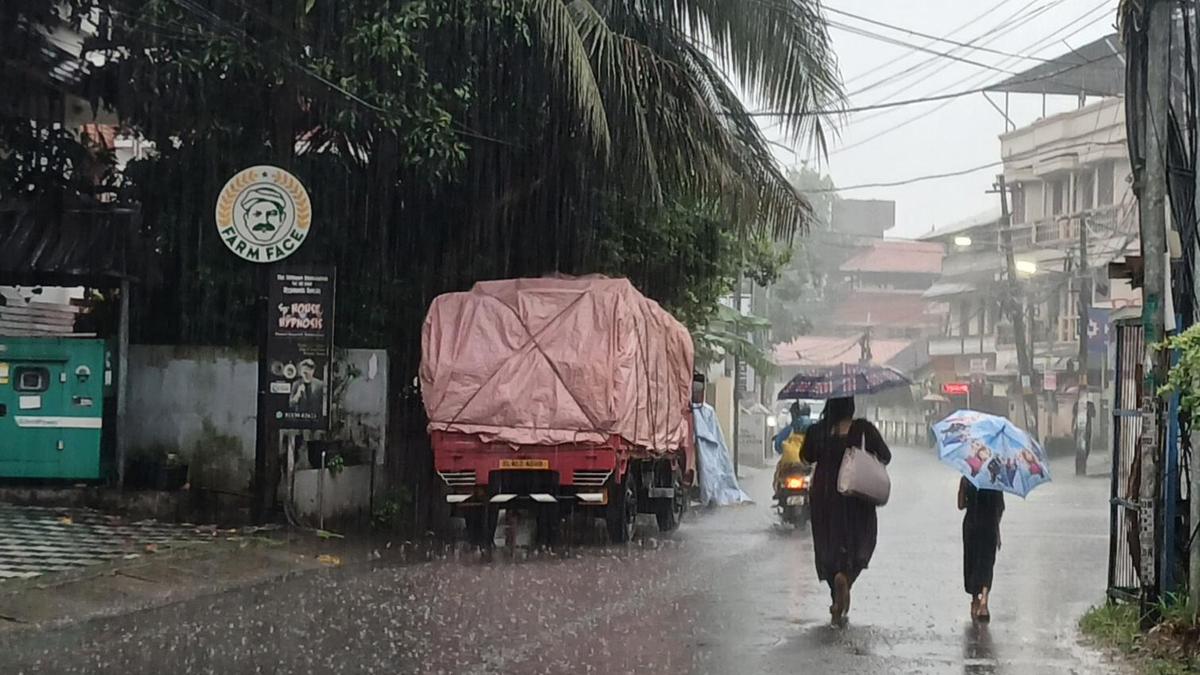
Keralam recorded rainfall deficits of 28% during the southwest monsoon and 26% during the northeast monsoon (up to November 21, 2026). (Photo for representation) | Photo Credit: H. VIBHU A drought vulnerability assessment conducted by the Kerala State Disaster Management Authority (KSDMA) has revealed that 27 of the 59 rainfall monitoring stations for which the India Meteorological Department (IMD) provided long-term data have reached the ‘Trigger-1’ threshold, an indicator used for drought monitoring.The worsening situation has necessitated the disaster management authority to hold a meeting based on the assessment that the State is likely to face a significant reduction in water availability during the upcoming summer, driven by the failure of both the southwest and northeast monsoons to deliver expected rainfall, compounded by the influence of the El Niño phenomenon in the Pacific. The agency also directed various departments to begin preparations and preventive measures to proactively address potential drought scenarios.In 11 districtsThe 27 stations that met the Trigger-1 conditions are spread across 11 districts—Kasaragod, Kannur, Wayanad, Kozhikode, Palakkad, Thrissur, Idukki, Alappuzha, Pathanamthitta, Kollam and Thiruvananthapuram as the State recorded rainfall deficits of 28% during the southwest monsoon and 26% during the northeast monsoon (up to November 21, 2026).During the four-month southwest monsoon season, the State received 1,446.4 mm of rainfall against the normal of 2,001.1 mm, marking a deficit of 28%. The worst-affected districts were Wayanad (53% deficit), Idukki (46%), Kollam (38%), Alappuzha (32%), Palakkad (30%) and Thrissur (30% deficit).The rainfall deficit during the ongoing northeast monsoon season stands at 26%, with the State receiving only 321.1 mm against the normal of 434.6 mm as of November 21, 2026. The rainfall deficiency in Ernakulam, Idukki, Kasaragod, Kollam, Malappuram and Thrissur ranged between 30% and 42%. The irregular rainfall pattern, characterised by short-duration spells interspersed with prolonged dry periods, has affected soil-moisture replenishment and groundwater recharge, resulting in poor inflows to reservoirs.Water kiosksThe meeting, chaired by State Relief Commissioner, directed the departments concerned to revive water kiosks and, if necessary, utilise the VB-G RAM G (employment guarantee scheme) workers to set up additional kiosks. District Collectors were also asked to adopt the Kareepra model of quarry pond rejuvenation in Kottarakkara, Kollam, and utilise the restored waterbodies for agricultural purposes and local groundwater recharge.The Water Resources department has been directed to ensure that sluice gates of barrages are repaired promptly, wherever necessary, to prevent water loss, while the Agriculture department will also prepare contingency plans at least at the block level, in convergence with VB-G RAM G, to address the emerging drought situation.KSDMA Member-Secretary Sekhar Kuriakose told The Hindu that the authority was closely monitoring the situation and had completed the first round of drought assessment based on rainfall deviation, the Standardised Precipitation Index (SPI), and dry-spell analysis. The next stage of assessment (Trigger-2), scheduled to be completed by the end of this month, will incorporate remote-sensing indicators such as the Normalised Difference Vegetation Index (NDVI), Normalised Difference Water Index (NDWI) and Vegetation Condition Index (VCI), along with crop conditions, soil moisture and hydrological indicators, (RSI, GWDI and SFDI). A detailed report will subsequently be submitted to the State government.As per the prescribed procedure, the Trigger-2 assessment will be followed by ground truthing, involving field-level verification, to establish whether the features identified through satellite imagery correspond with actual conditions on the ground. This exercise was essential for enabling districts to access additional funds to tackle the emerging challenges, Mr. Kuriakose said. The evolving situation points to the possibility of early summer-like conditions setting in across Keralam as early as the end of January 2027. Published - November 25, 2026 05:55 pm IST
Drought threat looms over Keralam as 27 rainfall stations cross Trigger-1 drought threshold
Full Article
Original Source
Read the full article at Thehindu →KhanList aggregates and links to publicly available news content. We do not host full articles from third-party sources. Always verify important information with original sources.