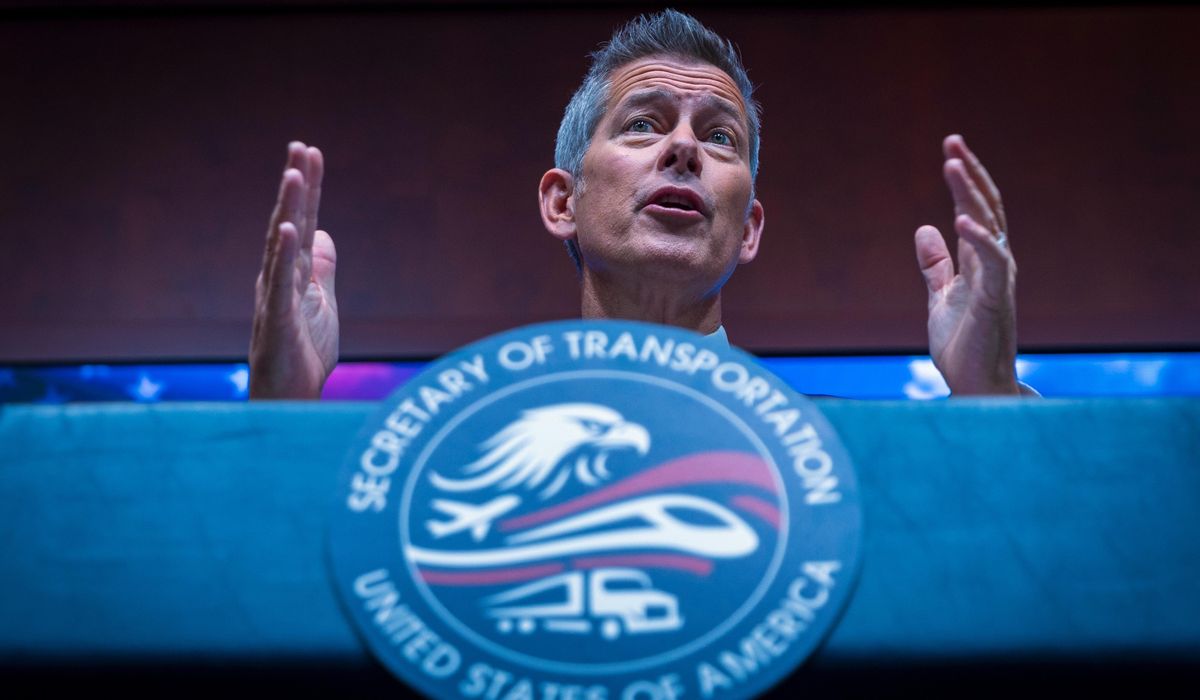
The Trump administration is helping clear the way for high-speed rail by easing noise-emission rules, although the reality of a superspeed train is still years away. Transportation Secretary Sean Duffy said Friday that the Federal Railroad Administration will overhaul train noise standards, allowing high-speed trains operating between 160 and 220 mph and an approval pathway for speeds over 220 mph. Currently, train noise standards focus strictly on engine and mechanical sounds, overlooking the wind noise generated at speeds above 160 mph. Traditional noise limits remain in place for speeds up to 160 mph. FRA Administrator David Fink said one of the reasons the U.S. does not have true high-speed rail is because current rules “disadvantage trains that generate most of their noise from sources other than their engines and rolling stock instead of approaching the issue holistically.” The agency estimated that these regulatory rollbacks will save U.S. high-speed rail developers $100 million over 30 years and incentivize private investment. However, a nationwide network remains a distant reality due to massive funding gaps, political friction and construction delays. While active projects are pushing forward, progress is localized rather than national. The California High-Speed Rail Authority, responsible for planning, building and operating the nation’s first high-speed rail system, projects the initial train to roll in 2033. Mr. Duffy has taken a two-pronged approach to high-speed rail: cutting federal backing for California’s project while enacting regulatory reforms intended to ease development for private and alternative high-speed rail networks. Roughly $4 billion in FRA grant funding previously allocated to the California High-Speed Rail Authority was terminated. An additional $175 million in project grants was withdrawn, with the FRA citing massive budget overruns and delayed timelines. “The Biden-Buttigieg administration dumped dollars into Gavin Newsom’s multi-billion-dollar Train to Nowhere instead of doing any regulatory work to make building this kind of innovation in America possible,” Mr. Duffy said in a statement. “This administration is cutting through the red tape that has stopped rail innovators from building in America before. We’re making it attractive to businesses and investors to partner with USDOT and develop high speed rail here in the U.S.” Other high-speed rail projects are on different timelines. Brightline West, a privately run high-speed rail line under construction in California and Nevada, targets completion in 2029, though transit authorities view this goal as aggressive. The Washington State Department of Transportation expects the final Service Development Plan for the Cascadia High-Speed Rail corridor connecting Oregon, Washington and British Columbia to wrap up in 2028. Story Topics
DOT loosens noise rules for high-speed rail, but real bullet trains remain a distant prospect
Full Article
Original Source
Read the full article at Washingtontimes →KhanList aggregates and links to publicly available news content. We do not host full articles from third-party sources. Always verify important information with original sources.