
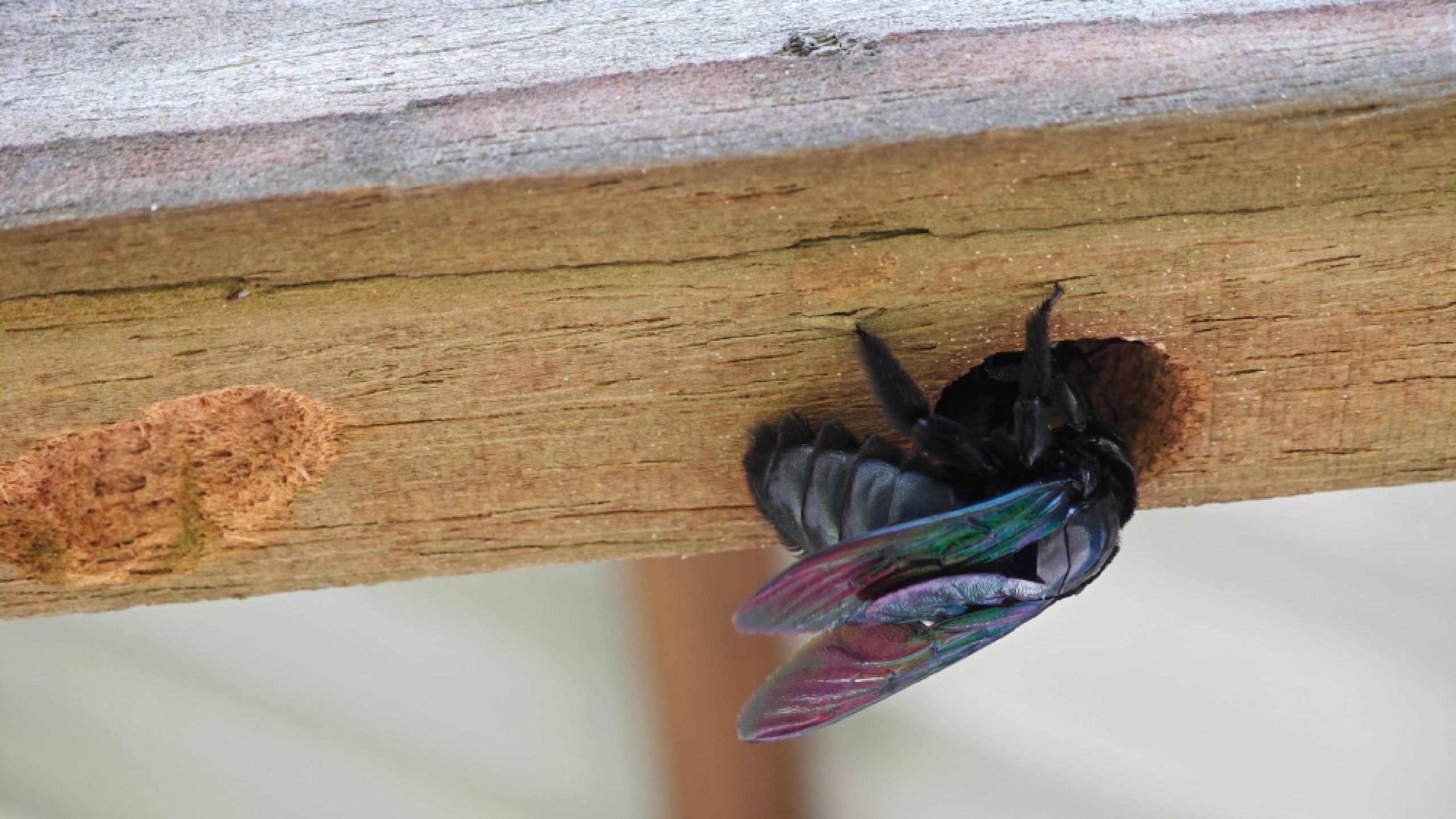
I’ve been seeing advice online recently telling people to spray WD-40 to get rid of carpenter bees. While it might sound like a quick, clever hack, it doesn't solve the problem long-term — and worse, it can stain your wood and harm beneficial garden pollinators.Unlike honeybees or bumblebees that live in social colonies, carpenter bees are solitary insects with a destructive habit: boring perfectly round holes into exposed outdoor wood to nest. While they don't eat wood like termites do, their tunneling in decks, fascia boards, and porch railings can weaken structural timber over time and leave unsightly yellow stains along entry points.If you prefer a gentler approach that won't harm pets, children, or local wildlife, a peppermint-based spray is the best natural deterrent. Carpenter bees have highly sensitive scent receptors and despise these strong, localized odors.Here's exactly why that viral WD-40 trick fails, how to make the DIY spray, and the best way to apply it for maximum protection.Why WD-40 doesn't work (Image credit: Shutterstock)Spraying WD-40 into carpenter bee holes is one of the most common internet myths circulating today. While the solvent might temporarily kill a bee on direct contact, it fails entirely as a long-term deterrent.WD-40 dries quickly, leaving behind a slick residue that fails to repel future bees. Worse, spraying petroleum-based lubricants onto raw, weathered wood can stain your deck, break down protective wood sealants, and leach toxic chemicals into nearby soil and garden beds. Relying on WD-40 leaves your home exposed while risking unnecessary environmental harm. What does work: The DIY peppermint and Castile soap spray Peppermint oil produces an intense, sharp aroma that overpowers the bees' delicate olfactory senses, driving them away from untreated timber. Pour 500 ml of water into a spray bottle, then add one tablespoon of liquid Castile soap (such as Dr. Bronner's or Murphy's Oil Soap) along with 5 to 10 drops of pure peppermint essential oil. Cap the bottle and shake thoroughly. The soap acts as a surfactant, helping the peppermint oil cling to raw wood far longer than water alone. Mist all exposed, unpainted wood generously, giving the bottle a quick shake periodically during use to keep everything blended. Pro tips for maximum prevention No spray is 100% permanent on its own. To secure your home against future infestations, pair your natural spray with these physical barriers.Get instant access to breaking news, the hottest reviews, great deals and helpful tips.Before applying your spray, pack old or active nest holes with steel wool or copper mesh, then seal over them with exterior wood putty or caulk. Carpenter bees are naturally drawn back to the scent of old nests year after year— losing entry points breaks the cycle.Carpenter bees strongly prefer bare, weathered softwoods. Applying a fresh coat of exterior latex paint or a thick polyurethane varnish creates a synthetic outer shell that bees rarely attempt to bore through. Follow Tom's Guide on Google News and add us as a preferred source to get our up-to-date news, analysis, and reviews in your feeds. Make sure to click the Follow button!More from Tom's Guide The hidden ways carpet beetles get inside your home — and how to spot themI stopped spiders from taking over my porch — without squishing them or using harsh chemicalsThe 2-herb combo that creates a "no-fly zone" for wasps (and exactly where to plant it)
Don't spray WD-40 into carpenter bee holes: this 3-ingredient DIY spray actually works instead
Full Article
Original Source
Read the full article at Tomsguide →KhanList aggregates and links to publicly available news content. We do not host full articles from third-party sources. Always verify important information with original sources.