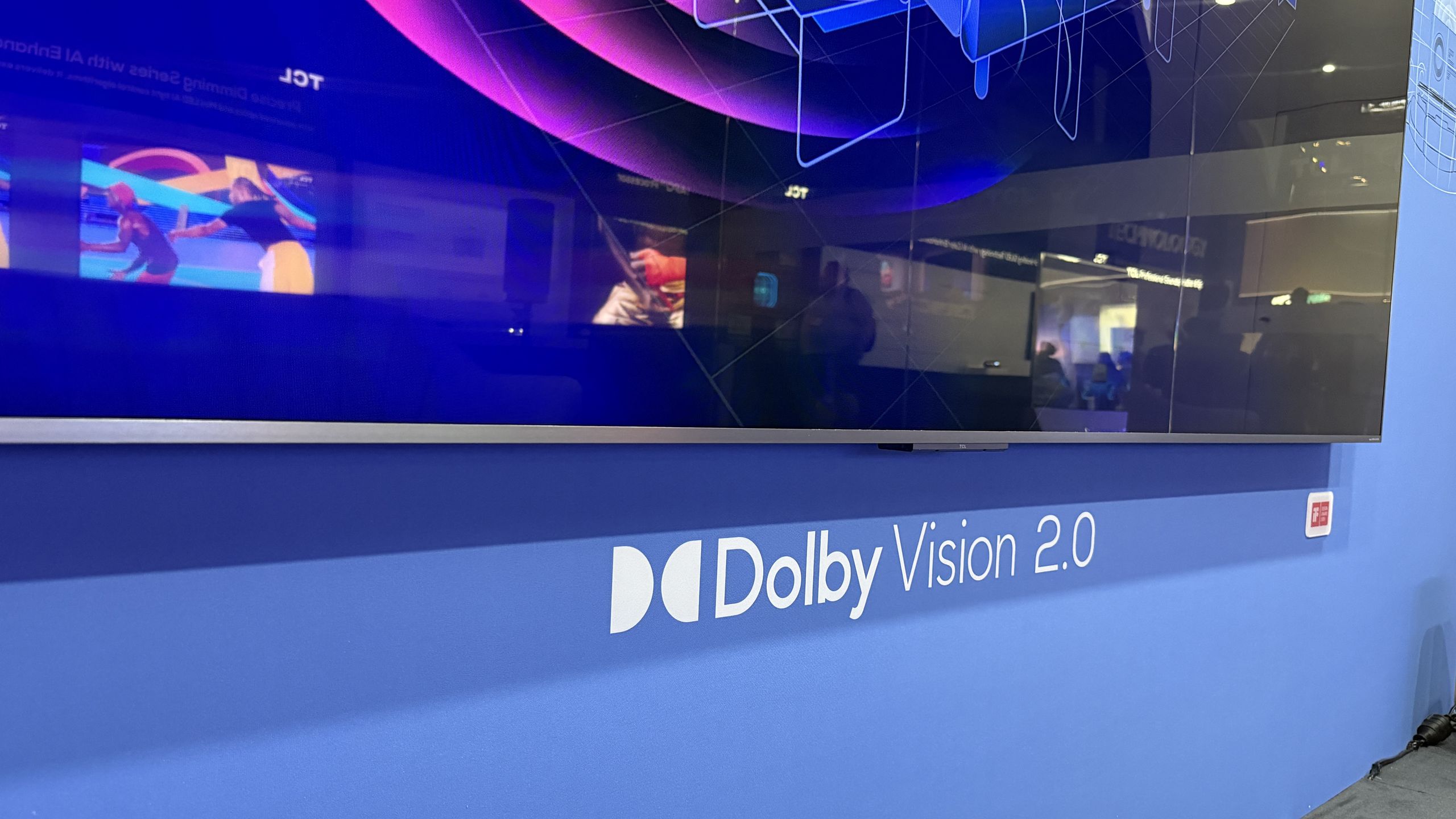
(Image credit: Future) Dolby confirms that Dolby Vision 2 Max is intended to be the replacement for Dolby Vision 1 in more premium TVsStandard Dolby Vision 2 is intended to come to budget TVs that wouldn't have included DV1, and will be cheaper as a resultMore chips that support Dolby Vision 2 are coming to help make this happen, likely for use in 2027's modelsDolby Vision 2 is a next-gen HDR standard that comes in two flavors. Dolby Vision 2 Max is designed for premium TVs, taking takes full advantage of their higher-spec hardware to add in extra features — and it's arriving on its first TVs this month.Meanwhile standard Dolby Vision 2 is designed to be simpler and more affordable for more budget sets, with the goal being to bring Dolby Vision 2 to TVs that previously went without it due to licensing costs, according to Dolby's experts.I've been taking a deep dive into the technology with Dolby Laboratories' vice-president of home devices, Chris Turkstra, and director of business strategy, Jonas Klittmark — we've already discussed the ins and outs of Dolby Vision 2 coming to 4K Blu-ray, and how conversion to Dolby Vision 2 can be automated to ensure that lots of movies and shows are available in the new format. And according to Turkstra and Klittmark, the new Dolby Vision 2 technology may be the cheapest way for TV firms to deliver better picture quality on a budget.As Turkstra explains, the decision to make a more affordable and less demanding version of the Dolby Vision 2 technology was made with affordable TVs in mind, a market infamous for razor-thin profit margins. "When it comes to improving picture quality, this is the cheapest bang for the buck for a TV [manufacturer] compared to a panel [upgrade], compared to a new backlighting technology, compared to anything else," he says. "This is way less expensive than those things."He continues: "When we do [Dolby Vision 2] demos, the one that is the most impactful is the demo we have on two $300 TVs that show the difference between Dolby Vision 1 on one TV and Dolby Vision 2... it is surprisingly effective at increasing accuracy and pulling detail out."Turkstra suggests that panel hardware upgrades to deliver similar improvements would be significantly more expensive than the cost of licensing Dolby Vision 2. I've seen the kind of comparison demo of Dolby Vision 2 on cheap TVs that Turkstra is referring to, and it's significant — though obviously I can't speak to whether Dolby's system would really be the cheapest way to a quality upgrade.What are the differences between budget Dolby Vision 2 and the full-fat Dolby Vision 2 Max?"As we were developing Dolby Vision 2, we found that it does amazing things on premium TVs," Turkstra told me. "It does a great job on the new TVs that are very bright, have a wide color gamut and have a lot of capabilities that we didn't have 10 years ago [when releasing Dolby Vision 1]. But it also brings a lot of benefit to mainstream users with TVs that are not as premium. So we split the product into two [versions].Sign up for breaking news, reviews, opinion, top tech deals, and more."Dolby Vision 2 Max is the version that we believe will basically replace Dolby Vision… we think it will move into the premium position Dolby Vision has today. And we think that the standard version, Dolby Vision 2, will be in new TVs that don't have Dolby Vision today."That doesn't mean the absolutely cheapest bargain-basement TVs, however. "We won't allow Full HD TVs," Turkstra says. "There is a set of requirements that the TVs have to meet. But Dolby Vision 2 will be on a lot more TVs than Dolby Vision is on today." Hisense and TCL TVs use the MediaTek Pentonic 800 chip for their processing, which gives them access to Dolby Vision 2 — and Dolby says more chips are coming in the future, to improve support (Image credit: Future)One of the things that will enable that is a new generation of TV processing chips that include the hardware upgrade necessary for Dolby Vision 2. At the moment, there's only one chip, the MediaTek Pentonic 800, but Turkstra confirmed that more are coming, and that the Pentonic 800 will spread from the upper-mid-range and premium TVs it's in now to more affordable models."We're seeing the Pentonic 800 being deployed [more widely], partly because it supports Dolby Vision 2," he says. "At the same time, there are new chips that we can't talk about, but we're working very closely with our silicon partners on that. They will be targeted more towards the mainstream TVs that will become compatible."He continues: "Our launch partner is MediaTek, but our intent is to expand to have every TV SoC [system on a ship] supplier support Dolby Vision 2. There's a lot of that in the works… there will be continued support for the Pentonic 800, and there will be more for sure."I expect that CES 2027 is when we can expect to start seeing the effect of that — including new brands support Dolby Vision 2 as well as more models. We know TCL, Hisense and Philips TVs (in Europe) will get support this year, but it seems like next year may be when we know whether it's really going widespread.Thinking of buying a new TV?Try our TV size and model finder! You tell it how far you sit from your TV, we'll tell you what size to buy based on viewing angle advice from image quality experts, and we'll recommend our three top TVs at that size for different prices. Follow TechRadar on Google News and add us as a preferred source to get our expert news, reviews, and opinion in your feeds. Matt is TechRadar's Managing Editor for Entertainment, meaning he's in charge of persuading our team of writers and reviewers to watch the latest TV shows and movies on gorgeous TVs and listen to fantastic speakers and headphones. It's a tough task, as you can imagine. Matt has over a decade of experience in tech publishing, and previously ran the TV & audio coverage for our colleagues at T3.com, and before that he edited T3 magazine. During his career, he's also contributed to places as varied as Creative Bloq, PC Gamer, PetsRadar, MacLife, and Edge. TV and movie nerdism is his speciality, and he goes to the cinema three times a week. He's always happy to explain the virtues of Dolby Vision over a drink, but he might need to use props, like he's explaining the offside rule.
Dolby says Dolby Vision 2 HDR should come to cheaper TVs than the original — and the basic version is less expensive to license than Dolby Vision 2 Max to achieve that
Full Article
Original Source
Read the full article at Techradar →KhanList aggregates and links to publicly available news content. We do not host full articles from third-party sources. Always verify important information with original sources.