
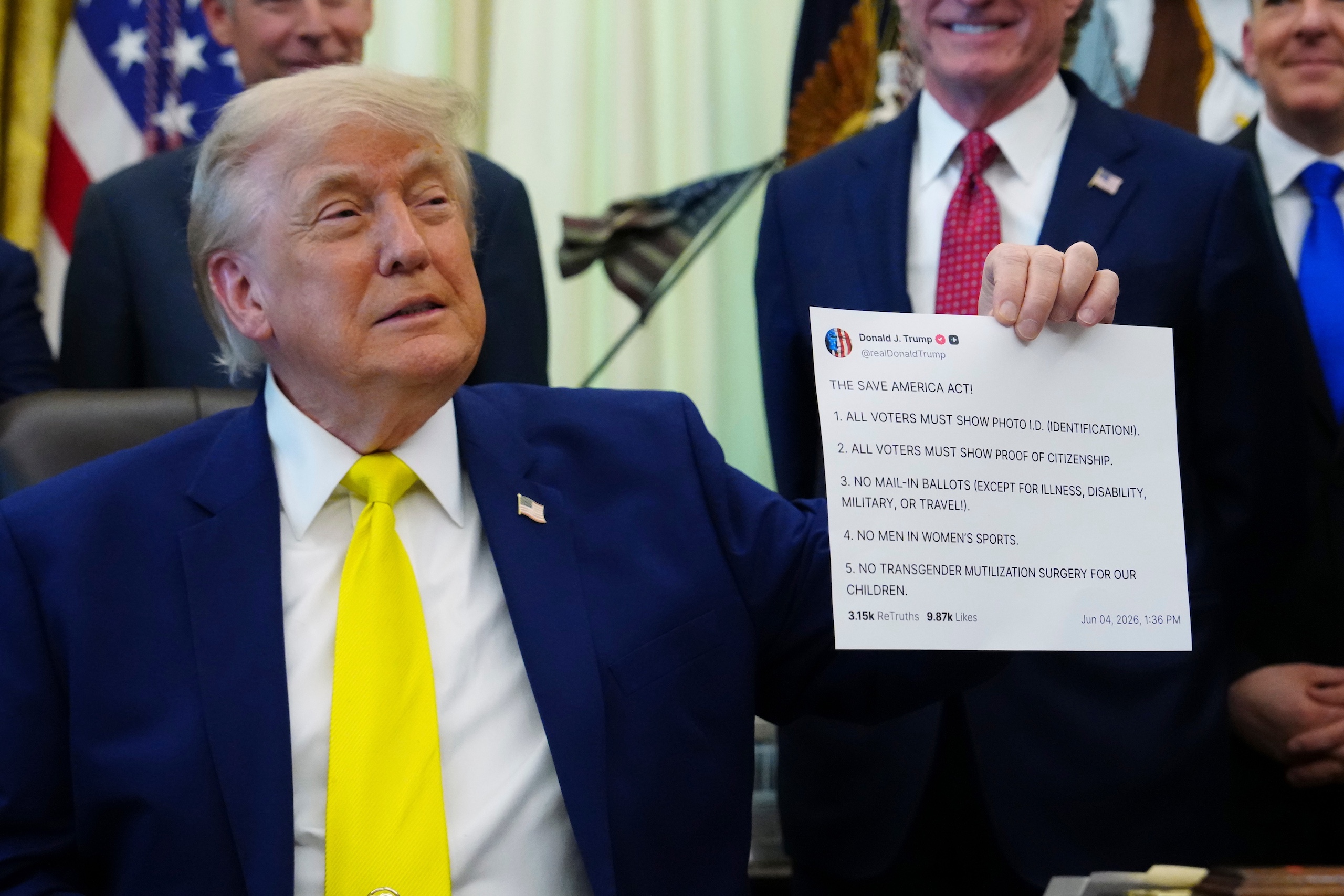
A Justice Department attorney argued Wednesday that the plan was a “completely private commercial decision,” not one made by the president personally.MANHATTAN (CN) — In a bid to justify President Donald Trump’s Truth Social platform charging $100,000 per month for its API, which provides customers instantaneous access to his posts on the site, a Department of Justice lawyer invoked presidents of the nation’s past.“Presidents are often known by the way they communicate,” Brantley Mayers of the DOJ’s civil division said in federal court on Wednesday.Theodore Roosevelt had his fireside chat radio addresses, he said. John F. Kennedy was a master of television.“President Trump uses Truth Social,” Mayers added.He was mere seconds into his argument when U.S. District Judge Paul Oetken, a Barack Obama appointee in the Southern District of New York, cut him off.“Well, President Roosevelt didn’t charge money for his fireside chats, did he?” Oetken asked.Mayers noted there were still barriers to entry. One needed a radio to listen — that costs money. But Roosevelt, himself, of course, did not charge for the radio speeches.That’s the central issue in a novel case over Trump’s controversial API subscription service, billed as a way for traders to get instantaneous access to the president’s market-moving announcements. According to online media publication The Intercept, which sued the administration in August over the scheme, it’s an affront to the First Amendment that could force media companies into buying the expensive service to avoid getting beaten to stories.Lawyers for the national outlet came to court on Wednesday for a hearing to convince the judge that, as long as the API is online, Trump should not be permitted to use Truth Social to make initial public announcements.It’s an issue of first impression. No elected official of Trump’s significance has owned a media company that has charged for quicker access to an official’s statements.“There hasn’t really been anything like this case,” Oetken noted from the bench.He initially appeared skeptical of the harm The Intercept and other media publications are facing. After all, the API doesn’t give exclusive access to Trump’s posts, but access that is quicker by potentially a fraction of a second.That’s valuable time for an algorithmic trader, but for a journalist claiming First Amendment violations, Oetken wasn’t so sure.“It’s a negligible delay to a human being,” he said.David Schulz of Yale Law School’s Media Freedom & Information Access Clinic disagreed. Representing The Intercept, Schulz argued the president’s “audacious” scheme places his client at a “direct disadvantage” with a media competitor who, theoretically, would choose to purchase the service.Unequal access to the platform could also be problematic for reasons of historical recordkeeping, Schulz added, given Trump’s often erratic nature on social media.“He will post things and then take them down,” he said.Schulz additionally criticized the scheme as “clearly corrupt,” noting his concerns with the fact Trump would effectively be using his office to profit to the tune of $1.2 million per year, per subscriber.“That simply can’t be the world we live in,” he said.Meanwhile, Mayers attempted to distance the president from the actions of his company. Truth Social isn’t a party to this case — only Trump and other White House officials like Daniel Scavino and Natalie Harp.Mayers insisted the choice to charge for Truth Social’s API wasn’t Trump’s personally but a “completely private commercial decision” made by his media company.Oetken acknowledged the potential discriminatory nature of creating “two classes of people,” one with instant access to Trump’s statements and one without. But he was also hesitant that he had the power to dictate where a president can communicate publicly.He didn’t immediately rule from the bench after Wednesday’s hearing, instead issuing a written decision.The Intercept and the Freedom of the Press Foundation sued in August after Truth Social announced the plan to charge for its API service. They claimed it was a “profoundly corrupt” effort to line the president’s pockets using his public, market-moving announcements.Trump has been routinely criticized for using his presidency to boost his own net worth, which has ballooned during his second White House stint.Subscribe to our free newslettersOur weekly newsletter Closing Arguments offers the latest about ongoing trials, major litigation and rulings in courthouses around the U.S. and the world, while the monthly Under the Lights dishes the legal dirt from Hollywood, sports, Big Tech and the arts.Additional Reads
DOJ defends Trump charging $100K for early access to Truth Social posts
Full Article
Original Source
Read the full article at Courthousenews →KhanList aggregates and links to publicly available news content. We do not host full articles from third-party sources. Always verify important information with original sources.