
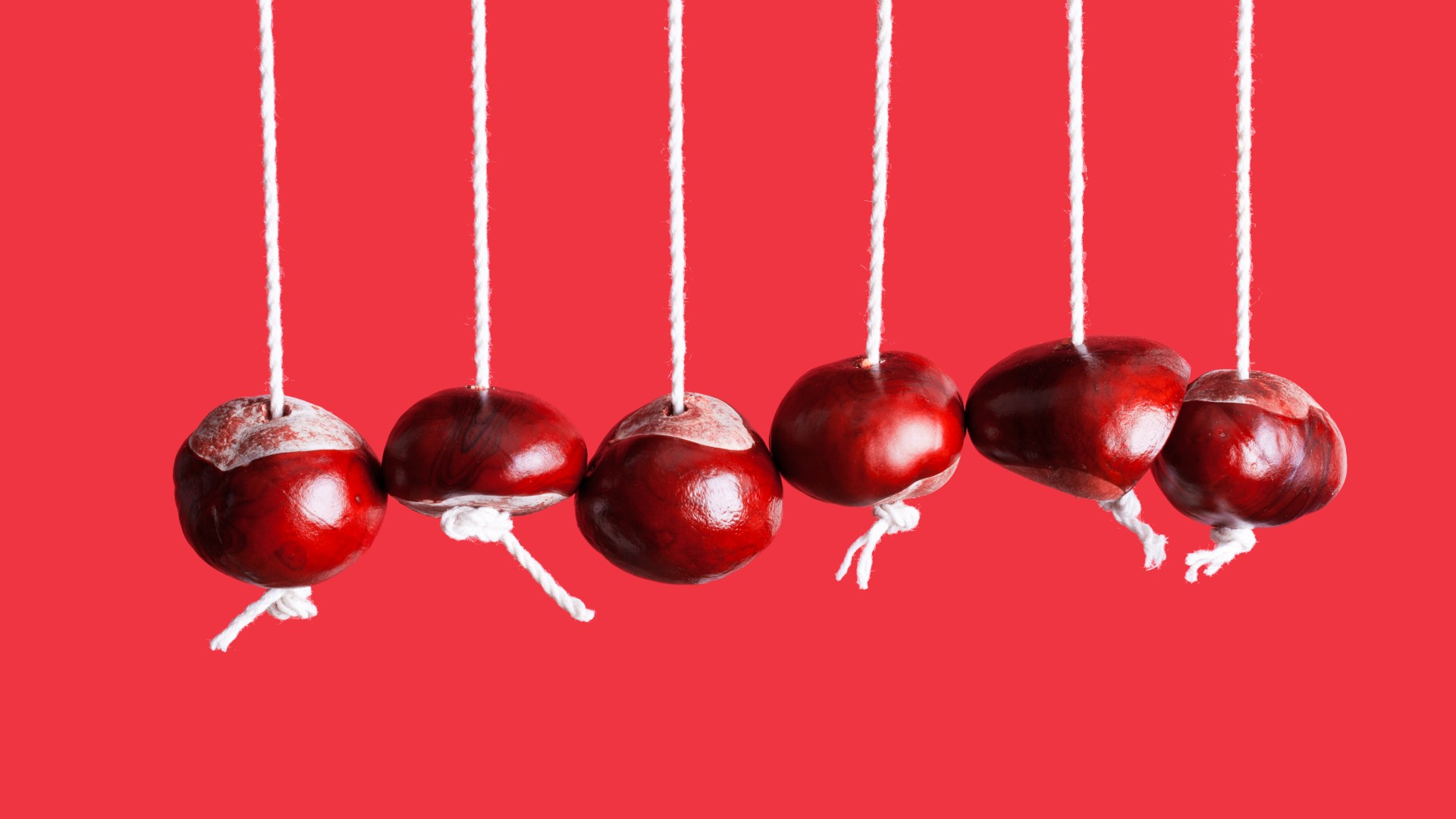
IF you are one of the millions of Brits who suffer from arachnophobia, September and October can be a scary time of year. For generations, people have scattered conkers around windowsills and doorways in the belief they keep them at bay. September and October are mating season for many UK spiders Credit: Getty A male Giant House spider on a bedroom carpet and close to the wall. A close-up and very well focussed image with copy space. Credit: Getty The timing makes the theory seem plausible, with conkers dropping just as spiders become much more noticeable in British homes. But is there actually any science behind the autumn trick? Sign up for The Sun newsletter Thank you! Do conkers repel spiders? For all of us who are terrified of the eight-legged little monsters, spider season poses a number of challenges. All of a sudden you are constantly getting webs in your face as you walk down the street and an army of spiders is invading your home and car. This is because September and October are mating season for many UK spiders. So while humans head indoors as the weather turns colder, arachnids are also on the lookout for shelter. Unfortunately, there is no good evidence that horse-chestnut conkers will repel spiders around your home. Rod Crawford, an arachnid curator at the Burke Museum in the US, says his own experience contradicts the popular claim. Most read in The Sun He said: “I like horse chestnuts and usually have some around, but still have plenty of spiders.” Rod also poured cold water on the idea that spiders can simply be driven away using strong household smells. He told AFP: “Most spiders cannot detect airborne odors.” In 2010, pupils at Roselyon School in Cornwall tested the conker theory for a Royal Society of Chemistry competition. The majority of the spiders crawled over the conkers, while most also chose to cross a bridge made from conkers rather than one made of wood. However, a 2018 peer-reviewed study published in the Journal of Economic Entomology found that chestnut fruit repelled two of three spider species tested. But the researchers used sweet chestnuts rather than conkers, so the results don’t prove that horse chestnut seeds can stop spiders from entering your home. In 2024, botanist and naturalist Phil Gates investigated claims that saponins – compounds found inside conkers – could be responsible for repelling spiders. After conducting his own experiment for BBC Wildlife Magazine, he concluded it seemed unlikely that the “compounds inside a conker would have any impact”. How can you keep spiders out of your home? Physical barriers are a more reliable option than scattering conkers around the house. The Natural History Museum recommends closing windows where practical and sealing gaps using plaster, draught excluders or insect screens. Peppermint is another widely suggested natural deterrent – and unlike conkers, there is some experimental evidence behind it. The same 2018 study found peppermint oil repelled two of the three spider species tested, although the results do not show that spraying peppermint around a house will keep every species away. Despite lemon being one of the most commonly suggested spider deterrents, researchers in the same study found lemon oil had no repellent effect on any of the three species. There is also little reliable evidence that chalk, hand sanitiser, vinegar, cinnamon or star anise will keep spiders at bay. So while a bowl of conkers on the windowsill may look suitably autumnal, you shouldn’t bank on it keeping your home spider-free. Comment now
Do conkers repel spiders? Experts explain if horse chestnuts can really keep arachnids away
Full Article
Original Source
Read the full article at Thesun →KhanList aggregates and links to publicly available news content. We do not host full articles from third-party sources. Always verify important information with original sources.