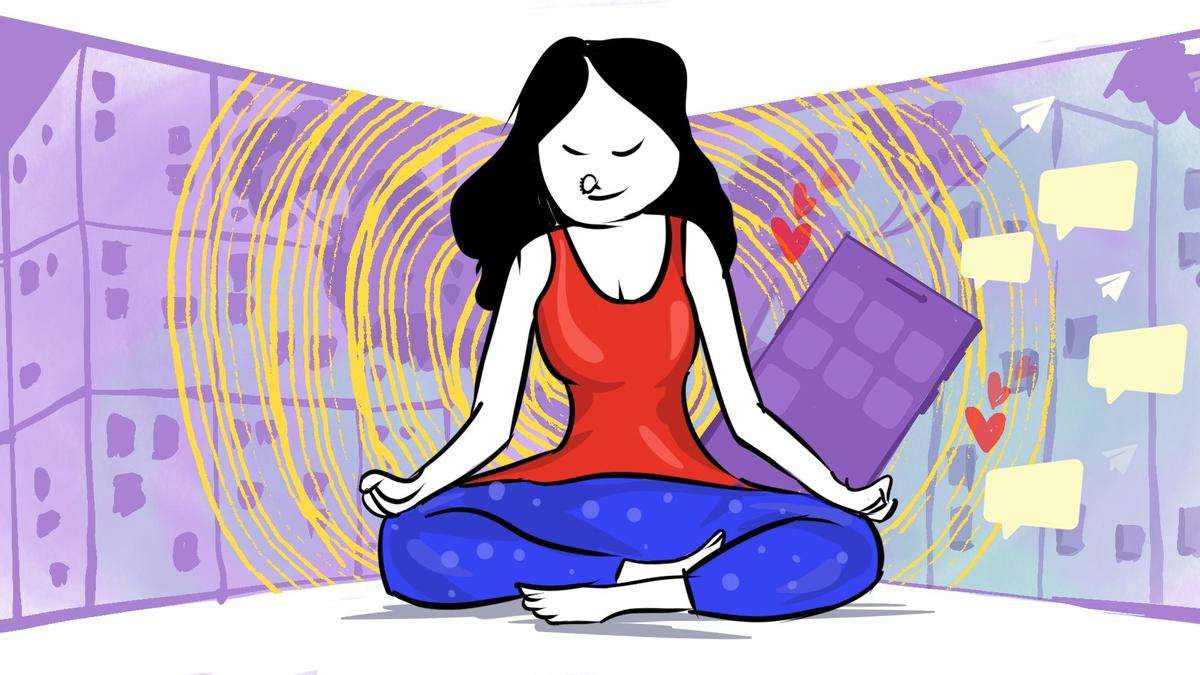
My algorithm on Instagram gives me two completely different sets of stories. One is of Sonam Wangchuk, who has lost weight drastically while on a hunger strike demanding education reforms, and the other is a series of fitness influencers telling me how I can, and need to, lose weight. While one is advocating for collective change, the other focuses on the self. And I think it is symptomatic of what we as a society have become. Self- improvement has completely overtaken collective and community improvement.The fitness and wellness influencers think the only indicator of discipline today is doing hard things such as “waking up at 5 a.m.”, “dunking your face in ice”, “seven-step skin care”, and “getting your protein intake”. But the fitness world did not invent discipline. People have been doing hard things all the time. Why is it that the only discomfort that we have grown to admire is “how she works out despite having a hectic job” or “look, he works so hard to get those abs”?Sadly, anyone who has stood at a protest, waited outside a government office for permission, designed and promoted a petition, run a fundraiser, created an awareness campaign, knows that a life in public services requires discipline and stamina.But then why is that not spoken of with the same regard and admiration?Why does it suddenly become “NGO work”, “do-gooding”, or “volunteering”, worthy perhaps, but not admirable in quite the same way?The issue is not that every person with an audience or a social media account must become a full-time activist or comment on every cause. It is that an entire economy of “visible” wellness and fitness discipline stops at the edge of the invisible wellness and fitness of public life. Every private discomfort is now a start-up or private solution. Don’t have a footpath? Buy this compact treadmill. Don’t have shade in your streets? Buy this sunblock. Don’t have access to healthy food? Buy this new supplement. Don’t have time to exercise your body? Buy this 10-minute workout plan. But ask the same people to question what solutions we can collectively bargain for or demand. Silence. Taking a stance might mean “losing audience”, “losing clients”, or perhaps worse, retribution from higher authorities.But what then can we say of people who continue speaking up for the greater good despite these threats? Somewhere along the way, has the self-improvement project gone too far? How did we get here? We know that all the solutions today’s businesses and marketers are peddling are actually problems created by us, our corporations, and our governments. If we all put our heads together, we can make it happen. But it requires us to come together. It requires getting to know and truly loving your neighbour. It needs you to look at the trees on your street and ask how to care for them better. It needs us to segregate our waste before it reaches a landfill. It needs us to demand better footpaths and public transport.So I thought I would borrow some of the language of fitness and return it to public life. We need resilience not only for our guts and nervous systems; we need it in our neighbourhoods, streets and cities. The kind that helps us survive flooding, heat, bad planning, neglect and indifference.Social strengthWe need strength not only in our muscles but also in communities marginalised by caste, class, gender, and sexuality. We need to strengthen workers’ groups, resident associations, youth clubs, public schools, unions, libraries and all the fragile places where people are already holding each other up. A society is not strong because a few people can deadlift twice their body weight. It is strong when the most vulnerable are not left to carry everything alone.We need endurance, yes, but not only for our hearts and lungs. We need endurance for sustained political action. For petitions that take months. For ward meetings that are boring. For protests that are inconvenient. For causes that do not resolve themselves in one viral post. We need flexibility too, not just in our hips but also in our ability to listen, change our minds, make room for people unlike us. We need to admit when the world is more complicated than our preferred narrative.We need “showing up” for not just for coffee raves, shopping pop-ups, and curated weekend plans, but also heritage walks, local libraries, artist studios, recycling centres, neighbourhood clean-ups, and conversations with the people who live next door. And, most of all, we need discipline — not the discipline of becoming a better-looking, better-performing individual, but the discipline of staying with a place, a problem, a community, long after it stops being inspiring.The next project cannot be only self-improvement. It has to be collective improvement too, because we need not only stronger bodies but also a stronger public life.gayatri.nair@gmail.com
Discipline for the greater common good
Full Article
Original Source
Read the full article at Thehindu →KhanList aggregates and links to publicly available news content. We do not host full articles from third-party sources. Always verify important information with original sources.