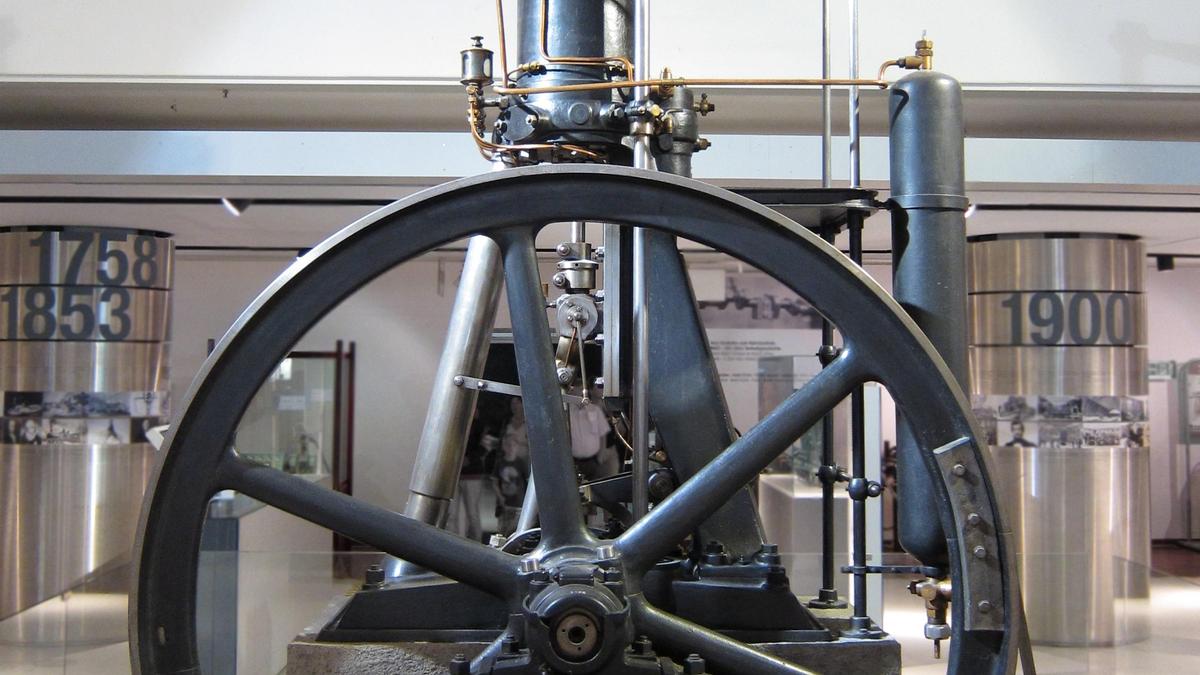
What are your motivations? Barring what we do spontaneously, almost all of our actions are driven by motivations. It is, in fact, all-encompasing, starting from the seemingly mundane to those that define us as a being.In case you are wondering how, think about this. We brush and bathe for our own wellbeing. We behave a certain way with our friends and family members, motivated by our own perception of ourselves. We study and work to fulfil our own goals, objectives, and ambitions. You get the drift. Be it the one sitting next to you as you are reading this, or the one who is looking to run for a country’s highest office in the future, everyone has their own motivations to do what they do. The scientists and inventors, whom we often place on a pedestal after their accomplishments, aren’t too different. Even in the case of serendipitous inventions and discoveries, the ones working on it have put themselves in a position to notice what is panning out through a lifetime of conditioning to spot those very things. And then, there are those who spend a lifetime towards a goal, without certainty as to whether it will ever be realised or not. French-born German engineer and inventor Rudolf Diesel neatly fits into the second category. Rudolf Diesel. | Photo Credit: Wikimedia Commons Man of many talentsNow best remembered for the engine that bears his name, Diesel was much more than just an inventor. He dabbled with languages, admired the arts, and was also a social theorist who tried to study and understand existing social phenomena. In fact, his concept of sociological needs was one of his prime motivators as an inventor. That, along with creative mechanical designs and a thorough understanding of heat transference by natural physical processes or laws, were the three underlying commonalities in most of Diesel’s inventions. As a thermal engineer of repute, Diesel was working on refrigeration with the Linde Ice Machine Company in Paris. His mind, however, was never too far from his desire to build an engine for everyone. If we clock back to this time in the second half of the 19th Century, we would encounter a world driven by steam. While trains and factories were powered by steam, transport on the road was still dependent on horses. Early versions of internal combustion engines that ran on petrol and gas made their way.Inefficient mechanismsAs a student, Diesel was drawn towards thermodynamics and he was stoked when he learnt that it was theoretically possible to convert all heat into work with the right internal combustion engine. Armed with this knowledge, and the fact that existing steam and gasoline engines only converted about 10% of heat to useful work, Diesel got to work.For Diesel, the problem that he was trying to solve wasn’t purely one of engineering. Looking around, it was obvious to him that the steam-powered engines were limited to industrial set-ups. In other words, the engines that were being used at the time were reserved for those who wielded wealth. Diesel dreamt of creating an engine that would be more efficient than the engines of the time, thereby becoming more accessible to smaller players with lower budgets. Diesel soon fully devoted his efforts towards this dream, experimenting with a number of engine designs in the 1880s. One such engine nearly cost him his life, as the steam engine that employed ammonia in its power making process exploded during testing. His vision was never the same again, but he continued working tirelessly once he had recovered, churning out innovative designs, one after another. Visitors at an auto expo in 2018 look at a modern diesel engine. | Photo Credit: Spielvogel / Wikimedia Commons Successful demonstrationDiesel finally had his success in 1893. On August 10, 1893, his prime model – one 10-foot iron cylinder with a flywheel at its base – ran on its own power for the very first time at Augsburg, Germany. He spent the next couple of years refining the design and on July 15, 1895, filed for a U.S. patent titled “Internal-combustion engine”. By the time Diesel received that patent on August 9, 1898, he had demonstrated a more powerful four-stroke engine with the aid of several German firms. With a theoretical mechanical efficiency of 75.6%, this engine was a marked improvement to other existing systems. Even though in reality it converted only 26.8% of heat contained in the fuel into effective power, it was still two and a half times better than its rivals. Part of the reason for diesel engine’s efficiency lies in how it ignites the fuel. Wherein petrol engines compress air and fuel together and ignite it with a spark plug, diesel engines compress only the air, making it hot enough to ignite the fuel when it enters. Different fuelsWhile we associate the diesel engine only with petroleum diesel – a crude oil derivative that is cheaper than petrol – Diesel himself designed his engine to use a variety of fuels. At the Paris World Fair in 1900, Diesel demonstrated a model that was based on peanut oil and his engine could run on many others, from coal dust to vegetable oils. Diesel believed that vegetable oils could become an important source of fuel, rivalling petroleum products. Again, Diesel was excited at the prospect of his engine helping develop poor, agricultural economies.Even though Diesel set out to create something that would benefit the local artisans and smaller companies, his invention, like many others before and after, benefitted large scale industrialists the most. His engines were used in factories and industries across fields and his patents made him wealthy, at least for a period. “I am firmly convinced that the automobile engine will come, and then I consider my life’s work complete.”Rudolf DieselDiesel once stated that “I am firmly convinced that the automobile engine will come, and then I consider my life’s work complete.” While he wasn’t around to realise that, his life’s work was indeed completed as his diesel engines continue to power automobiles to this day. In fact, his engines not only power passenger cars, but are also employed in commercial vehicles, lorries, locomotives, watercraft, and in the aviation industry. A mysterious disappearance One reason why Diesel didn’t live long enough to see his engine being used in automobiles is owing to the fact that he disappeared in mysterious circumstances. On September 29, 1913, Diesel vanished off the face of the Earth while on his way to London. His body washed ashore days later and his death remains a mystery till this day. While some believe he committed suicide, there are others who believe it was murder. There are a number of conspiracy theories, each one as likely or unlikely as the other. There’s one that talks about financial ruin leading to his suicide. There’s another – given that his death happened just before the start of World War I – that says that he was murdered to stop him from selling his patents to a rival government. And a third suggests that he was murdered by agents from oil corporations to ensure that it remained the dominant source of fuel. We don’t know yet as to what really happened. Enough evidence hasn’t been uncovered to reveal the truth. But that isn’t to say that the truth will never come out.
Diesel’s desire: an engine for everyone
Full Article
Original Source
Read the full article at Thehindu →KhanList aggregates and links to publicly available news content. We do not host full articles from third-party sources. Always verify important information with original sources.