
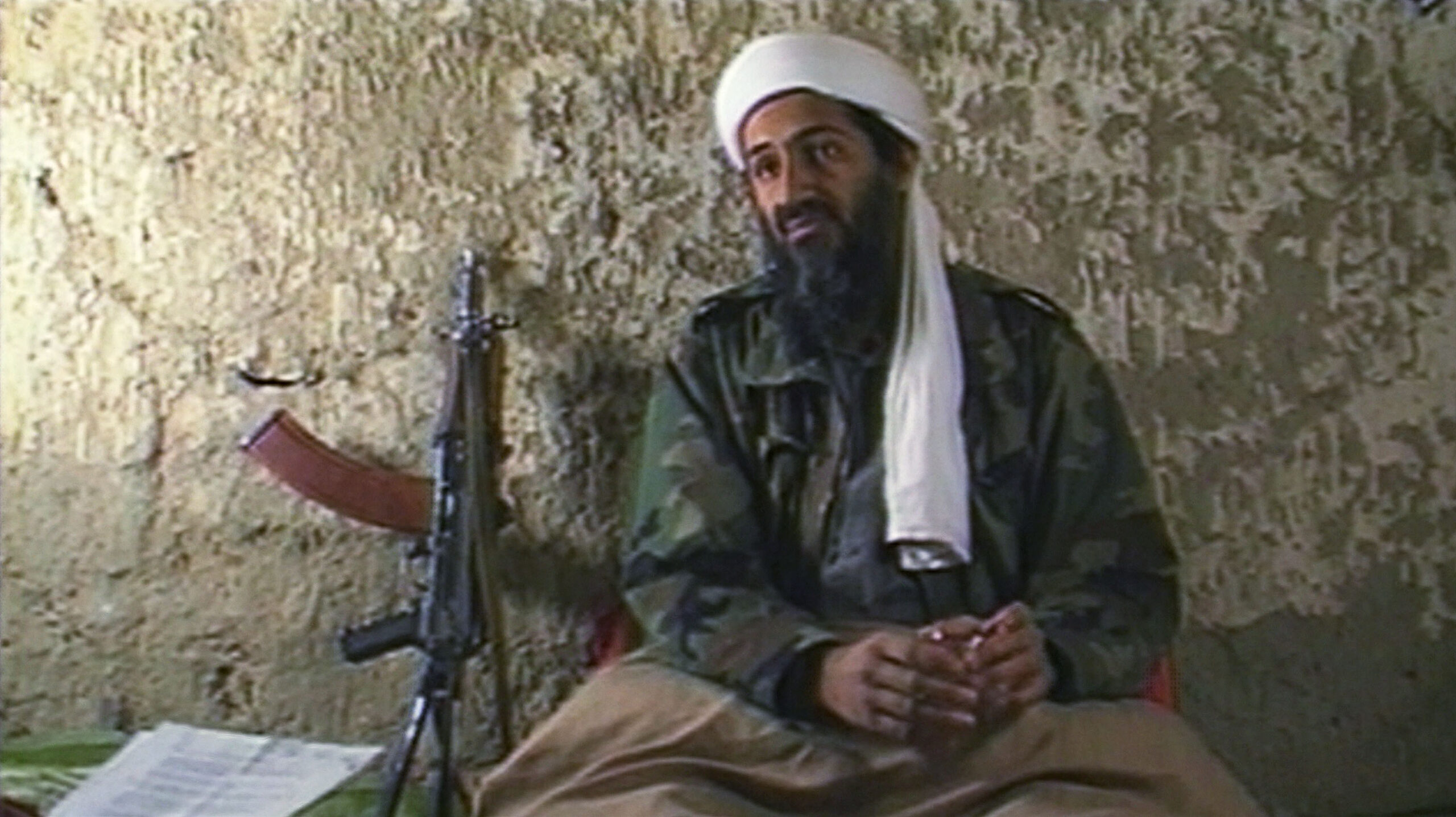
Foreign Affairs Preventing future blowback requires a foreign policy of peace. Photo by CNN via Getty Images On September 11, 2001, al Qaeda terrorists hijacked four planes. Two of these were flown into the Twin Towers, one into the Pentagon, and the fourth—en route to Washington, D.C.—crashed in a Pennsylvania field after its passengers heroically overpowered the hijackers. All told, 2,977 Americans were killed on that day. Shortly thereafter, the Bush administration would launch the invasion of Afghanistan and begin laying the groundwork for war against Iraq. According to Brown University’s Costs of War project, the military interventions we collectively know as the Global War on Terror (GWOT) led to the deaths of over 900,000 people and cost the United States more than $8 trillion. Afghanistan and Iraq ended in failure. Most Americans (at least, those not named Marc Thiessen or Bill Kristol) believe that the post-9/11 wars in the Middle East were a mistake. Indeed, this was a major part of Donald Trump’s initial appeal: “They lied,” he said of the GWOT’s architects in 2016. We are now a quarter of a century on from the horrific events of September 11. And looking back, it is more important than ever to understand what caused them, and why bin Laden seemed to have gotten what he wanted out of the attacks. The truth of the matter is that bin Laden did not come out of a vacuum. Al Qaeda did not emerge suddenly from the mountains of Afghanistan in 2001. The terrorism that confronted us at the beginning of the 21st century was a product of history—a history formed by policy choices, including on the part of the United States. Despite pat talk of bin Laden hating us for our freedom, his motivations had more to do with the effects of decades of U.S. involvement in the region than an abstract contempt for our way of life. Bin Laden was an Islamist and a fanatic, and his ideology gave him a simplistic view of reality. He saw America as an implacable aggressor against Muslims, attacking his coreligionists across the Middle East and Africa. He believed the presence of Americans in his home country of Saudi Arabia—host to Islam’s two holiest sites—was defiling, an occupation demanding resistance. As the al-Qaeda leader himself put it in 1998: Your situation with Muslims in Palestine is shameful.… Also, according to testimony of relief workers in Iraq, the American-led sanctions resulted in the death of over one million Iraqi children. All of this was done in the name of American interests. We believe the Americans are the biggest thieves and terrorists in the world. One can choose to disbelieve bin Laden, of course; to hold, perhaps, that he suddenly discovered a copy of our constitution in Afghanistan and conceived an implacable hatred for America. But it would not change the fact that U.S. foreign policy seems to have played a major role in his radicalization, not to mention his success in recruiting fellow Islamists to commit themselves to terroristic war against a country 7,500 miles away. Nor did Bin Laden change his rhetoric following the attacks. More than a year later, he wrote his notorious “Letter to America.” In it, he sought to answer the question, “Why are we fighting and opposing you?”“The answer is very simple: Because you attacked us and continue to attack us.”(In the aftermath of Hamas’s October 7 attacks against Israel, this letter controversially resurfaced on TikTok, where its condemnation of the “military occupation for more than 80 years” of Palestine attracted the attention of many of that platform's Gen Z users.) Having established bin Laden’s motivation, one might still ask what his strategy was. Was it simply to attack U.S. financial infrastructure? Or maybe revenge for its own sake, under the guise of jihad? Bin Laden himself told us his strategy: to induce a series of retaliatory moves that would bleed America dry. Bin Laden was a veteran of the U.S.-supported Mujahadeen that, through Operation Cyclone, bogged down the Soviet Union in Afghanistan for a decade beginning in 1979. It is clear the Al Qaeda leader saw his strategy with the United States as similar, saying as much in a 2004 video transcribed by al Jazeera. He recalled fighting alongside the Mujahadeen to try forcing Russia into bankruptcy and a humiliating withdrawal. “So we are continuing this policy in bleeding America to the point of bankruptcy,” he explained.Game, set, match. Hasn’t Osama Bin Laden gotten everything he wished for? The financial costs have taken an undeniable economic toll, fueling unprecedented levels of debt. The human costs have soured many Americans, not just on Mideast wars, but on the elites who got us into them (and indeed, these elites continue to draw us into them). Syria is now run by a former member of al Qaeda, who has been welcomed to the White House. Bin Laden laid the bait for the U.S. to exhaust its own power; Presidents Bush, Obama, Biden, and Trump all took it. There is still a need, 25 years on, to ask how this happened and what we should have done differently. Was bankrupting our country and sending our young men and women off to die in the Middle East worth it? There were, as it happens, other options. We might have undertaken a more surgical response; Rep. Ron Paul (R-TX) introduced legislation that would have authorized letters of marque targeting Bin Laden and Al Qaeda. The Taliban actually offered to extradite bin Laden to a third party if proof was provided to them of his guilt in the September 11 attacks. America was not compelled by 9/11 to bog itself down in a decades-long conflict in Afghanistan (nor, for that matter, in Iraq). We did not have to give bin Laden exactly what he wanted.It’s worth recalling what Harry Browne, the Libertarian Party candidate in 2000, courageously wrote just one day after the towers fell: When will we learn that we can’t allow our politicians to bully the world without someone bullying back eventually? President Bush has authorized continued bombing of innocent people in Iraq. President Clinton bombed innocent people in the Sudan, Afghanistan, Iraq, and Serbia. President Bush, senior, invaded Iraq and Panama. President Reagan bombed innocent people in Libya and invaded Grenada. And on and on it goes. Did we think the people who lost their families and friends and property in all that destruction would love America for what happened? When will we learn that violence always begets violence? Subscribe Today Get daily emails in your inbox The truth is that our foreign policy was on autopilot for decades. Grand strategy is abstract and intimidating (or, worse, boring) to many Americans; the results are often so distant from our everyday lives that we tend to ignore them to focus on domestic issues. It is only when blowback occurs that the consequences of our foreign policy become stark and unignorable. And if we fail to learn the lessons of the past, we will continue to fall into the traps laid by enemies like bin Laden. So we must be honest about one of the reasons al Qaeda attacked on September 11: our foreign policy involved us in the killing of innocent people abroad. Every missile lobbed at an apartment building, every village attacked by Israeli settlers, every child suffering from malnutrition under U.S. sanctions—that is somebody’s September 11. We saw how America responded to the deaths of our own. How else can we expect others to react when our government inflicts harm on them? But to understand is not to excuse, and still less to justify. The attacks of September 11 were an atrocity, a horrid crime committed against innocents. But by understanding why it happened, we can help ensure it doesn’t happen again. The surest way to protect our country is to turn away from the temptations of empire and military domination. Peace is the only foreign policy that doesn’t create terrorists abroad. That is our only option.
Did Bin Laden Defeat America?
Full Article
Original Source
Read the full article at Theamericanconservative →KhanList aggregates and links to publicly available news content. We do not host full articles from third-party sources. Always verify important information with original sources.