
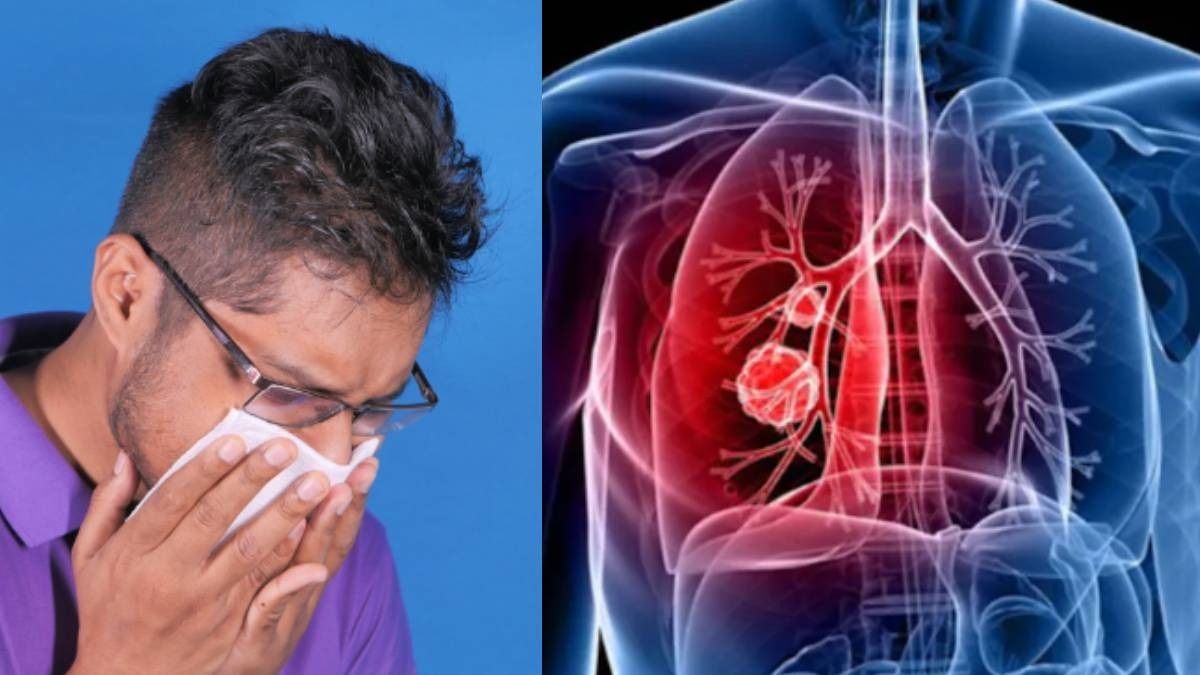
Six Delhi hospitals recorded more than 6,500 new lung cancer cases from 2020 to July this year. Doctors say the figures may understate a changing disease burden increasingly affecting non-smokers.Lung cancer was the leading killer among all malignancies in India in 2024More than 6,500 new lung cancer cases and a death every third day across six hospitals in Delhi from 2020 to July this year, including premier health institute All India Institute of Medical Sciences (AIIMS), point to a growing disease burden in the national capital.But the figures obtained through a right to information (RTI) query by news agency PTI may capture only a fraction of the problem, as lung cancer increasingly strikes people who have never smoked, including women, amid prolonged exposure to toxic air.The data from six hospitals in Delhi comes at a time when the capital and much of North India are choking under high pollution levels, with the hazardous air quality index (AQI) becoming a recurring winter crisis.While tobacco remains the biggest risk factor for lung cancer, doctors are increasingly concerned about a changing patient profile – younger people, women and non-smokers who have lived for years in polluted environments. The scale of the disease nationally is equally alarming. According to Globocan 2024 estimates, India recorded 1,12,659 new lung cancer cases that year, making it the third most common cancer. Also, it caused 98,687 deaths, ranking first among all cancers in mortality.Lung cancer remains among the country's deadliest malignancies and is the leading cause of cancer deaths globally, largely because it is frequently detected at an advanced stage. The Delhi figures, however, may not reflect the full burden of the disease. Patients from across the National Capital Region often seek treatment at hospitals outside the six institutions covered by the RTI, while many may be diagnosed or treated in other cities."The RTI numbers are a warning, but they probably understate the problem," said Dr Nitesh Rohatgi, medical oncologist at Fortis Gurugram. He said the actual picture could be far scarier, given the growing number of patients being seen beyond the hospitals covered by the data.A CHANGING PATIENT PROFILELung cancer is no longer being seen only among people with a history of smoking. Doctors in North India are increasingly reporting cases among non-smokers, including younger patients and women. Adenocarcinoma, a subtype of lung cancer more commonly associated with non-smokers, is also becoming more prominent."More and more people are getting lung cancer in Delhi and all over India, there is definitely something wrong," said Dr Geeta Kadayaprath, principal lead, Apollo Athena Women's Cancer Centre.Smoking remains the strongest established risk factor, but it is not the only one. Long-term exposure to outdoor air pollution, passive smoking, household pollution from cooking fuels and occupational carcinogens can all contribute to lung cancer risk.The concern in Delhi-NCR is the duration and intensity of exposure. PM2.5 particles are small enough to travel deep into the lungs. Prolonged exposure can trigger inflammation, oxidative stress and cellular damage, processes that may contribute to cancer development, stressed Dr Indoo Ammbulkar, medical oncologist with HCG Cancer Hospital in Mumbai.The World Health Organization's cancer research agency, the International Agency for Research on Cancer, has classified outdoor air pollution and particulate matter as carcinogenic to humans. While pollution cannot be identified as the cause of every individual cancer, its contribution to the overall disease burden is a growing public-health concern.SYMPTOMS OFTEN DISMISSEDOne of the biggest reasons lung cancer remains deadly is that it is often diagnosed late. Early disease may produce few or no symptoms, while signs that emerge – persistent cough, breathlessness, chest pain, unexplained weight loss or blood in sputum – are frequently attributed to respiratory infections, tuberculosis or pollution.In much of India, where tuberculosis remains prevalent and pollution-related coughs are common, patients may undergo repeated treatment for respiratory complaints before cancer is suspected."Most patients reach us at stage III or IV, when treatment is largely palliative," Dr Rohatgi said, pointing to delays in investigating persistent coughs that are often treated as tuberculosis or pollution-related illness.Late diagnosis sharply narrows treatment options. Although advances in targeted therapies and immunotherapy have improved outcomes for some patients, the benefits depend on timely diagnosis, appropriate molecular testing and access to treatment.India also lacks a screening strategy that adequately captures people who may be at risk despite never having smoked. Low-dose CT screening is recommended for certain high-risk smokers, but those criteria may not identify non-smoking patients whose risk comes from environmental exposure or other factors.PREVENTION BEYOND SMOKINGClinicians and public health specialists say India needs a broader approach to lung cancer prevention and detection, one that moves beyond tobacco control to include air pollution, occupational exposure, indoor air quality and early investigation of persistent symptoms.Molecular testing is another critical gap. A significant proportion of Indian patients have actionable genetic mutations such as EGFR and ALK, which can make them eligible for targeted therapies. But testing and treatment costs remain prohibitive for many.Dr Rohatgi called for a lung cancer registry, risk-based screening models tailored to Indian populations, clearer referral pathways for persistent respiratory symptoms and more affordable access to diagnostics and medicines.- Ends
Delhi's lung cancer crisis is alarming. The real toll may be worse
Full Article
Original Source
Read the full article at Indiatoday →KhanList aggregates and links to publicly available news content. We do not host full articles from third-party sources. Always verify important information with original sources.