
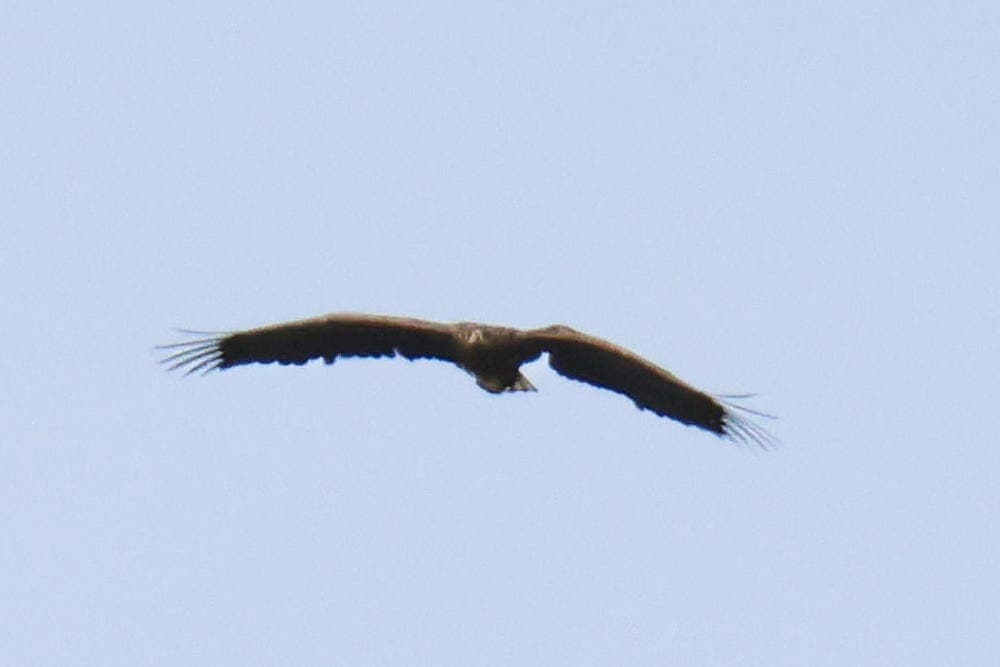
A “death defying” white-tailed eagle has been spotted in the skies above Mull three years after breaking a wing in a fall from his nest as a chick.Experts feared the chick might not survive after the fall during bad weather in July 2023.However the bird fledged and the following year was spotted at a new nest site where his parents were continuing to feed him, a behaviour that had never been seen in the species before.The bird of prey, nicknamed Kinky due to the kink in his wing, was then seen flying above the island of Eorsa in Loch na Keal in Mull in July 2025.Kinky was seen in the skies above Loch Spelve (Beth Shiels/PA)Kinky has recently been seen again on Mull in the skies above Loch Spelve, to the delight of nature lovers.Naturalist and presenter Iolo Williams was working as a wildlife guide for Nature Scotland Wildlife Tours when he saw the bird of prey last month.He said: “I’d heard the incredible story of Kinky’s survival against the odds in 2023 and his parents still caring for him over a year later.“To now see him alive and well, aged three and approaching maturity, is an absolute joy.“Kinky is a truly inspirational eagle.”The bird will not reach sexual maturity and find a mate until he is aged around five.However he has started to develop the beginnings of his adult plumage, including the tail changing from brown to the distinctive white that gives the species its name.Experts said the potential for conflict with other eagles will increase as he gets older.RSPB ambassador Dave Sexton said: “I’m in awe of this bird.“He had a death-defying start in life but things are about to get even tougher.“As he nears maturity, looking for a mate and a territory of his own, he might clash with established pairs and that doesn’t always end well.“But Kinky’s a born survivor; I’m keeping everything crossed for him.”White-tailed eagles were driven to extinction in the UK in the early 20th century, with the last native bird shot in Shetland in 1918.In 1975, a reintroduction project was started in Scotland and a self-sustaining population has since been established.Further reintroduction projects have seen the species return to England and Northern Ireland and there are now around 200 pairs across the UK.
‘Death defying’ eagle spotted three years after breaking wing as chick
Full Article
Original Source
Read the full article at Standard →KhanList aggregates and links to publicly available news content. We do not host full articles from third-party sources. Always verify important information with original sources.