
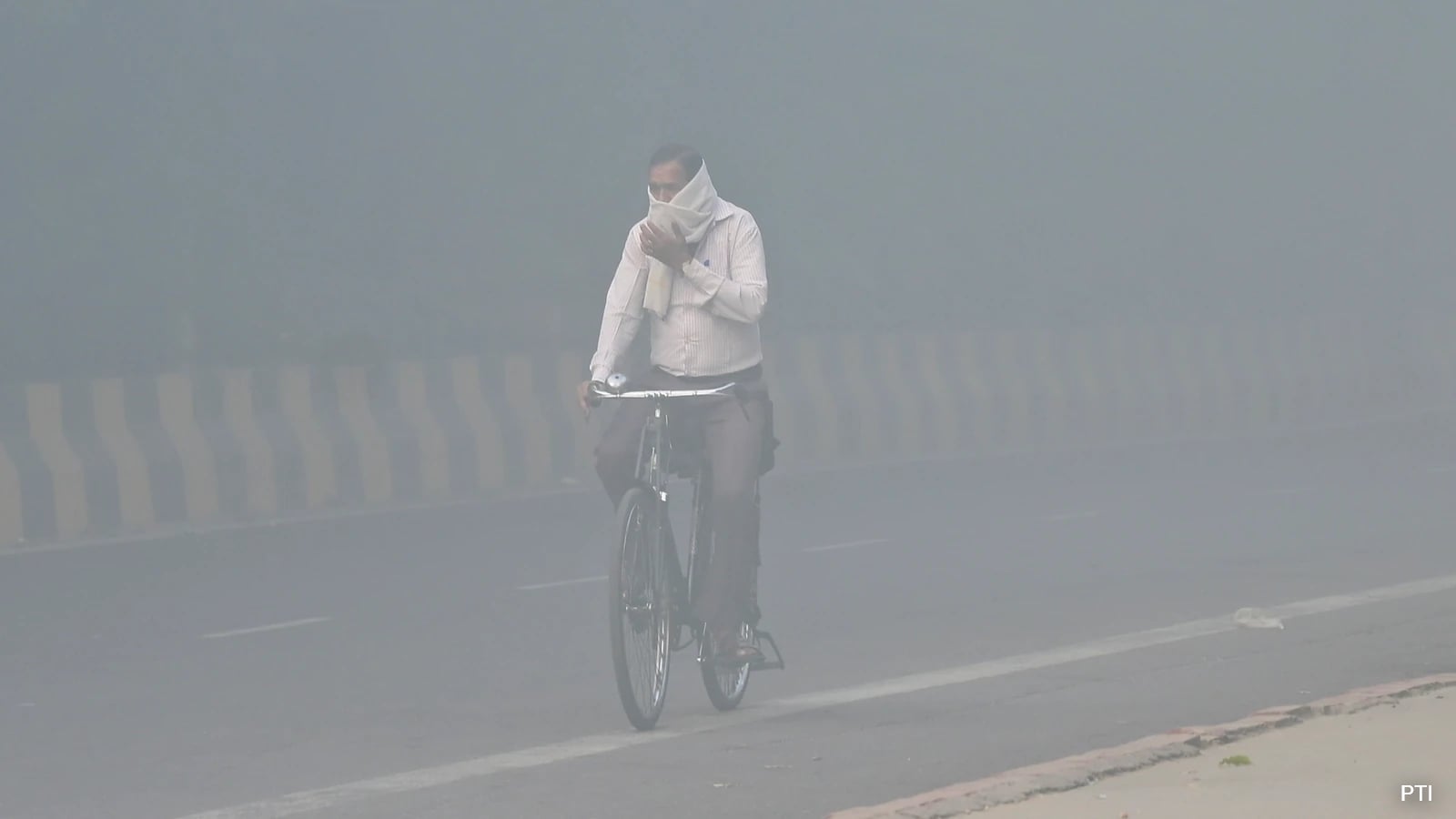
New Delhi: Every year as winter arrives, the national capital faces the grimly familiar routine - skies draped in a heavy, suffocating grey haze amid dropping temperatures. As the season changes, the pollution also spikes, driven by festive emissions, vehicular pollution, construction dust, stubble burning residue, among other factors.This year is no different. Diwali this year was the fourth most polluted day of the entire year, recording a staggering daily average PM2.5 concentration of 257 µg/m³, according to research conducted by Dr. Manoj Kumar of the Centre for Research on Energy and Clean Air (CREA). The days leading up to the festival-November 5, 6, and 7-offered no respite, ranking as the sixth, seventh, and eighth worst air quality days of 2026, respectively. Compounding the alarm, Diwali 2026 stood out as the fourth most polluted Diwali the capital has witnessed since 2016.As distressing figures emerge, discourse has inevitably returned to the root causes of the crisis. This year, firecrackers have once again taken center stage, sparking a highly polarized debate over stringent regulations and the viability of "green" alternatives.READ | "Even When There Is No Stubble Burning...": AAP Attacks BJP Over PollutionThe "Green" Alternative What grabbed much attention this year was the manufacturing and marketing of green crackers, developed under the CSIR-NEERI framework to target a minimum 30% reduction in particulate matter compared to conventional variants.However, environmentalist Abhiir Bhalla said that green crackers are "nothing more than greenwashing" and "rarely meet the prescribed emission thresholds"."If a bureaucrat like Tukaram Mundhe were overseeing manufacturing and supervision with strict, uncompromised enforcement, maybe we could talk, but right now? It's just another term invented to throw dust in our eyes - literally," Bhalla told NDTV. Another environmentalist, Siddhant Sarang, noted that green crackers "should not be mistaken for pollution-free crackers" but only a "step towards reducing the environmental impact" of firecrackers. READ | 'Pollutyens' Delhi, 'Chandni Choke': Shashi Tharoor Shares Hilarious Names For Delhi Areas Amid Pollution Crisis"The CSIR-NEERI framework requires green crackers to demonstrate a minimum 30% reduction in particulate matter emissions compared with conventional crackers or meet prescribed combinations of particulate and gaseous emission reductions. This is a meaningful technological intervention, but a reduction in emissions per cracker does not automatically translate into a proportionate reduction in overall pollution. The total number of crackers used, duration of bursting, concentration of use in particular areas and prevailing weather conditions all matter," Sarang said. He also flagged how ground enforcement failures allow conventional crackers to flood markets disguised with fake certification logos, completely defeating the purpose of the policy.Analysing Spikes Beyond FestivalsWhile experts agree that firecrackers are not the sole cause of Delhi's year-round air pollution crisis, their immediate impact is undeniable.An IIT-Delhi study published in 2022 found that fireworks account for roughly 95% of elemental PM2.5 during peak celebrations. "Firecrackers are a significant contributor to the sudden deterioration in air quality around Diwali, particularly because they release large quantities of particulate matter and other pollutants over a very short period. However, it would be scientifically incorrect to attribute the entire post-Diwali pollution burden to firecrackers," Sarang said.READ | Delhi's Post-Diwali Toxic Haze Leads To 44% Delay In Flight DeparturesHe added that firecrackers contribute to the immediate pollution spike, while other factors such as vehicular emissions, industrial activity, construction dust, biomass burning and unfavourable winter meteorological conditions contribute to the wider and more persistent pollution crisis. "We need to address both the festival-related pollution spike and the structural sources of pollution throughout the year," he said. Echoing the same, Bhalla said that firecrackers cause massive and concentrated toxic spikes right after festivals like Diwali, shooting PM2.5 levels off the charts overnight. "However, science and data tell us that Delhi's crisis is a year-round, regional fossil-fuel and governance problem. Stubble burning accounts for only a minor slice of the annual pie (averaging around 3.5% seasonally), and crackers are a severe seasonal shock. But the baseline poison comes from our vehicles, industrial clusters in the airshed, secondary particles, and year-round dust," he said. The Enforcement Void And The Data BlindspotThe Supreme Court of India ruled out a complete national blanket ban on firecrackers. Instead, the top court took an approach that permits regulated use of certified green crackers during designated hours while leaving localized restrictions to state and municipal authorities. Talking about enforcement, Bhalla points to areas across Delhi where timing violations and late-night celebrations go unpunished due to reactive, weak enforcement."If you look at community compliance, it's a complete failure. Enforcement is weak because authorities only react when the AQI hits severe levels, instead of acting proactively. Whether it's a Pollution Under Control (PUC) certificate check or firecracker timing limits, people treat rules as optional. When enforcement agencies look the other way or accept token fines, localized enforcement becomes a joke. Real change requires stringent checks at the point of sale and active community policing, not just empty advisories," he said. CREA's findings also revealed alarming data gaps during the peak of the pollution event:Missing Data: 36 monitoring stations across Delhi lacked hourly PM2.5 data at 1:00 AM on November 9, right when pollution levels peaked amid stagnant atmospheric conditions.The Capping Problem: Stations like Siri Fort maxed out at 1,000 µg/m³-the absolute ceiling displayed on the CPCB-CCR public portal. Because the portal cannot display readings above this threshold, critical questions remain about how accurately extreme, off-the-chart toxin concentrations are being communicated to the public.READ | Delhi's Air Quality Improves To 'Poor' Due To Increased Wind SpeedA Call For AccountabilityThe Supreme Court's approach reflects an attempt to balance environmental concerns with the right to celebrate, moving away from an outright prohibition towards regulated use, Sarang said, adding that the real test of any such policy is whether it delivers measurable improvements in air quality. "The debate should not be reduced to a binary choice between a complete ban and unrestricted celebrations. What matters is whether regulation is scientifically backed, consistently enforced and supported by public cooperation. Otherwise, we risk repeating the same cycle every year, where restrictions are announced before Diwali, but their effectiveness remains questionable," Sarang said. Bhalla noted that a regulatory framework on paper means nothing when enforcement is practically non-existent.
Data Blindspots, Weak Rules: Inside Delhi's Annual Battle For Clean Air
Full Article
Original Source
Read the full article at Ndtv →KhanList aggregates and links to publicly available news content. We do not host full articles from third-party sources. Always verify important information with original sources.