
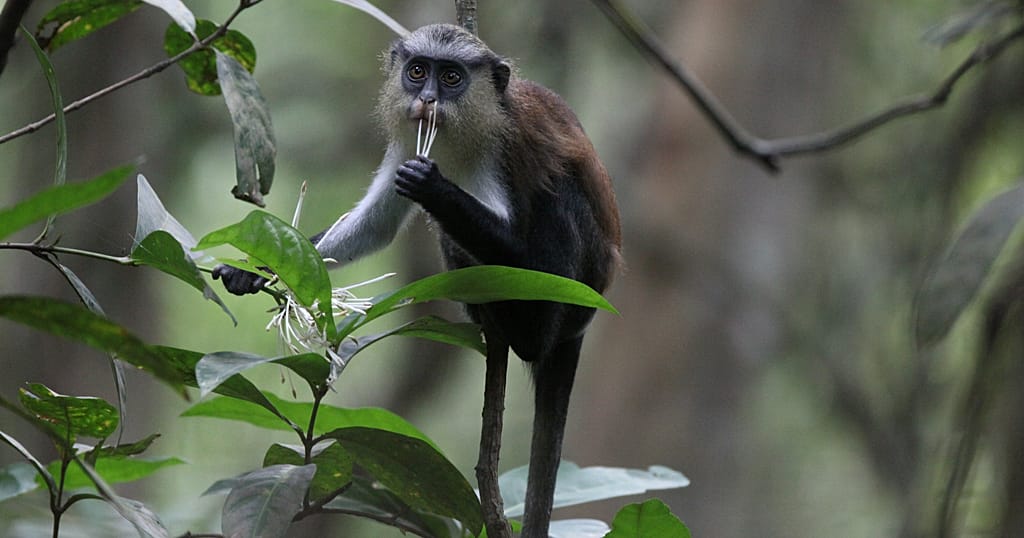
Amid the sprawling concrete landscape of Lagos, one of Africa’s most densely populated megacities, a 78-hectare stretch of wetlands and forest offers a rare escape from the urban hustle. The Lekki Conservation Centre, established in 1990 by the Nigerian Conservation Foundation, is a vital ecological sanctuary preserving some of the natural landscape increasingly threatened by the city's rapid expansion. As residential developments, roads and other infrastructure continue to reshape Lagos, the centre stands as an important green lung, providing a refuge for wildlife and an opportunity for city residents and visitors to reconnect with nature. For visitors, the attraction goes beyond its natural surroundings. The centre's upkeep and conservation efforts offer a welcome contrast to the challenges of maintaining public spaces in Nigeria. Sarah Omorodion, tourist: "What I am really proud of is the maintenance because I think that it's something that is usually lacking in Nigeria. I think we should try to maintain more things like this." For other visitors, the sanctuary provides a rare opportunity to experience nature in a city better known for its traffic, crowded neighbourhoods and constant construction. Andrea Nicolucci, tourist: “Personally, I am very happy to see this place because in a chaotic and big city like Lagos, places like this where you can see nature that is pure and original are very important to understand the country." But preserving this natural environment is becoming increasingly difficult as urban development closes in on the reserve. Project Manager Stephen Aina says the growing human footprint around the conservation centre is one of its biggest challenges. Residential estates and land reclamation are putting pressure on the wetlands, with sand-filling activities altering natural water flows and threatening parts of the ecosystem. "One of the major challenges is the engulfment by human activities. If you look around the center there are residential areas and you hardly can have buildings around without sand filling. At the moment we are having a pool of water gathering within the center which is of course causing damage to some of our facilities even including the trees." Despite these challenges, the centre is finding innovative ways to bring people closer to nature and raise awareness about the importance of protecting the environment. One of its biggest attractions is a 401-metre suspended canopy walkway, elevated about 22 metres above the forest floor. Recognised as Africa's longest canopy walkway, it offers visitors a unique perspective of the reserve while allowing them to explore different levels of the forest. Abanj James Kejin, Canopy Walk Supervisor, Lekki Conservation Centre: "It is designed in such a way that it will give you access into the 4 layers in the forest. The forest floor, the understory, the canopy and then the emergent. The emergency is where you go above the forest cover." The walkway is more than a tourist attraction. It provides an opportunity for visitors to appreciate the complexity of forest ecosystems and understand what is at stake as urban development continues to expand. Established by the Nigerian Conservation Foundation in 1990, the 78-hectare reserve remains an important site for biodiversity conservation, environmental education and ecotourism in Lagos. As Lagos continues to grow, the Lekki Conservation Centre highlights the importance of protecting green spaces within rapidly expanding cities. Its future, however, will depend on how effectively conservation efforts can keep pace with the pressures of urbanisation. For now, this pocket of wilderness remains a reminder that even in a city dominated by concrete, nature still needs room to breathe.
Lekki Conservation Centre: Lagos’ Green Oasis Battling the Pressures of Urban Expansion
Full Article
Original Source
Read the full article at Africanews →KhanList aggregates and links to publicly available news content. We do not host full articles from third-party sources. Always verify important information with original sources.