
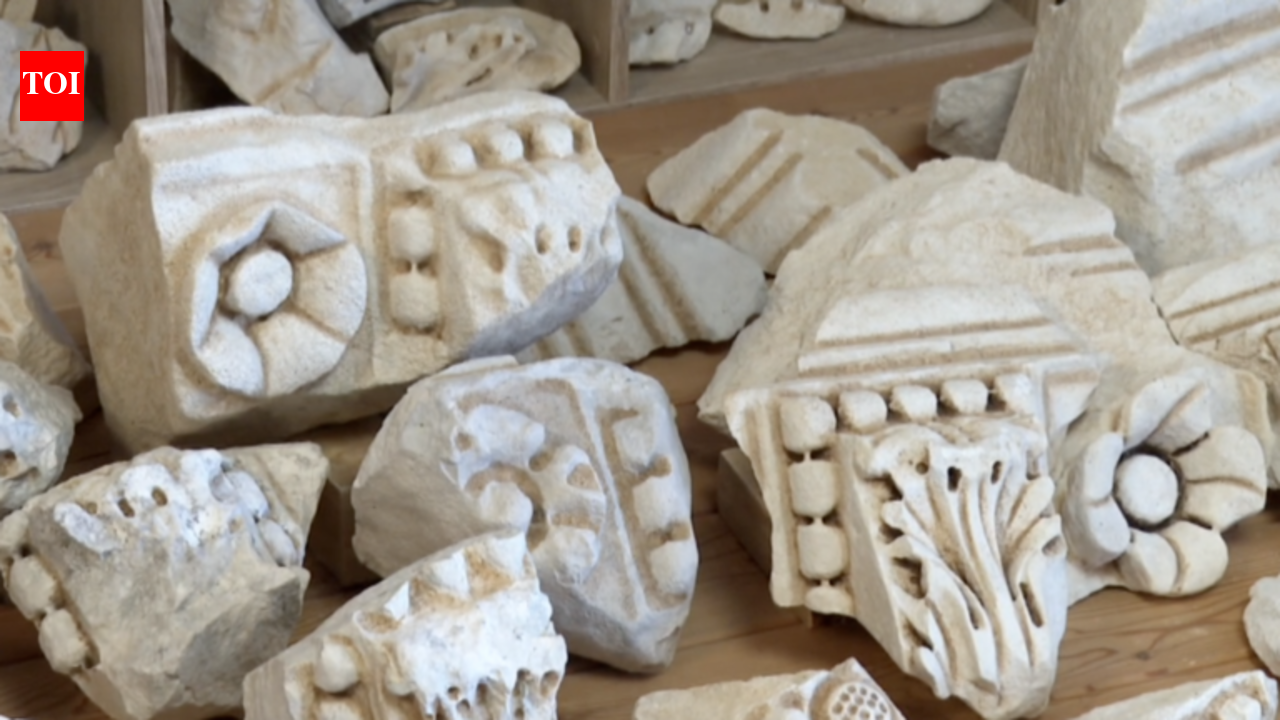
Image Credit: Ivana Ivanović/PIXSELLIf you use the same stones from centuries-old monuments to build your home, does that make your home a centuries-old monument? This question might come to mind while reading further.People have used stones to build their homes for millennia. Across generations, old buildings have been dismantled, their stones reused in walls, houses, barns and other structures. Sometimes, these stones carry fragments of a history that the people using them may not even know about. What appears to be an ordinary piece of building material could once have belonged to a temple, a public monument or even an imperial structure.Something remarkably similar happened in Dicmo, a small settlement in Croatia, where a retired architect spent nearly five decades collecting carved stones from his family's land. What he had preserved as fragments of an old past would eventually help archaeologists identify a lost Roman triumphal arch, believed to have been built nearly 1,900 years ago in honour of Emperor Trajan.According to a report by Croatian national broadcaster HRT, the stones collected by retired architect Božo Kokan were eventually identified as fragments of a monumental Roman triumphal arch at the Vratnica archaeological site in Dicmo. The monument is believed to have been built in honour of Emperor Trajan, who ruled the Roman Empire from 98 to 117 AD. Archaeological research suggests that the arch dates back to the early second century AD, making it nearly 1,900 years old.How forgotten stones revealed a lost Roman monumentstone fragments from Dimco (Image courtesy of HRT/Croatian Radiotelevision )The discovery has since moved beyond the collection of scattered stones, with systematic excavations revealing more about the monument's original structure and decoration. Professor Dražen Maršić of the University of Zadar, who is leading the archaeological investigation, said the latest excavation season had produced particularly encouraging results.“We believed in us and I think we justified those expectations. We have excellent results, the finds have multiplied several times compared to last year's,” Maršić told Croatian broadcaster HRT.Among the most striking discoveries from the latest excavations are fragments depicting an imperial eagle, a symbol closely associated with Roman power and authority. Archaeologists have also uncovered carved representations of Victoria, the Roman goddess of victory, along with figures of Eros. Other recovered pieces include fragments of decorated pillars and architectural elements that offer clues about how the triumphal arch may have looked before it was dismantled.Boris Rožić Vašiček, deputy head of the excavation, told HRT that the team had recovered several decorative elements, including fragments of pilasters and figures of Eros and Victoria. Among the finds was also a wing and claw belonging to an aquila, the imperial eagle used as a symbol of Roman military and imperial authority.The fragments are significant because they reveal that the arch was not simply a monumental gateway but an elaborate structure decorated with imagery associated with imperial power and victory. Its dedication to Trajan also places the monument within a period when the Roman Empire was expanding its influence across the region.The archaeological work has also extended beyond the arch itself. Researchers have identified another Roman building approximately 100 metres from the monument, where excavations uncovered pottery, roof tiles and a coin belonging to Emperor Diocletian. The discovery suggests that the area may have held a larger Roman settlement or complex whose history is still being uncovered.But the question still persists: how did they know that the stones collected by an old man were nearly 1,900 years old?The clues hidden in the stonesTrajan Forum (Wikimedia commons )The answer lay in the inscriptions and architectural fragments themselves. A closer examination of the stones revealed that they were not simply remains of an old building, but pieces of a much larger Roman monument. Archaeologists identified fragments of a monumental inscription bearing the titles Imperator and Germanicus, which helped narrow down the identity of the emperor to whom the structure had been dedicated.A preliminary analysis of the inscription pointed towards Emperor Trajan. Researchers dated it to around 101 AD based on his imperial titles. Other architectural details, including fragments suggesting an arched structure and elements of its decorative design, helped them establish that the monument was most likely a free-standing triumphal arch rather than a temple, as initially suspected.The findings were documented in a 2024 research paper, Trajan’s Arch from Dicmo: Discovery and Preliminary Analysis, written by archaeologists Nikola Cesarik and Dražen Maršić, along with Božo Kokan. The study examined more than 1,000 fragments recovered from the area.You find the most wonderful things in the most unexpected places. What began as a retired architect's decades-long effort to preserve carved stones from his family's land eventually helped archaeologists piece together a forgotten chapter of Roman history. Nearly 1,900 years after Trajan's reign, fragments of the monument have found their way back into historical memory, reminding us that sometimes the past survives in the most ordinary places, waiting for someone to recognise its significance.So, would you now call the house a monument?
Croatian man's 50-year stone collection traced to lost 1,900-year-old Roman arch
Full Article
Original Source
Read the full article at Timesofindia →KhanList aggregates and links to publicly available news content. We do not host full articles from third-party sources. Always verify important information with original sources.