
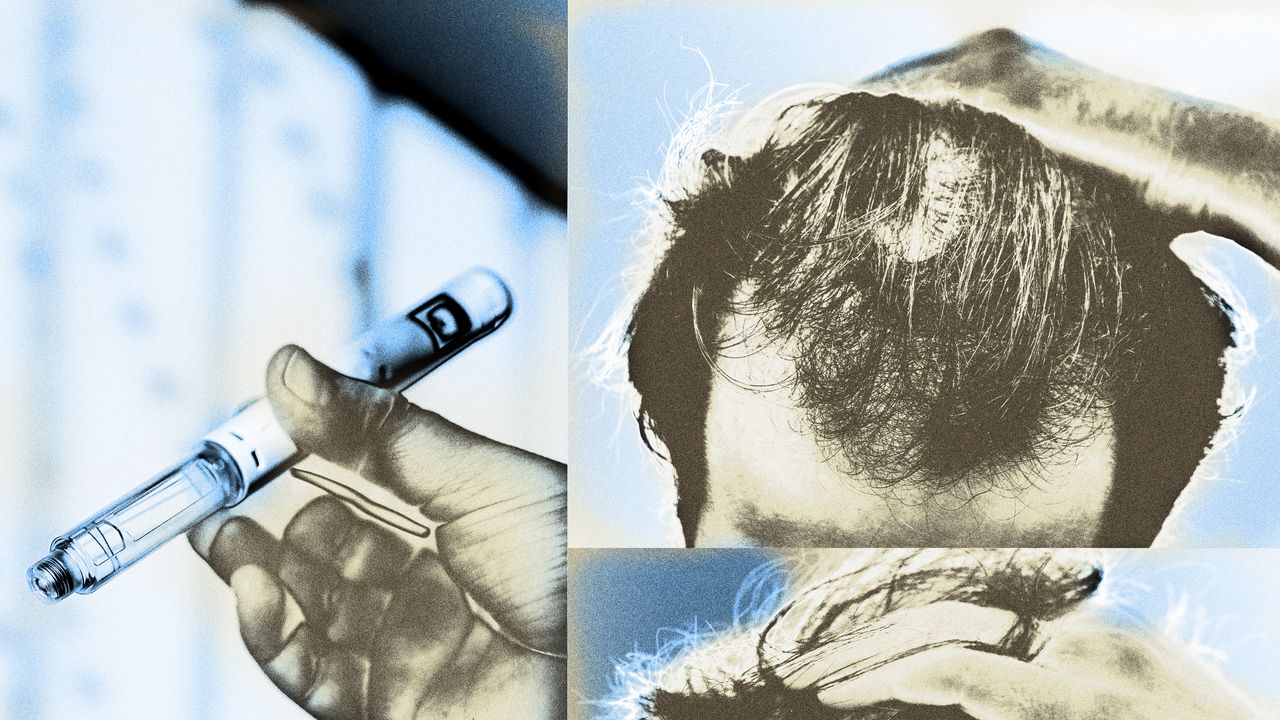
If it feels like everyone you know is on a GLP-1, you’re on to something. A 2026 survey found that 15% of people have used the drug for weight loss at some point in their life. It was initially approved as a treatment for type 2 diabetes, but non-diabetics are now using the medication to help manage weight loss. Some have even started using it as a longevity drug. But like any form of medication, using GLP-1s comes with some potential side effects. These can include gastrointestinal issues—nausea, constipation, diarrhea—as well as adverse effects on mental health. Some users report a loss in satisfaction in food or anxiety linked to eating meals. A recently published study has added a new risk associated with taking the popular weight loss drug: a higher likelihood of hair loss in men.What does the study say?The study, which was published September 3 in the Journal of Investigative Dermatology, was led by researchers at NYU Langone Health who found that men who are already at risk of hair loss have an additional 7% risk of going bald if they start taking GLP-1s. GLP-1, glucagon-like peptide-1, is a naturally occurring hormone in the body that’s released in response to food consumption to signal fullness to the brain. GLP-1 drugs mimic those hormones to tell your brain that you’re already full, even if you haven’t eaten anything.In this study, the researchers focused on the GLP1R gene, which everyone has. More activity from this gene results in an increase in GLP-1 receptor proteins, and those are what bind to the GLP-1 hormone. Having more receptor proteins doesn’t mean you produce more of the GLP-1 hormone, rather it increases the efficacy of GLP-1 medications for losing weight. Basically there are more chances for the hormone to latch onto a receptor to help the sensation of feeling full kick in.Researchers found that people who are predisposed to androgenetic alopecia, a genetic form of hair loss, have more GLP-1 receptor proteins. In comparing the activity of the GLP1R gene in those with androgenetic alopecia versus those without, researchers found that the chances of going bald were 7% higher for those with more GLP1R activity.“It was surprising to see that for some men who have the genetic predispositions for male pattern hair loss, the use of Ozempic or Wegovy could actually trigger or expose that susceptibility,” the study’s senior investigator Dr. Lynn Petukhova says.The study has not found out why GLP-1 use weakens hair follicle growth. Per the researchers, more research is needed to learn about the biological mechanisms.Anecdotally, GLP-1 users have noticed hair thinning while actively taking the drugs. Up until this point, researchers had attributed it to the rapid weight loss that comes with using GLP-1s. This study is the first to find a genetic connection between the drug and hair loss.Should you stop taking GLP-1s if you’re afraid of losing your hair?If you’re worried about hair loss while using a GLP-1, consider seeing a dermatologist, says Dr. Petukhova. Dermatologists can differentiate between temporary hair shedding and male pattern hair loss. If you’re experiencing significant hair loss, they’ll also be able to concoct a plan of action—like prescribing the prophylactic minoxidil.“I don't want GLP-1 users to stop using a medication that's helping them because there are a lot of health benefits to these drugs,” Dr. Petukhova says. “And also what our data suggests is that it is a very small number of people who will experience this.”
Could Your GLP-1 Be Making You Bald? One Study Says Maybe
Full Article
Original Source
Read the full article at Gq →KhanList aggregates and links to publicly available news content. We do not host full articles from third-party sources. Always verify important information with original sources.