
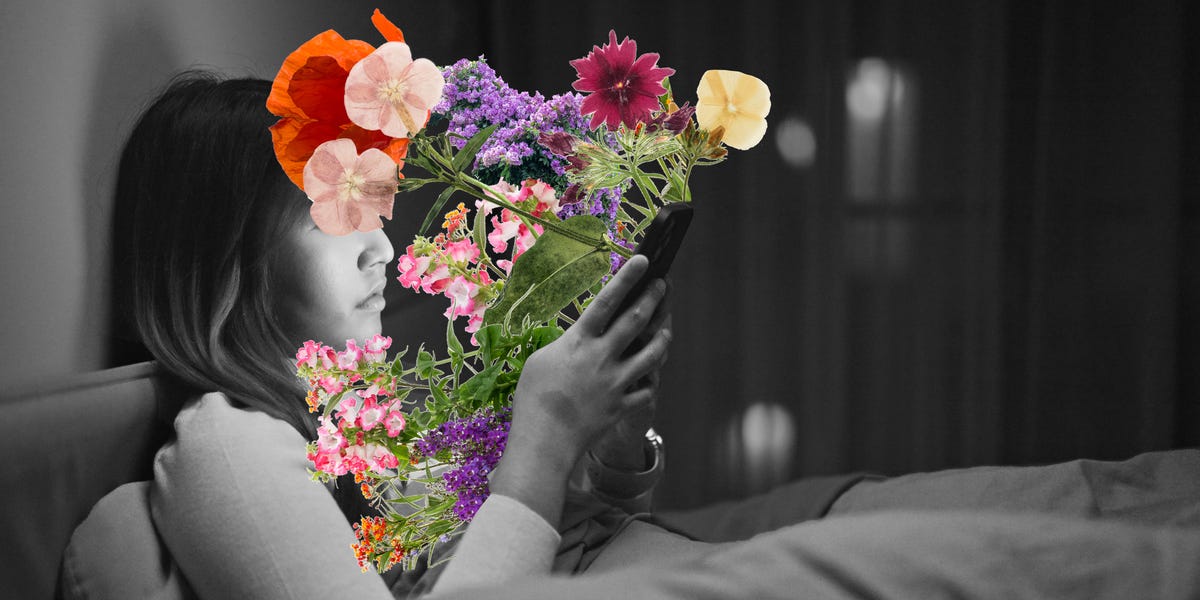
4 min readBloomscrolling is the habit of seeking out positive content online.It’s considered the opposite of doomscrolling, where the content is designed to boost your mood.Psychologists say there can be both good and bad in this practice.It’s no secret that the content you consume can influence your mood. If you stumble across something stressful or triggering, it’s fair to feel upset or moody afterward. Unfortunately, social media is packed with content like this, making it easy to fall into the trap of doomscrolling.Of course, you don’t have to sit back and assume that every interaction online is going to leave you feeling mentally wiped. Now there’s also bloomscrolling, a habit that’s being touted as doomscrolling’s opposite.Bloomscrolling is all about looking for uplifting, happy, and inspiring content with the goal of making you feel better—not worse—afterward. But for all of the hype around bloomscrolling online, can it actually improve your mood and quality of life? Psychologists break it down.Meet the experts: Thea Gallagher, PsyD, clinical associate professor at NYU Langone Health and cohost of the Mind in View podcast; Hillary Ammon, PsyD, a clinical psychologist at the Center for Anxiety & Women’s Emotional WellnessWhere did bloomscrolling come from?It’s not entirely clear. TikTok is packed with videos people have posted in the name of bloomscrolling. Some are all about positive thinking and being silly, while others take the concept very literally and focus on content around flowers blooming.Whatever the exact message, the overall theme is the same: This is content designed to make you feel happy and positive—not stressed out.Why are people bloomscrolling?In general, people are becoming more aware that what they consume impacts how they feel, says Thea Gallagher, PsyD, clinical associate professor at NYU Langone Health and co-host of the Mind in View podcast.“We have a natural negativity bias, so threatening, upsetting, or outrageous information tends to grab our attention very easily,” she says. “That can make doomscrolling almost effortless.” This is why you may click into TikTok to look at one thing and 30 minutes later, leave your scroll session feeling like the world is terrible.That’s why Gallagher encourages her patients to check in with themselves on the kind of content that feeds them emotionally and what feels draining—and to alter their algorithm as best they can based on that. “That might mean more memes that genuinely make you laugh, funny videos, animals, wholesome content, creativity, inspiring stories, or content related to hobbies and interests that make you feel more like yourself,” Gallagher says. “We tend to talk about ‘the algorithm’ as though it's something that simply happens to us, but our behavior helps shape what we see.”Could bloomscrolling actually help your mental health, or is this just another form of brain rot?It can be a little of both. “Positive content can absolutely change our emotional state in the moment. Something funny can interrupt rumination. Seeing kindness or connection can make us feel more hopeful,” Gallagher says. “But I wouldn't assume that content is healthy simply because it's positive.”Bloomscrolling also isn’t a perfect practice, according to Hillary Ammon, PsyD, a clinical psychologist at the Center for Anxiety & Women’s Emotional Wellness. “The internet can be the Wild West, in that you never have complete control over the content you encounter,” she points out. “Even when you think you have the ‘perfect algorithm,’ a video or post may drop in that undoes the purpose of bloomscrolling.”Ammon adds that bloomscrolling “could be OK in moderation,” but she recommends looking for opportunities to use this practice to support human interaction, like sharing something cute or funny you came across with a friend or partner.“Additionally, reflect on when and why you are searching for this content,” Ammon says. “Are you avoiding something bigger and escaping with social media? Are you spending too much time on the internet and not being present in your life?” Basically, the same mental health recommendations apply to bloomscrolling as they do for other content.How to bloomscroll without falling into a time suckGallagher recommends trying to keep yourself in check when it comes to any social media use, including bloomscrolling. “Are you using it briefly to shift your mood, connect with someone, and then returning to your life, or are you using it to avoid your life?” she says. “If you're staying up until 1 a.m. watching heartwarming animal rescues, that's probably emotionally preferable to staying up until 1 a.m. reading terrifying news, but you're still losing sleep because you can't put your phone down. Positive content doesn't cancel out compulsive behavior.”Ammon recommends limiting yourself to 10 to 20 minutes per bloomscrolling session. “Be intentional,” she says. “Take time to reflect on how you’re feeling afterward. Also consider what you learned or what brought you joy.”Gallagher also suggests thinking of bloomscrolling as “more like a snack than a meal.” Meaning, you probably don’t need to spend an hour doing it to get the emotional perks. “Even five or 10 intentional minutes may be enough to interrupt a negative spiral, make you laugh, connect with a friend, or shift your attention,” she says.She also recommends continuing to challenge yourself while bloomscrolling to keep your habit in check. “Ultimately, the goal isn't to build a happier version of compulsive scrolling. It's to use technology in a way that supports the life you're actually living,” she says.
Could ‘Bloomscrolling’ Help Improve Your Quality of Life? What to Know About the New Trend
Full Article
Original Source
Read the full article at Womenshealthmag →KhanList aggregates and links to publicly available news content. We do not host full articles from third-party sources. Always verify important information with original sources.