
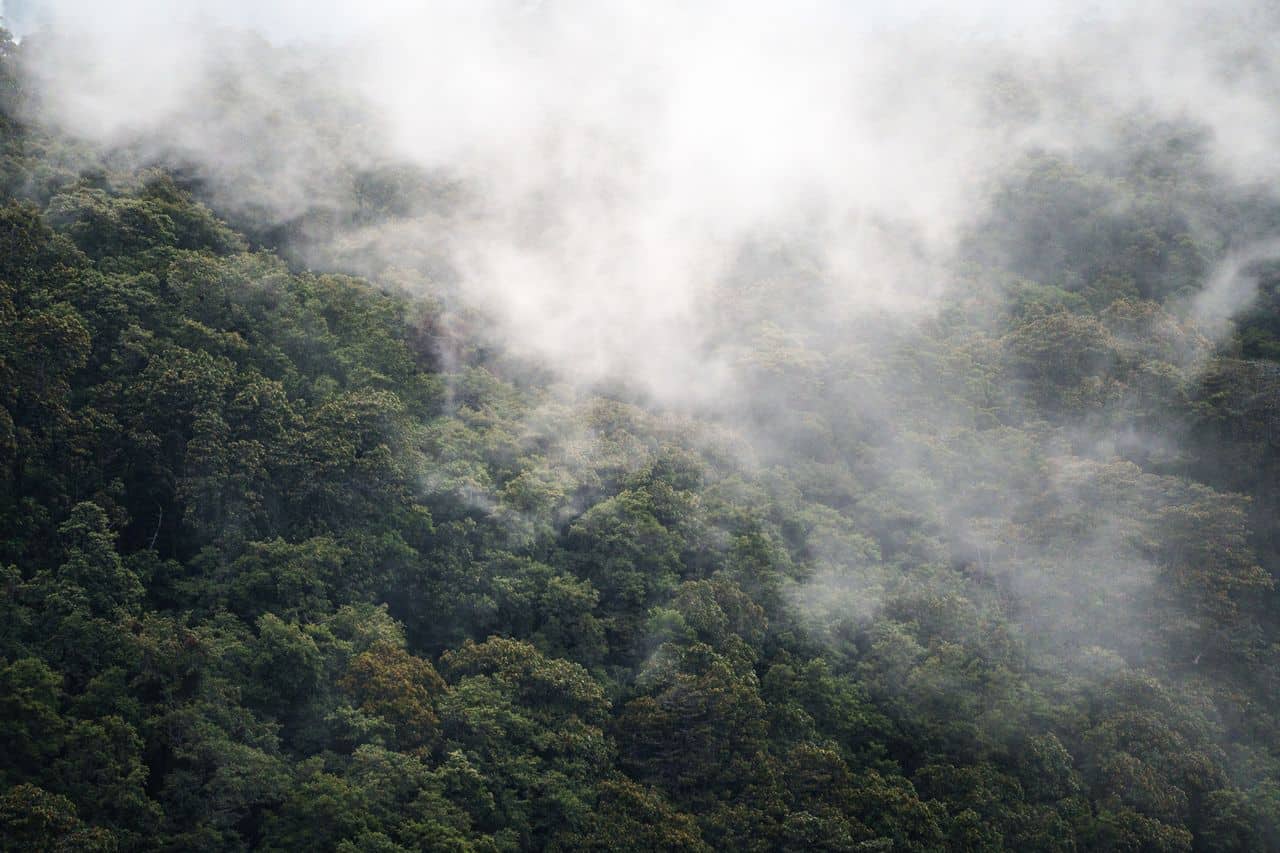
Monteverde remains one of Costa Rica’s wettest places, receiving more than 2,500 millimeters (98 inches) of rain a year. Yet scientists are finding signs of drought in the plants that help give the famous cloud forest its name. The apparent contradiction is the focus of a new PBS science report examining changes inside Monteverde’s forest canopy. Researchers say the problem is not simply how much rain falls each year. It is how long dry spells last and how often clouds and mist come into direct contact with the forest. In a cloud forest, water does not arrive only as rain. Low clouds move through the trees, leaving moisture on leaves, branches, mosses, ferns and orchids. This process, sometimes called horizontal rain, keeps the canopy wet and slowly releases water into the soil and streams below. But as temperatures rise, the altitude at which clouds form can also rise. When clouds pass above the treetops instead of through them, the forest loses a crucial source of moisture even when annual rainfall totals remain high. Researchers featured in the PBS report said Monteverde’s yearly rainfall remains close to levels recorded 50 years ago. What appears to be changing is the length of the dry season and the number of days when mist and fog reach the vegetation. The first plants to show the strain include epiphytes, which grow on trees without drawing nutrients from them. Orchids, bromeliads, mosses and ferns are among the epiphytes that cover Monteverde’s branches and act like living sponges. To study what might happen if those plants disappear, scientists removed the epiphytes from 10 trees and compared them with 10 untouched trees. Monitoring equipment measured temperature, humidity, leaf moisture, sunlight and wind inside the canopy. The stripped trees became hotter and drier. Without the plants to capture and temporarily store water, rain moved through the canopy more quickly instead of being released gradually into the forest. The concern is that the process could feed on itself. Longer dry periods weaken or kill epiphytes. Their disappearance then leaves the remaining canopy warmer and less able to hold water, making other plants more vulnerable. Earlier research supports concerns that Monteverde is receiving less dry-season moisture from mist. A study published in the Journal of Geophysical Research found that this decline has been observed since the mid-1970s. Researchers have examined both warming ocean temperatures and forest clearing at lower elevations as possible factors lifting the cloud base. Computer modeling found that lowland deforestation may have reduced the amount of Costa Rican mountain forest covered by fog by between 5% and 13%, while raising afternoon cloud bases by roughly 25 to 75 meters (82 to 246 feet). The study cautioned that further clearing could push the clouds higher still. The consequences extend beyond the mosses and orchids visitors see along Monteverde’s trails. Cloud forests regulate water, store carbon and provide habitat for amphibians, birds and plants that depend on cool, consistently damp conditions. The Monteverde Cloud Forest Preserve protects more than 4,100 hectares (10,000 acres) of forest. Conservation groups are also restoring cleared land on the Pacific slope with native trees, giving wildlife more connected habitat and helping the landscape retain water. Scientists are not saying Monteverde will suddenly lose its forest. Their warning is that a cloud forest can change gradually even when conventional rainfall measurements appear normal. The amount of rain still matters, but so does whether the clouds continue reaching the trees.
Costa Rica’s Monteverde Cloud Forest Is Drying Despite Heavy Rain
Full Article
Original Source
Read the full article at Ticotimes →KhanList aggregates and links to publicly available news content. We do not host full articles from third-party sources. Always verify important information with original sources.