
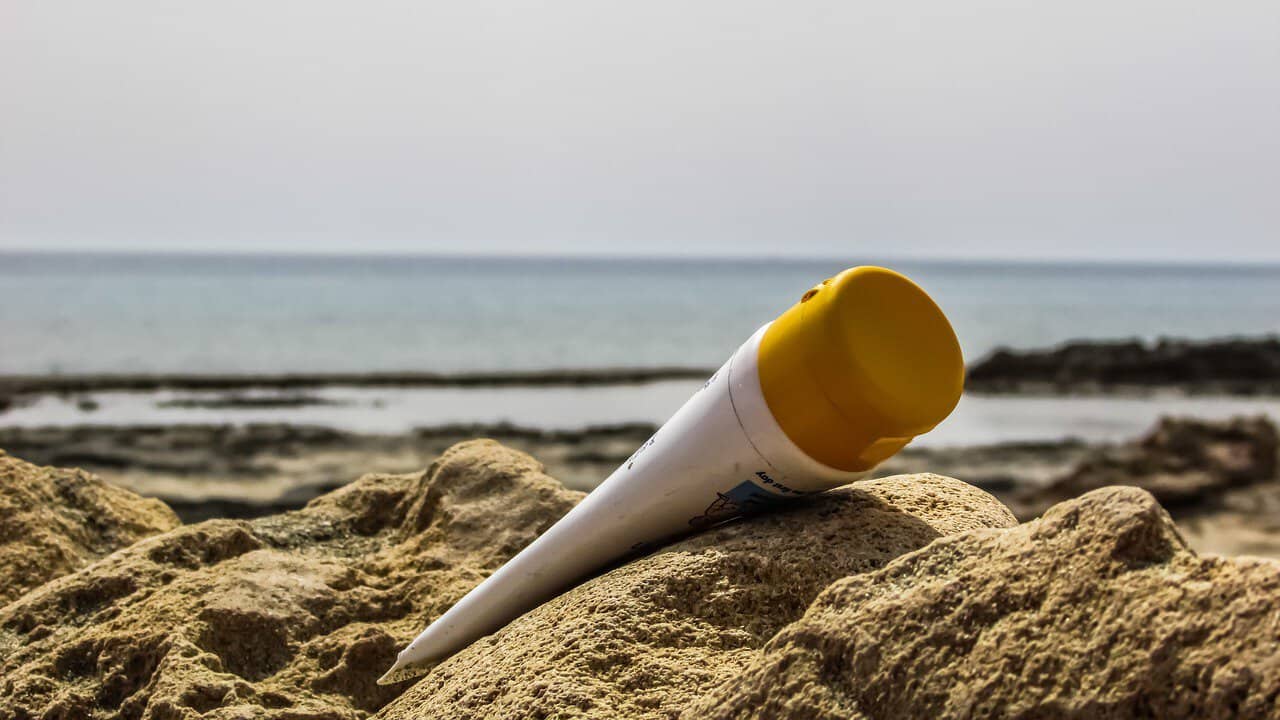
Some water-resistant sunscreens may slightly reduce the body’s ability to cool itself during prolonged exercise in hot conditions, according to research conducted at the University of Costa Rica. The researchers found that participants who exercised while wearing one water-resistant sunscreen recorded an internal body temperature about 0.2 degrees Celsius, or 0.36 degrees Fahrenheit, higher after one hour than when they completed the same exercise without sunscreen. The difference was small and did not amount to overheating or heatstroke. Researchers also stressed that the findings should not be interpreted as a reason to stop using sunscreen, which remains essential for protection against sunburn and ultraviolet radiation. The study involved 15 physically active university students who completed two hour-long sessions on a stationary bicycle inside the university’s controlled-climate laboratory. The chamber was kept at 35°C, or 95°F, with relative humidity of 55%, conditions similar to those found in many tropical parts of Costa Rica. During one session, participants wore a water-resistant sunscreen applied to about 85% of their bodies. They completed the same exercise without sunscreen during the other session. Researchers tracked their internal and skin temperatures, heart rates, sweat loss and feelings of heat and thirst. The participants recorded the slightly higher internal temperature and reported feeling thirstier when wearing sunscreen. Their skin temperature, total sweat production, heart rate and loss of body mass showed no meaningful differences. The results were published in the Journal of Science and Medicine in Sport. The researchers believe the sunscreen may have formed a film that partially interfered with the evaporation of sweat. People continued sweating, but some of that moisture may not have evaporated as efficiently. Because sweat cools the body as it evaporates, even a modest reduction can allow heat to accumulate gradually. The work followed an earlier UCR study comparing three commercially available sunscreens with a sun protection factor of 50 or higher. In that trial, researchers found that one product reduced local sweating more noticeably than the others. That sunscreen contained dimethicone, a silicone commonly used to create a smooth and water-resistant layer on the skin. Its presence led researchers to investigate whether ingredients that form a more protective film could also affect heat release. The results do not establish that dimethicone or all water-resistant sunscreens interfere with body cooling. The increase was measured during a specific one-hour laboratory test using a single sunscreen formulation and a small group of young, physically active participants. The effect could nevertheless become more relevant when combined with stronger risk factors such as high humidity, intense exercise, dehydration, heavy clothing or spending several hours without shade. That makes the research particularly relevant in Costa Rica, where agricultural workers, construction crews, athletes, hikers and others regularly spend extended periods outdoors in hot and humid conditions. Researchers recommend treating sun and heat protection as two parts of the same problem. People exercising or working outdoors should continue wearing sunscreen while also drinking enough water, taking regular breaks, seeking shade and choosing light, well-ventilated clothing. Those precautions matter far more than the small temperature difference measured in the study. Sunscreen still provides important protection, but it cannot replace hydration, rest and sensible limits on physical activity during periods of intense heat.
Costa Rica Study Examines How Water-Resistant Sunscreen Affects Body Heat
Full Article
Original Source
Read the full article at Ticotimes →KhanList aggregates and links to publicly available news content. We do not host full articles from third-party sources. Always verify important information with original sources.