
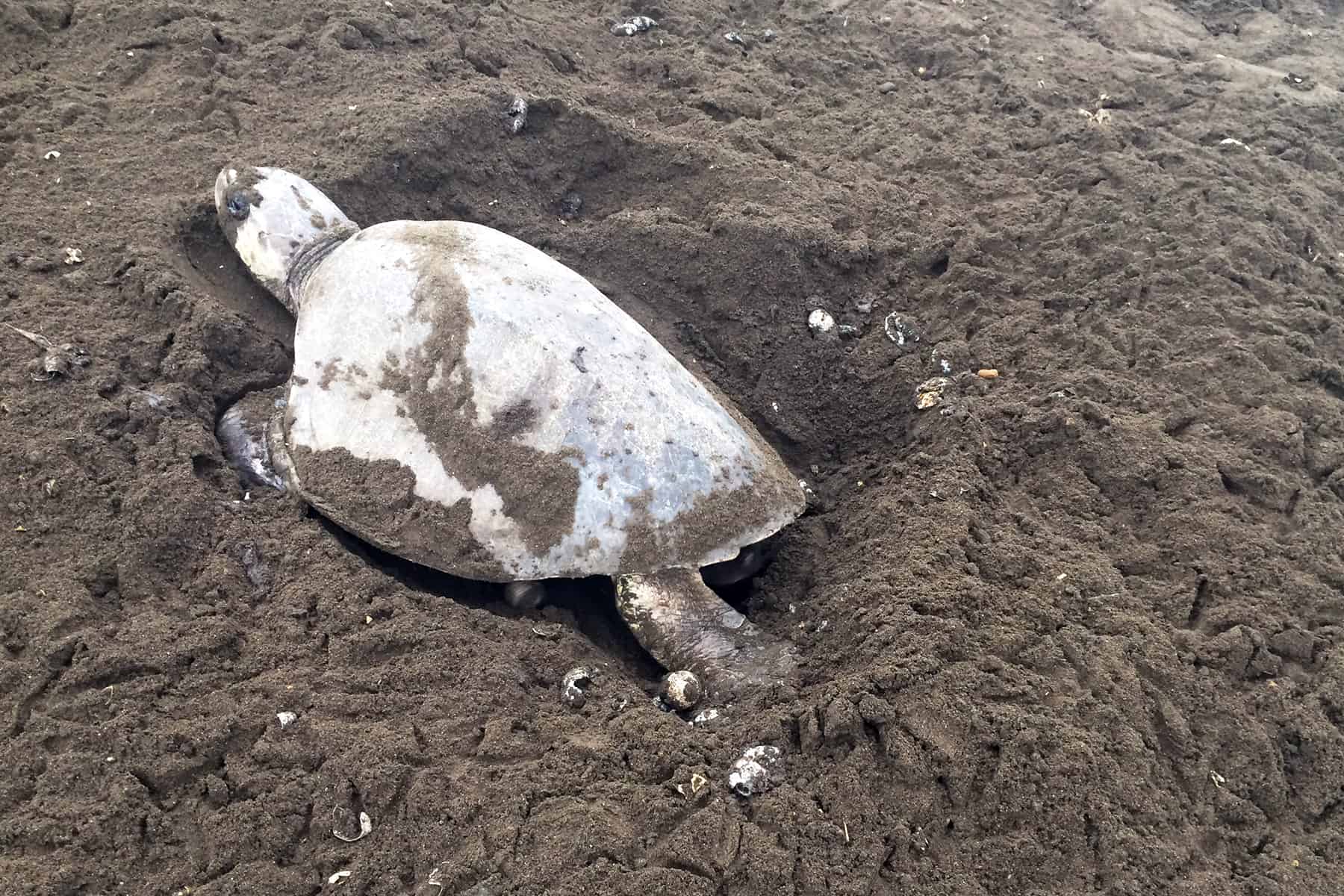
Researchers are examining olive ridley sea turtles at Ostional for exposure to antibiotic-resistance genes as part of a broader investigation into marine pollution. Details released yesterday describe an initial sampling visit conducted in March. The team collected noninvasive samples to establish a starting point for future conservation decisions. No test results were released. Ostional is known for its arribadas, mass nesting events when thousands of turtles come ashore to lay eggs. The protected area includes Ostional, Nosara, Pelada and Guiones beaches in Guanacaste, along with surrounding marine habitat. The investigation focuses on pollution associated with farming, livestock operations and pharmaceutical use that can reach the ocean through waterways and runoff. Its broader scope includes heavy metals and seabirds, with bird sampling planned for the Gulf of Nicoya. Scientists from several disciplines are participating in the project, which aims to improve understanding of pollution exposure in marine wildlife and help guide conservation efforts. For people visiting Ostional, existing wildlife protections remain central to the experience. Visitors must enter with a local guide during arribadas, and nighttime flash photography is prohibited. Visitors should also ask their guide before using a flashlight because light can disrupt nesting turtles. The refuge prohibits vehicles on the beach, horseback riding on the sand, bonfires and pets in protected areas. Those rules help protect the nesting habitat that makes Ostional one of Costa Rica’s best-known wildlife destinations.
Costa Rica Researchers Study Pollution Exposure in Ostional Sea Turtles
Full Article
Original Source
Read the full article at Ticotimes →KhanList aggregates and links to publicly available news content. We do not host full articles from third-party sources. Always verify important information with original sources.