
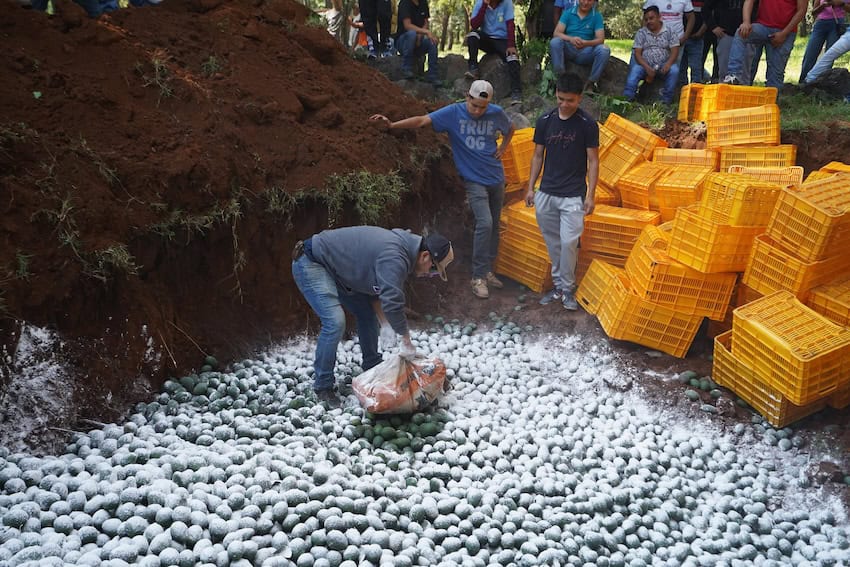
Farmers in Michoacán, Jalisco, Colima and Nayarit were forced to destroy approximately 52 tonnes of avocados over the weekend after detecting the presence of the avocado seed weevil. The discovery of larvae in fruit destined for export prompted the state authorities and the National Service for Agrifood Health, Safety and Quality (Senasica) to halt shipments. Tons of avocados were destroyed in Mexico after authorities detected an aggressive pest — known as the avocado seed weevil — in shipments destined for international markets. https://t.co/G1Kt5WAxva https://t.co/HPB14c3p9t — ABC News (@ABC) November 3, 2026 Michoacán Environment Minister Alejandro Méndez confirmed the infestation to reporters, while officials work to determine a timeframe for resuming shipments. Video shared on social media showed local producers emptying truckloads of avocados and dumping crates into pits to be burned and buried, as required by pest-elimination protocols. The avocado seed weevil (Curculionidae) is a snout beetle, or bark beetle, whose larvae develop inside the fruit, boring through the pulp until they reach the seed, where they feed and complete their life cycle. The adult female pierces the avocado peel with an elongated extension of the mouth called a rostrum and lays one or two eggs per fruit, pushing them close to the seed. The eggs take 12 to 14 days to hatch. A cross-section of an infected avocado seed shows how the weevil larva bores holes to use for incubation. (Juan José Estrada Serafín/Cuartoscuro) As the entry hole becomes covered with debris and secretions, the peel does not show visible damage, making it difficult to detect the infestation from the outside. Upon hatching, the larva moves through the pulp toward the pit where it feeds for about two months. It also creates a pupation chamber inside the seed, and remains for another two weeks or more before emerging as an adult. Applying insecticides to infested fruit is useless; the larva and pupa develop protected inside the seed, out of reach of any chemical product. Chemical control is only effective against adults during their emergence stage. For larvae and pupae, the options are cultural control — collecting and burying damaged fruit at least 1 meter deep, or burning it — and biological control with entomopathogenic fungi (a specialized group of parasitic microorganisms that infect, disable and kill insects and other arthropods). The weevil also bores into the branches and trunks of avocado trees, and can spread very aggressively within an orchard and devastate crops if not addressed. Local authorities have yet to provide an estimate of the economic impact. With reports from LopezDoriga.com, Reuters and Infobae
Pest outbreak forces destruction of 52 tonnes of avocados across 4 states
Full Article
Original Source
Read the full article at Mexiconewsdaily →KhanList aggregates and links to publicly available news content. We do not host full articles from third-party sources. Always verify important information with original sources.