
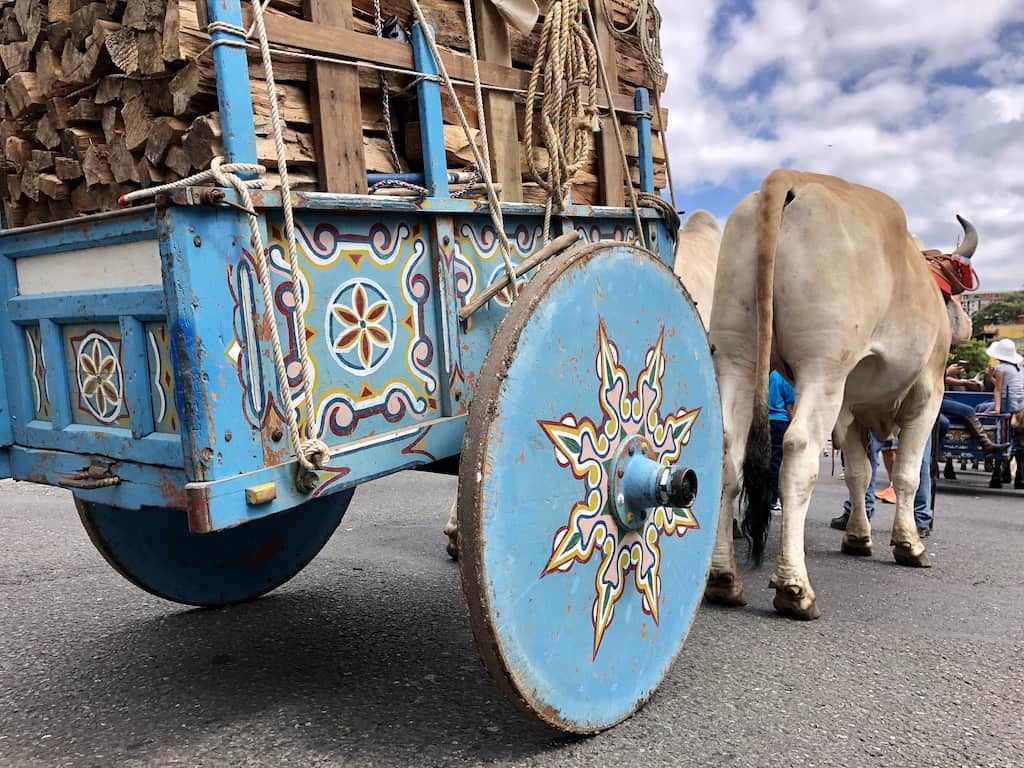
San José hands its largest park to oxen and hand-painted carts today as the Festival de Boyeros closes with its traditional parade around La Sabana Metropolitan Park. The parade is scheduled to begin at 10 a.m., with oxherders, known as boyeros, guiding yoked teams and decorated carts through the streets that ring the park. The Ministry of Culture and Youth lists Sunday’s free program as running until 3 p.m. and ending with a marimba performance by the State Distance University ensemble. The festival opened Saturday with the sesteo, the gathering of teams and carts in the park ahead of the parade. That evening brought folk dancing, cimarrona brass bands, marimba and concerts. This year’s edition also pays tribute to the National Day of the Costa Rican Marimba, which falls on Monday, November 30. The oxcart holds a place in Costa Rica that few objects can match. In the 19th century, teams of oxen hauled the country’s coffee harvest from the Central Valley to the Pacific port of Puntarenas, and the carts became the backbone of the export economy. Families later began painting the wheels and sideboards in bright geometric and floral patterns, a craft most closely tied to the town of Sarchí in Alajuela. The cart was declared a national symbol of labor in 1988, and UNESCO recognized the oxherding and oxcart tradition as a masterpiece of intangible heritage in 2005. Few working farms still depend on oxen, which is part of what gives the parade its weight. The animals, the yokes and the painted carts are kept by families who pass the skills from one generation to the next. About 3 kilometers (2 miles) east of the park, the National Museum is marking a different piece of the national identity. Its Festival of the Abolition of the Army runs from 9 a.m. to 4 p.m. today and commemorates 78 years since Costa Rica dissolved its military. The setting is part of the story. The museum occupies the former Bellavista Barracks, where José Figueres Ferrer struck a wall with a sledgehammer on December 1, 1948, to symbolize the end of the armed forces. The ban on a standing army was written into the Constitution the following year. Admission to the museum and the festival is free today for Costa Ricans, residents and foreign visitors alike, according to the museum. The program includes a puppet show at 10 a.m., followed by three concerts in the central garden: a concert band from Guanacaste at 11 a.m., pianist Henry Del Toro at noon and an early music ensemble at 1 p.m. About 30 vendors are selling crafts and traditional food throughout the day. The afternoon centers on a tree. At 2 p.m. the museum hosts a ceremony for the Árbol de la Paz, or Peace Tree, with the planting set for 2:45 p.m. in the garden. The sapling descends from the hibakujumoku, the trees that survived the atomic bombing of Hiroshima in 1945. The University of Costa Rica, the Embassy of Japan and the museum organized the planting as part of a university project to germinate and propagate the survivor trees. The museum says the tree is meant to carry a message of never forgetting, never repeating, and building a future of hope and environmental responsibility. The museum’s permanent exhibitions are also open, including one that traces how the barracks became a museum in 1949. Together, the two events put on display a pair of traditions the country counts among its defining traits: the rural working culture that built its economy, and the decision to live without an army.
Costa Rica Celebrates Its Oxcart Tradition With a Festival in San José
Full Article
Original Source
Read the full article at Ticotimes →KhanList aggregates and links to publicly available news content. We do not host full articles from third-party sources. Always verify important information with original sources.