
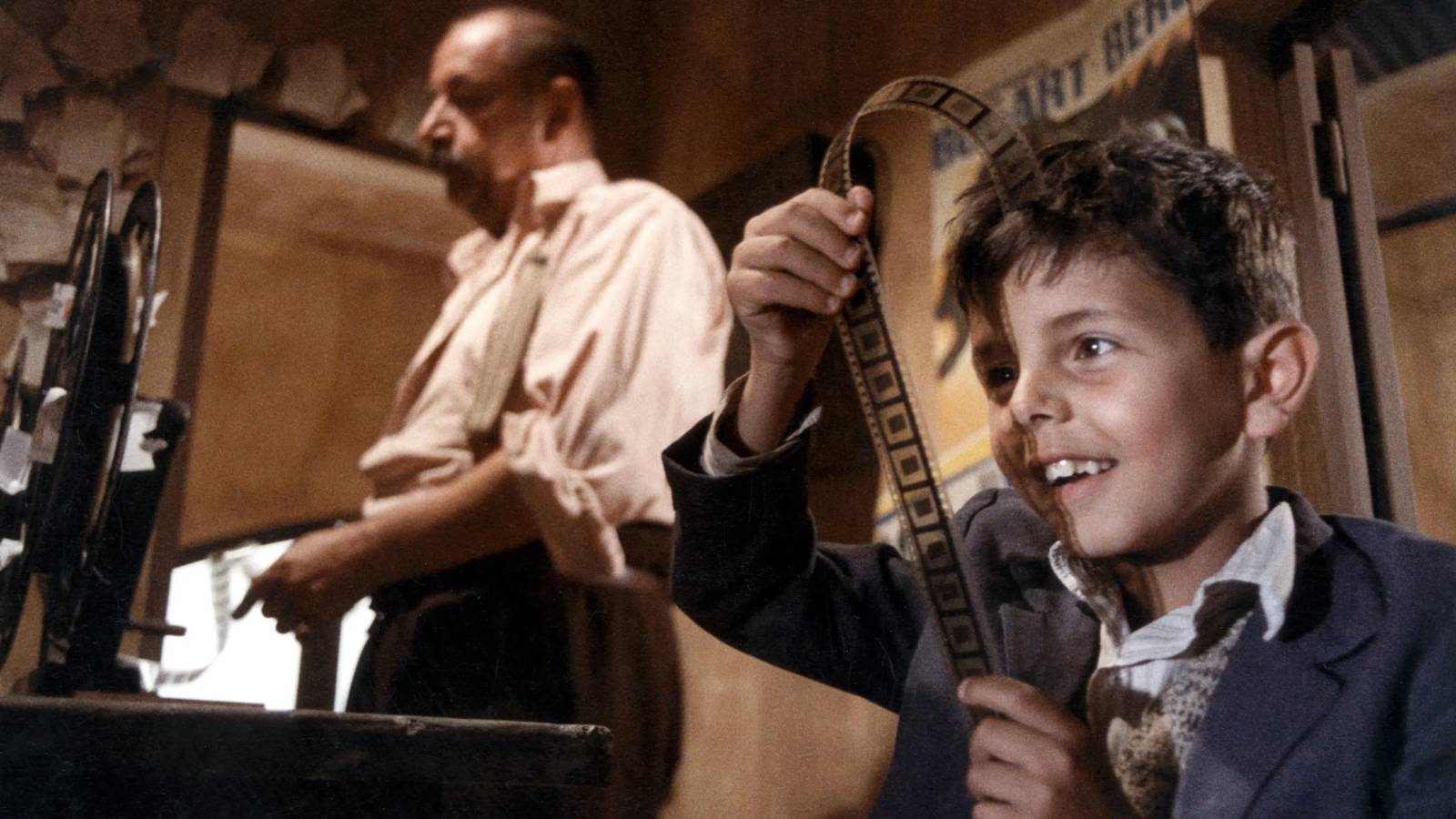
Published Nov 29, 2026, 11:05 AM EST Diego Pineda has been a devout storyteller his whole life. He has self-published a fantasy novel and a book of short stories, and is actively working on publishing his second novel. A lifelong fan of watching movies and talking about them endlessly, he writes reviews and analyses on his Instagram page dedicated to cinema, and occasionally on his blog. His favorite filmmakers are Andrei Tarkovsky and Charlie Chaplin. He loves modern Mexican cinema and thinks it's tragically underappreciated. Other interests of Diego's include reading, gaming, roller coasters, writing reviews on his Letterboxd account (username: DPP_reviews), and going down rabbit holes of whatever topic he's interested in at any given point. Movie genres and subgenres come and go, but there are some in particular that deliver at least a few dozen downright perfect masterpieces every single decade. The 1980s were no exception. This was a landmark decade for cinema, one defined by high-concept blockbusters, cutting-edge visual effects, a booming indie scene, and the explosion in popularity of the home video market. However, though every genre gave us a few of the greatest masterworks of the '80s, it's perfectly possible to look at each of those main genres (presented here in alphabetical order) and single out the best film that they produced over the course of the decade. From international Oscar winners like Cinema Paradiso to foundational Hollywood classics like Do the Right Thing, these films prove just how great the '80s were for filmmaking. Action: 'Ran' (1985) Akira Kurosawa is not only undoubtedly the greatest Japanese filmmaker of all time, but also far and away one of the greatest in general. Best known for his samurai movies, he made many of the best historical epics of all time, but one of his best is actually not a samurai film at all: It's Ran, which transposes William Shakespeare's King Lear to Sengoku-period feudal Japan. From Die Hard to First Blood, the '80s were a particularly strong decade for action cinema; but the winner here has to be not a blockbuster, but the greatest Japanese film of the decade. Though Kurosawa was legally blind while shooting this passion project, he nevertheless produced what may very well be the most colorful and visually stunning movie of the '80s, further bolstered by a flawless lead performance by Tatsuya Nakadai. Comedy: 'The King of Comedy' (1982) Image via 20th Century-Fox Cringe comedy is a whole art unto itself, which is exactly why it's a compliment to say that Martin Scorsese's The King of Comedy is one of the most cringeworthy movies of all time. In spite of being the biggest box office flop of Scorsese's career, it has stood the test of time as a bit of a cult classic, elevated by one of the best performances of Robert De Niro's career. Through its razor-sharp satire and prophetic comments on the age of mass media, King of Comedy manages to shine even brighter than other groundbreaking '80s comedies like Airplane! and This Is Spinal Tap. It's the kind of brilliant subversion of the American Dream narrative that only a filmmaker as versatile and capable of nuance as Scorsese could have made. Crime: 'Once Upon a Time in America' (1984) Image via Warner Bros. Pictures By the time he came over to Hollywood to make his American directing debut with Once Upon a Time in America, Italian auteur Sergio Leone had already firmly established himself as the king and father of the spaghetti Western subgenre. It's only fitting that his Hollywood debut was something entirely different, a nearly four-hour-long crime epic based on Harry Grey's semi-autobiographical novel The Hoods. It's one of the heaviest crime movies of all time, but it also features De Niro and James Woods at the top of their games, as well as a soul-stirring Ennio Morricone score, making it a must-see. Though films like Scarface and The Untouchables are also among the '80s' best crime gems, there's nothing quite like this non-linear, unforgettably complex, masterful de-romanticizing of the gangster myth. Drama: 'Do the Right Thing' (1989) Image via Universal Pictures Though the '90s would undeniably become the heyday of independent Hollywood cinema, the '80s laid down the key foundations that would allow that boom to come about. One such foundation was the cinema of Spike Lee, whose third feature film, Do the Right Thing, is one of those American movies that everyone must watch at least once in their lives. From Raging Bull to Amadeus to Paris, Texas, the dramatic genre arguably gave us the most tremendous cinematic masterpieces of the '80s, but there really is a strong argument to be made in favor of Do the Right Thing being the greatest and most essential. A stacked ensemble, airtight pacing, an emotionally engaging and morally complex story, fascinating characters with layered dynamics; what's not to love and admire? Family: 'My Neighbor Totoro' (1988) Image via Mei Kusakabe Today, Studio Ghibli is widely recognized as the spearhead of anime filmmaking, but even the greats have to start somewhere; and in the case of Ghibli, that was the '80s. The studio's second film ever was Hayao Miyazaki's My Neighbor Totoro, which could be the only movie anyone needs to watch to get an understanding of why Miyazaki is hailed as the greatest animated filmmaker of all time. My Neighbor Totoro is one of the best low fantasy animated movies of all time, and even though other '80s family masterpieces like E.T. and The Princess Bride are also worthy of note, there's nothing quite as timeless as Totoro. Ma is the Japanese concept of negative space, and this is the ultimate masterclass in how giving scenes and characters space to breathe can result in a generation-defining family film. Fantasy: 'Fanny and Alexander' (1982) Image via Sandrew Film & Teater History has seen many great depictions of childhood in movies, but nothing quite like what Fanny and Alexander has to offer. Designed to be Swedish auteur Ingmar Bergman's final picture before retirement, this semi-autobiographical masterpiece was originally released as a five-hour-long miniseries, but the theatrical cut is easily the best fantasy film of the '80s. The fantastical elements here are remarkably subtle, more akin to magical realism than full-on low fantasy; but the point still stands that, though it produced other '80s gems like The NeverEnding Story and Labyrinth, the fantasy genre has never delivered anything quite like this. It's a love letter to childhood imagination, blending warmth with theatrical grandeur and psychological depth. Horror: 'The Thing' (1982) Image via Universal Pictures After 1951's The Thing from Another World, horror legend John Carpenter wanted to make a more faithful adaptation of John W. Campbell Jr.'s 1938 novella Who Goes There? From that desire came The Thing, and though critics disliked it and it underperformed at the box office, the home video market turned it into the foundational cult classic that it's still remembered as today. It's one of the most amazing horror movies ever made, at once a suffocatingly terrifying creature feature and a powerful metaphor for the paranoia of the Cold War era and the Red Scare. With films like The Shining and A Nightmare on Elm Street as evidence, the '80s were one of the best decades of all time for horror cinema, but there will never be anything quite like the sci-fi horror gem that is The Thing. Romance: 'Cinema Paradiso' (1988) Image via Miramax Films Winner of the Best Foreign Language Film Oscar and featuring yet another one of Ennio Morricone's most unforgettable scores, Giuseppe Tornatore's Cinema Paradiso may very well be the most universally beloved Italian movie of all time. It's certainly one of the best drama movies in film history, as well as one of the best romance and coming-of-age movies. In short, Cinema Paradiso is a masterpiece without equal, a powerful love letter to cinema, nostalgia, and the bittersweet passage of time. You also have masterworks like Moonstruck and When Harry Met Sally..., but what makes Cinema Paradiso work so flawlessly as a romance drama is that it's not just about one love story, but two: It's the pure, operatic tale of Salvatore and Elena, but also the story of Salvatore's first and biggest love: cinema itself. Science Fiction: 'The Empire Strikes Back' (1980) Image via 20th Century Studios Even though the original reception of Irvin Kershner's The Empire Strikes Back was originally worse than that of its predecessor, George Lucas' Star Wars (which remained the highest-grossing film of all time until the arrival of E.T.), time has been nothing but kind to it. Today, it's almost universally praised as the best piece of media that Star Wars has offered to date. Collider Exclusive · Star Wars Quiz Which Force UserAre You? Light Side · Dark Side · Or Somewhere Between The Force is not a binary. It is a spectrum — from the serene halls of the Jedi Temple to the shadowed corridors of Sith space. Ten questions will reveal where you truly fall. The Force has always known. Now you will too. 🔵Jedi Master 🟡Padawan 🔴Sith Lord ⚫Inquisitor ⚪Grey Jedi IGNITE YOUR SABER → 01 What is the Force to you? Your relationship with the Force defines everything else. AA living energy I must be worthy of — it is not mine to control. BSomething vast and mysterious I'm only beginning to understand. CNeither light nor dark — just a current I choose to ride. DPower. Pure and simple. The strong take it; the weak don't. NEXT QUESTION → 02 When you feel strong emotions — anger, grief, love — what do you do? The Jedi suppress. The Sith feed. Others choose differently. AAcknowledge them, then release them. Attachment leads to suffering. BFeel them fully, then decide what to do — they're not the enemy. CBury them. Emotion is a liability I can't afford to indulge. DUse them. Passion is the engine of the dark side for good reason. NEXT QUESTION → 03 The Jedi Council gives you an order you disagree with. You: How you handle authority reveals your alignment. AFollow it. The Council's wisdom surpasses my own perspective. BVoice my objection clearly, then defer to the decision. CComply outwardly while doing what I think is right. DIgnore it. The strong don't answer to committees. NEXT QUESTION → 04 You are offered forbidden knowledge that could give you enormous power. The cost is crossing a moral line. You: The dark side's pull is never more than a choice away. ARefuse without hesitation. There is no cost worth that price. BWeigh it carefully — sometimes darkness holds real answers. CFeel the pull but walk away — for now. DAccept it. Power justifies the method used to obtain it. NEXT QUESTION → 05 Your approach to training and learning is: A student's habits become a master's character. ADedicated but humble. There is always more to learn from my masters. BRigorous and patient. Mastery is earned through years of discipline. CEclectic — I draw from every tradition, not just one. DRelentless and brutal. Pain accelerates growth. Rest is weakness. NEXT QUESTION → 06 In a duel, your lightsaber fighting style reflects: Combat is the purest expression of a Force user's philosophy. ADefense and composure — I wait for my opponent to overcommit. BFast and instinctive — I trust the Force to guide my movements. CUnpredictable — I blend styles to keep enemies off-balance. DOverwhelming aggression — I end fights before they begin. NEXT QUESTION → 07 A defeated enemy lies at your feet, powerless. You: Mercy — or its absence — is the truest test of alignment. AStrike them down — compassion toward enemies is naïve and costly. BNeutralize them permanently. I can't afford loose ends. CSpare them if I can — but stay clear-eyed about the risks. DOffer them a chance to surrender. Every being deserves that. NEXT QUESTION → 08 The Jedi Code forbids attachment. Your honest view on love and bonds: The source of the greatest falls in the galaxy. AThe Code is right. Attachment clouds judgment and invites suffering. BLove is not a weakness — the Jedi Code got this one wrong. CI have no attachment — only loyalty to my master's mission. DI feel it deeply but struggle to reconcile it with my training. NEXT QUESTION → 09 Why do you use the Force at all? What's the point? Purpose is the difference between a knight and a weapon. ATo learn. I'm still figuring out what I'm capable of. BTo protect and serve. The Force is a responsibility, not a gift. CTo survive — and maybe carve out something worth having. DTo dominate. Strength demands to be expressed, not contained. NEXT QUESTION → 10 At the final moment — light side or dark side pulling at you — what wins? In the end, every Force user faces this moment. What does yours look like? AThe light. I choose peace, even when darkness would be easier. BNeither fully — I carve my own path through the middle. CWhoever I serve — my loyalty defines me more than my morality. DThe dark. Power is the only thing that's ever actually been real. REVEAL MY ALIGNMENT → Your Alignment Has Been Determined Your Place in the ForceThe scores below reveal how the Force sees you. Your highest number is your true alignment. Read on to understand what that means — and what it will cost you. 🔵 Jedi Master 🟡 Padawan 🔴 Sith Lord ⚫ Inquisitor ⚪ Grey Jedi Disciplined, compassionate, and deeply attuned to the living Force, you have walked the path long enough to understand its demands — and accept them. You lead not through authority alone, but through example. You have felt the pull of the dark side and chosen otherwise, every time. That is not certainty. That is courage. You are earnest, powerful, and brimming with potential — and you know it, which is both your greatest asset and your most dangerous flaw. You act before you think, trust your gut over your training, and sometimes confuse impatience for bravery. The Masters see something in you, though. The question isn't whether you have what it takes — it's whether you'll be patient enough to find out. You are not simply dangerous — you are certain, and that is worse. You have decided what the galaxy needs, and you have decided you are the one to deliver it. Your power is genuine and formidable, earned through sacrifice that would have broken lesser beings. But examine your victories carefully. Every Sith believed their cause was righteous. The dark side's cruelest trick is that it agrees with you. You were forged in fire and reshaped by those who found you at your lowest. You serve, because service gave you structure when you had none. Your allegiance is not to an ideology — it is to survival and to the master who gave you purpose. But there is something buried beneath the conditioning. The Jedi you hunt? You recognize them. Because you remember what it felt like before the choice was taken from you. You have looked at the Jedi Code and the Sith Code and found both of them incomplete. You walk the line not out of indecision but out of conviction — you genuinely believe both extremes miss something essential. The Jedi don't fully trust you. The Sith think you're wasting your potential. They're both partially right. But so are you. ↻ RETAKE THE QUIZ Where Star Wars was the most perfect sci-fi movie of the 1970s, Empire was undoubtedly the most perfect of the '80s, a science fantasy space opera the likes of which the world has never seen again. It's grand, it's exciting, it's surprisingly willing to subvert the traditional blockbuster formula, and it somehow only keeps getting better with age. It's simply the best of its kind, great though classics like Blade Runner and Brazil may be. Thriller: 'The Killer' (1989) Image via Golden Princess Film Production No one throughout the 20th century did action thrillers quite like Hong Kong filmmakers like John Woo. Woo is the father of the gun fu subgenre, which is all about combining gunplay with the jaw-dropping, balletic action choreography of the martial arts film genre. The Killer was one of the first gun fu masterpieces in history, and it's still one of the best hitman movies of all time. It's the pinnacle of '80s heroic bloodshed cinema, and as phenomenal as other '80s thrillers like Blow Out and Fatal Attraction are, it just doesn't get any more fun than this. Operatic melodrama, existential dread, and delightfully elaborate and over-the-top combat choreography all make up the foundations of The Killer, which is simply a must-see for anyone seeking to understand action thriller cinema.
The Most Perfect Movie of Every Genre in the 1980s
Full Article
Original Source
Read the full article at Collider →KhanList aggregates and links to publicly available news content. We do not host full articles from third-party sources. Always verify important information with original sources.