
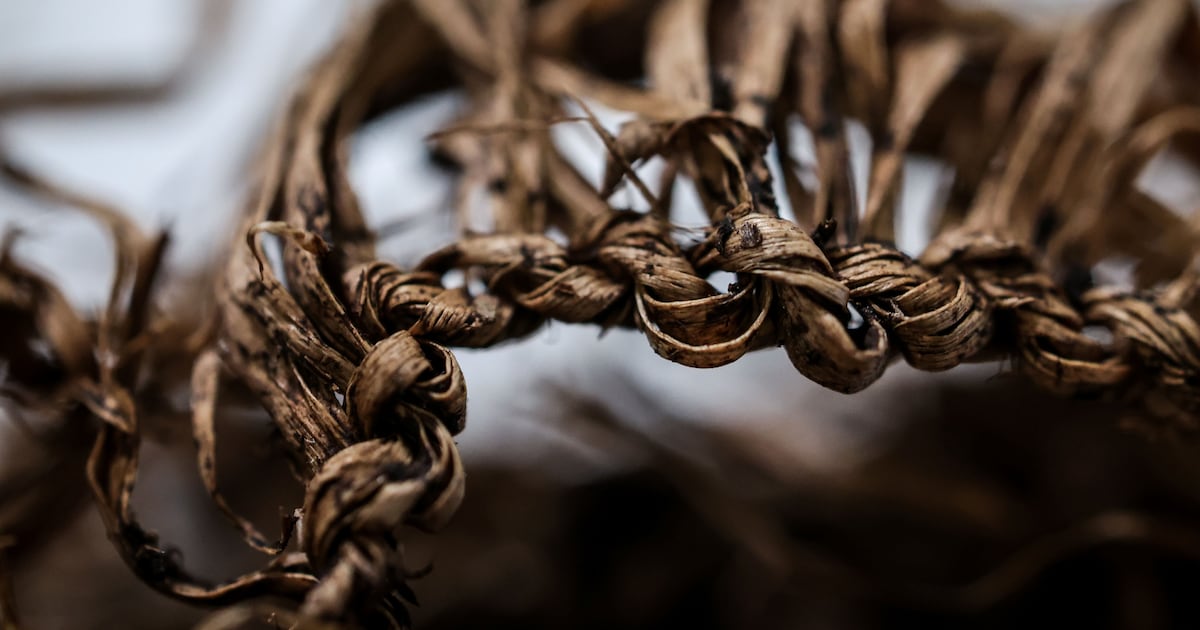
The story of a young woman living in Northern Ireland during the Iron Age has been explored in a special coronial investigation at a museum.The remains of Ballymacombs More Woman along with a woven artefact were discovered in bogland near Bellaghy in Co Derry in 2023.She is thought to have been aged between 15 and 22 when she was deliberately decapitated from behind with a bladed weapon more than 2,000 years ago, potentially in a ritualised killing.In a first for the attraction, the Ulster Museum in Belfast on Monday hosted a coronial investigation with the help of experts from across Europe to tell her story.READ MOREChaired by Belfast Coroner Joe McCrisken, it was held with the structure and methodology of a contemporary coroner’s investigation, conducted as an educational and investigative exercise.It pursued the same fundamental questions as modern inquests, including who the deceased was, where and when she died, and by what means she came by her death.Researchers, museum professionals, forensic experts and members of the public took part in the consideration of the evidence assembled during a big international research programme led by National Museums NI.The evidence established that Ballymacombs More Woman was aged about 15-22 years and that she died during the Iron Age.Scientific analysis showed she suffered a deliberate decapitation, most likely inflicted from behind with a bladed weapon, while examination of her remains and associated artefacts also provided important insights into her diet, health, appearance and the world in which she lived.While the precise circumstances surrounding her death remain unknown, the evidence suggested she may form part of a wider tradition of ritualised killing and sacrifice documented among a number of bog body discoveries across Iron Age northwestern Europe.As with internationally renowned finds such as Tollund Man, Grauballe Man and Ireland’s Clonycavan Man and Old Croghan Man, Ballymacombs More Woman offers a rare and compelling glimpse into the beliefs, practices and lives of people who lived more than 2,000 years ago.[ What violent secrets do ancient bog bodies hold?Opens in new window ]National Museums NI and its research partners gave evidence at the hearing, including representatives from Queen’s University Belfast, the National Museum of Ireland, Trinity College Dublin, University College Dublin, the University of Copenhagen, the University of Glasgow, the University of Bradford and the University of Manchester.Witnesses also included officers from the Police Service of Northern Ireland and employees of Bulrush Horticulture, whose work led to the discovery of the remains.The multidisciplinary research programme employed advanced scientific techniques including micro-CT scanning, digital mapping, 3D imaging and specialist analyses of bone, hair, skin, nails and the associated textile.The site where the remains of the Ballymacombs More Woman were found in bogland near Bellaghy, Co Derry, in 2023. Photograph: Ryan Montgomery/Queens University Belfast/PA Wire In his concluding remarks, McCrisken described facilitating the story of the young woman to be told.“The purpose of the exercise is not to impose modern legal conclusions upon the distant past, but to provide a framework through which the available evidence could be assessed and the story of a previously unknown young woman could be told,” the coroner said.“Although separated from us by more than 20 centuries, she was once a living member of her community, and the investigation sought to restore, insofar as possible, an understanding of her life, death and place in history.”Ballymacombs More Woman’s story will help inform new displays being planned in the Early Peoples gallery at the Ulster Museum.[ ‘Thanks to the bogs, life will continue. Just not ours’: The Irish bog and our national psycheOpens in new window ]“Though she lived and died over 2,000 years ago, we will ensure that her story resonates long into the future as a bridge from the Iron Age to our modern world,” said Hannah Crowdy, head of curatorial at National Museums NI. – PA
Coronial hearing on remains of young Iron Age woman found in Co Derry
Full Article
Original Source
Read the full article at Irishtimes →KhanList aggregates and links to publicly available news content. We do not host full articles from third-party sources. Always verify important information with original sources.