
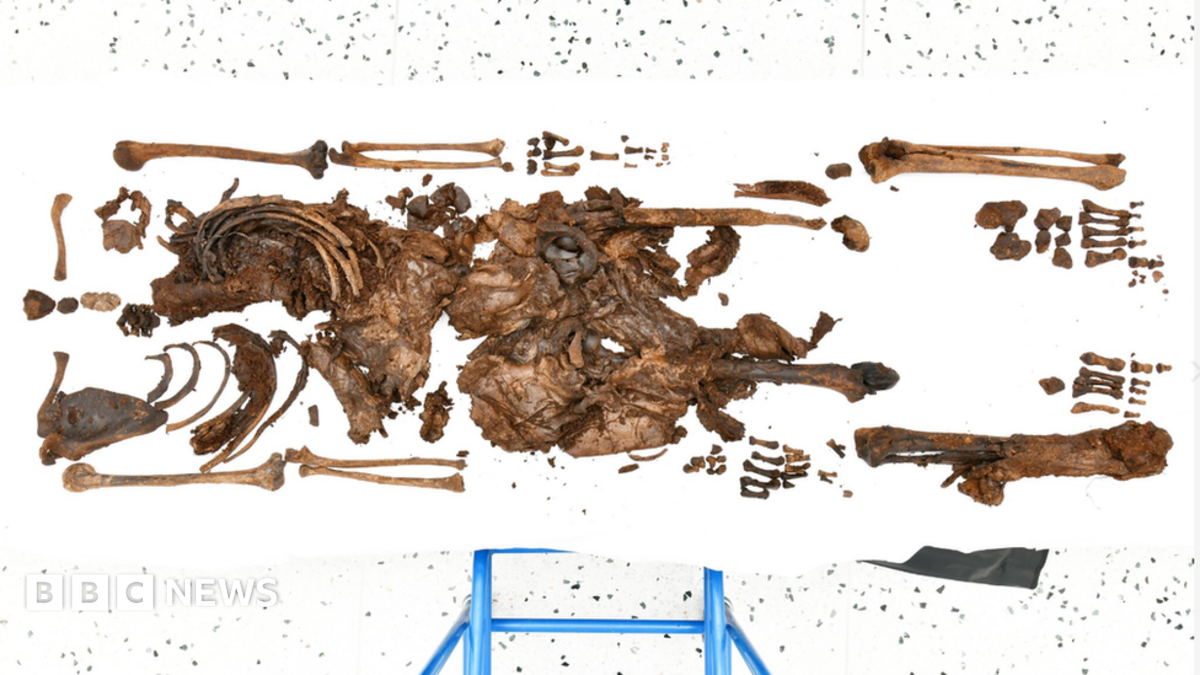
Mystery of 2,000-year-old bog body solved in 'first of its kind' investigationImage source, PSNIImage caption, The body of the young woman is thought to be more than 2,000 years oldFor more than 2,000 years, the remains of an Iron Age woman laid undiscovered in bogland - her story unlikely to ever be told.But when archaeologists unearthed human bones in 2023, it led to an unprecedented effort in Northern Ireland to find out who they belonged to - and what had happened to that person.Now a coroner's investigation has been held at the Ulster Museum in Belfast to establish the truth behind the Ballymacombs More Woman.It has establish that she was between 15 to 22 years old when she died - and that she suffered a deliberate decapitation, most likely inflicted from behind with a bladed weapon.The discovery of her remains near Bellaghy, County Londonderry, marked an important moment, according to Hannah Crowdy, head of curatorial at National Museums NI (NMNI)."Finds like this that are women are incredibly rare," she told BBC News NI. "She's the first of her kind in Northern Ireland at all.Figure caption, The human remains were discovered in October 2023 "This helps us piece together a part of history that is quite mysterious."There's been a really intensive period of research."To honour her, it's important to tell her story and bring that to the fore."The coroner's investigation brought together the archaeological and scientific research that has been carried out since the Ballymacombs More Woman was unearthed.Image caption, Hannah Crowdy said the discovery of the woman's bones was "incredibly rare"Examination of her remains and other artefacts found near or with her also provided important insights into her diet, health, appearance and the world in which she lived.It is impossible to know the exact circumstances of her life and death but evidence suggests her death may have been part of a ritualistic killing or sacrifice.Crowdy said she believed this was the first time any museum had held a coroner's investigation into the cause of death into an ancient individual.Image source, PSNIImage caption, Bog bodies are naturally mummified human remains found buried in peat bogsWhen the museum creates an exhibition about the find, the remains of the woman will not be on display."We think this is an opportunity to look at a different way of how to tell a story of an individual within a museum collection so we aren't going to display the Ballymacombs More Woman's remains," said Crowdy."But we have all this amazing research so we can tell a really detailed story about her and we're looking at creative ways to tell that story, through illustration and poetry, for example."We hope that will do her justice and bring her to life."'Intentionally decapitated in the bog'Curators worked with many different experts to establish as much information about the woman as possible.Niamh Baker, the museum's curator of archaeology, said an osteoarchaeologist - who studies archaeological human bones - assessed the remains.They found cut marks on the woman's neck and "it would appear she was intentionally decapitated in the bog", said Baker."No skull was recovered with further investigation."It may be that she falls into a pattern of ritual and sacrifice that took place across north-west Europe in the Iron Age period."Image caption, Niamh Baker says one possibility is that the woman may have been a sovereignThe reason behind the ritualistic death remains shrouded in mystery."There are examples of some Iron Age remains in the Republic of Ireland that are male that similarly met violent deaths and some of those are thought to be associated with kingship and sovereignty," said Baker."Was she a female sovereign? Or it may be that it was related to an agricultural or weather issue at the time."The woman and her story have been taken to heart by the people of Bellaghy, who have named her Aine.Séamus Mac an Fhirléighinn, from the Bellaghy Historical Society, attended the coroner's investigation with others from the area."We feel that Aine is one of our own. This is her inquest, she needed her people, her family there with her to act on her behalf as advocates," he said."Local people are very interested - we wanted to know who this person was, how she died, how she lived."Image source, Press Eye/National Museums NIImage caption, Curators examined various tems that were found beside Ballymacombs More WomanCoroner Joe McCrisken felt it was important to have a coroner investigate this unusual case."The coroners in Ireland have been asking the same four questions for generations: who was the deceased; when did she die; where did she die; and how did she come by her death?"So at this hearing today I asked the same four questions - and answered them with some degree of clarity but there's still some mystery remains."Perhaps 2,000 years ago somebody like me would have been a part of that neolithic community investigating sudden deaths."So it seems right that when we're looking at who this person was, when they died, where they died and how they died, that it should be a coroner that does that."More on this story
Mystery of 2,000-year-old bog body solved in 'first of its kind' investigation
Full Article
Original Source
Read the full article at Bbc →KhanList aggregates and links to publicly available news content. We do not host full articles from third-party sources. Always verify important information with original sources.