
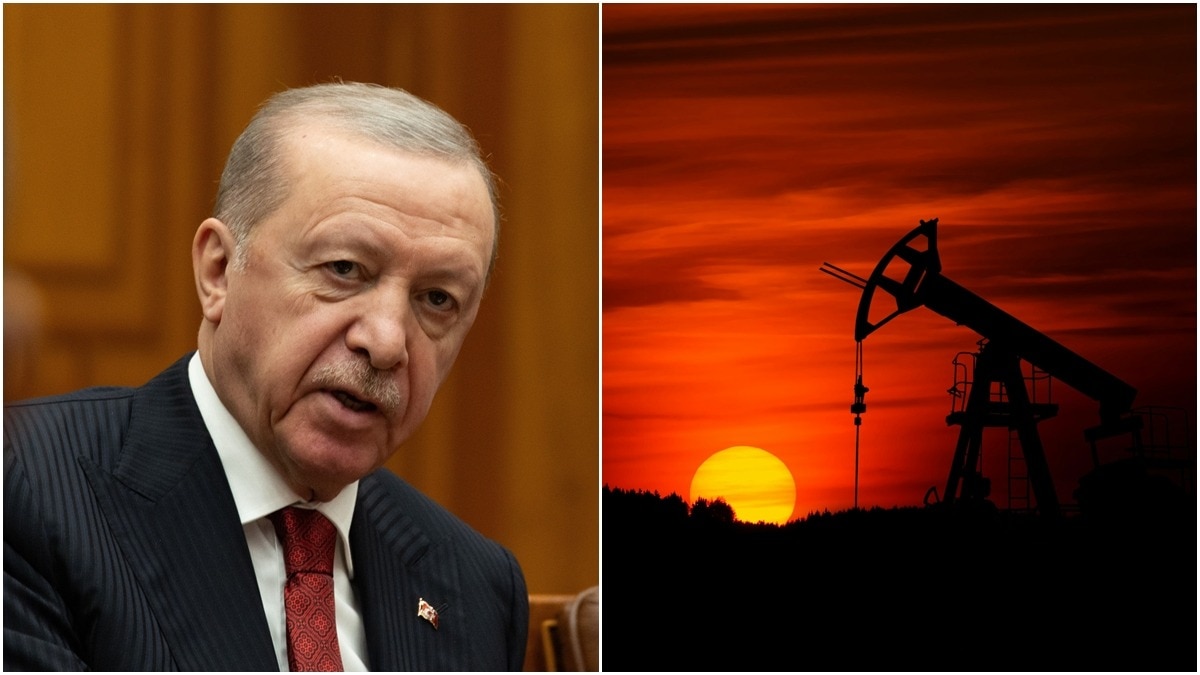
As COP31 focusses on cutting emissions, Turkey has announced two new oil discoveries, highlighting the continuing gap between climate pledges and fossil fuel expansion.President Recep Tayyip Erdogan announced two new oil fields ahead of COP31's second day. (Photo: Reuters/Unsplash)New Delhi,Nov 10, 2026 17:41 ISTAs the COP31 climate summit entered its second day on Tuesday, with the future of the planet's energy supply high on the agenda, Turkish President Recep Tayyip Erdogan chose a different announcement to celebrate.The night before, he took to social media to announce the discovery of two new oil fields in the country's southeast, highlighting their potential to boost production. A protester's hands are covered in oil during a protest against fossil subsidies and fossil fuel projects. (Photo: AP) The announcement has come under the microscope as it came at a time when delegates have gathered at COP31 in Antalya to discuss how countries can cut emissions and slow down the planet's feverish warming.Erdogan announced on Monday that production had begun in October at the Gaziler and Cardakli fields in the Gabar region, and that initial assessments put their oil potential at 135 million barrels in place. He said further development and new wells could increase daily production in the region by 30%. The figure refers to oil estimated to be present underground, not necessarily the amount that can be extracted. (Source: X) For context, Turkey currently produces about 84,000 barrels of oil a day from Gabar, which meets around 8% of its domestic consumption, according to Erdogan. He expects regional output to cross 1,00,000 barrels a day in the second half of 2027.THE FOSSIL FOUL The announcement comes as COP31 turns its attention to energy and transport, two sectors central to the shift towards cleaner power and fewer emissions.Fossil fuels remain the biggest contributor to climate change, with the United Nations confirming that coal, oil and gas account for more than 75% of global greenhouse gas emissions. Emissions rise from the smokestacks at a coal power plant. (Photo: AP) And yet, fossil fuels have remained one of the most contentious issues at the annual climate summits, including the last one held in Belem, Brazil, where nations failed to agree on a fossil fuel phaseout plan.However, Turkey is not alone in backing new fossil fuel production while participating in climate efforts.NOT JUST TURKEYIn Australia, which is leading COP31 negotiations while Turkey hosts the summit, authorities in Victoria approved a licence in October to restart production at the offshore Patricia-Baleen gas fields. Production is expected to begin in 2028. Activists protest after Britain approved the a North Sea gas field. (Photo: Reuters) The United Kingdom also granted production consent for the already-licensed Jackdaw gas field in the North Sea on October 21. The project is expected to supply gas from this winter.Norway, meanwhile, announced an oil and gas discovery in the North Sea on October 14, estimated to hold the equivalent of 19 million to 50 million barrels.India, the world's third-biggest polluter, has also approved a major offshore oil and gas exploration programme and is expanding its coal-mining pipeline, while the world's largest polluter, China, continues to develop new coal mines at a scale unmatched by any other country. An LNG tanker waits to dock at Western Europe's largest liquefied natural gas plant, in Hammerfest, Norway. (Photo: Reuters) The US, the second-biggest polluter, is also planning a large expansion of gas-fired power capacity, partly to meet rising electricity demand from data centres.Elsewhere, Nigeria has approved an $800-million offshore gas project, while Canada has backed a major expansion of its natural gas pipeline network.These developments are clear evidence pointing to the gap between countries' climate commitments and their continued investment in fossil fuel supplies. An LNG tanker unloading liquefied natural gas at a Sinopec terminal in Shandong province, China. (Photo: Reuters) For the rest of the world, however, the climate fight goes on.- Ends
COP31 host Turkey announces oil discoveries as world debates fossil fuel exit
Full Article
Original Source
Read the full article at Indiatoday →KhanList aggregates and links to publicly available news content. We do not host full articles from third-party sources. Always verify important information with original sources.