
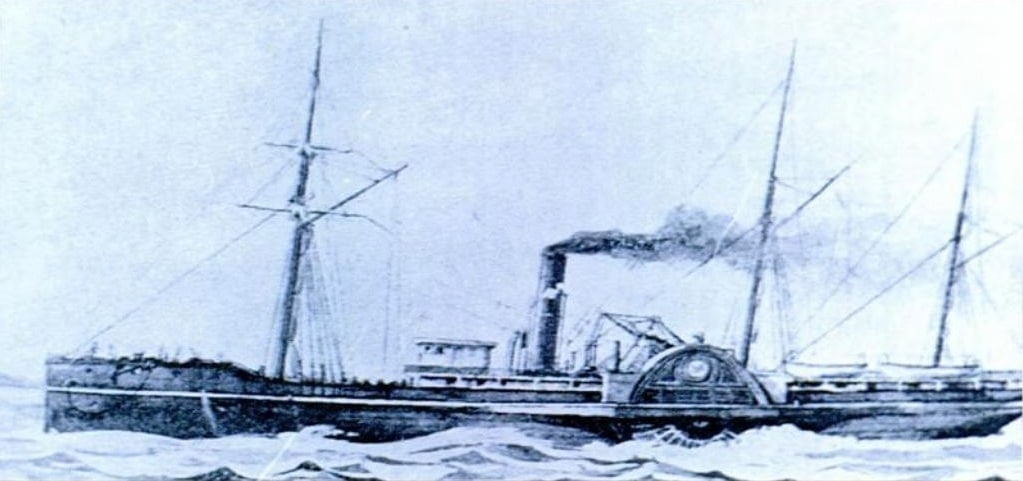
In four years with exclusive salvage rights, Rockfish has only recovered a firebrick and wood from the wreck site.SEATTLE (CN) — Loaded with wealthy passengers, opium and gold, the S.S. Pacific disappeared under the rough waters off the coast of Washington in 1875, never to be found.More than 150 years later, the hunt for treasure is now open game after a company’s attempt to retain exclusive rights to salvage the wreckage faltered in federal court Tuesday.In 2022, the exploration company Rockfish claimed it had located the remains of a vessel believed to be the S.S. Pacific: a 223-foot sidewheel steamer that sank on Nov. 4, 1875, after colliding with another vessel 80 miles south of Cape Flattery, Washington.It took less than an hour for the Pacific to sink, killing more than 300 people believed to be on board. Just before sinking, the Pacific picked up prominent and wealthy passengers in Victoria, Canada, along with a crowd of gold miners from British Columbia. The maritime disaster remains one of the deadliest in U.S. Pacific coast history.Rockfish filed an action in federal court that year to secure exclusive salvage rights to the site. U.S. District Judge James Robart granted the request.In late 2023, Robart granted the company’s motion for an injunction, giving it exclusive right to salvage the shipwreck within a certain boundary through mid-2025. The judge expanded the geographic boundary in 2024 and hesitantly extended the injunction in 2025.In that order extending exclusive salvage rights, Robart noted the court was “concerned with the pace of Rockfish’s salvage efforts,” though he believed the company’s efforts “remain clothed with some prospect of success.”But that conclusion changed, with the George W. Bush appointee stripping exclusive rights from the company Tuesday.Donald Foster, the great-grandson of one of the Pacific’s passengers, requested the court dissolve the injunction granting Rockfish exclusive salvor rights in October. Foster argued the company hadn’t produced any recovery of identifiable artifacts in the nearly four years it has been running expeditions.Prior to gaining salvage rights, Rockfish produced a firebrick and some wood it claimed were recovered from the Pacific. No other artifacts have been reported since.Rockfish argued the recoveries constitute “success in part,” an element required to succeed on a maritime salvage claim. But Robart was not convinced.“The court agrees with Mr. Foster that Rockfish has not demonstrated success in whole or in part and is thus not entitled to a salvage award,” Robart wrote.Earlier this month, Rockfish reported to the court that it has completed 20 expeditions to the wreck site and explained several bases for identifying the site as the remains of the Pacific. Robart noted the company admitted it has not recovered any additional artifacts beyond the firebrick and wood that were obtained before filing the lawsuit.Foster argued the company neglected to explain why it has failed to recover any of the 450 objects it claims to have mapped on the seafloor, a point with which Robart agreed.“Under settled admiralty law, locating, identifying, and exploring a sunken vessel — however diligently — does not constitute salvage success absent the actual recovery and preservation of imperiled property,” Robart wrote.The company also failed on its law of finds claims for the same reasons its salvage claim failed: “Having recovered nothing beyond a firebrick and wood over 20 expeditions, Rockfish has failed to present competent evidence that it has reduced the vessel or its cargo to actual or constructive possession — much less to establish that any unrecovered property on the seabed has been abandoned by its owners.”Since the court granted summary judgment against Rockfish on its salvage claim, there was no longer a predicate for keeping the company’s exclusive salvor status and Robart dissolved the injunction.While Foster challenged Rockfish’s salvage claims, he didn’t challenge the company’s claimed title since he has no ownership interest in it, allowing it to proceed as the company’s sole remaining claim.Robart acknowledged that the dismissals of the other claims, however, raise serious questions about whether the court retains subject-matter jurisdiction.Neither Rockfish nor Foster responded to a request for comment before press time.Categories / Courts, RegionalSubscribe to our free newslettersOur weekly newsletter Closing Arguments offers the latest about ongoing trials, major litigation and rulings in courthouses around the U.S. and the world, while the monthly Under the Lights dishes the legal dirt from Hollywood, sports, Big Tech and the arts.Additional Reads
Company loses exclusive right to salvage remains of 1875 steamboat disaster
Full Article
Original Source
Read the full article at Courthousenews →KhanList aggregates and links to publicly available news content. We do not host full articles from third-party sources. Always verify important information with original sources.