
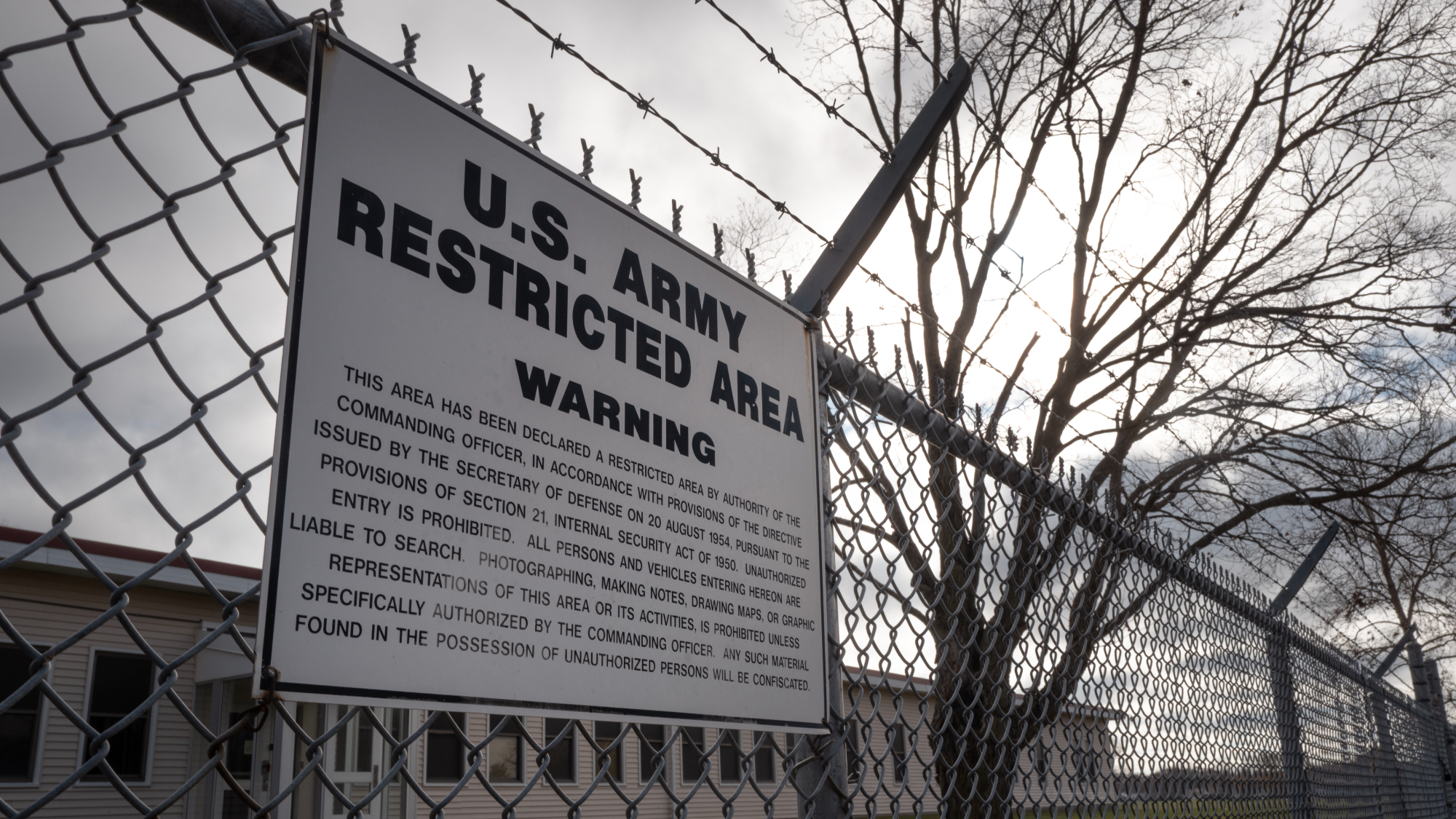
A sign hangs from a fence surrounding the Iowa Army Ammunition Plant, on November 23, 2026 in Middletown, Iowa.Scott Olson/Getty Get your news from a source that’s not owned and controlled by oligarchs. Sign up for the free Mother Jones Daily. After a lawsuit, shifting delays, and massive public outcry, the US Army now plans to detonate 68 barrels of lead azide explosives in Middletown, Iowa on Wednesday morning—instructing hundreds of residents, especially pregnant women, children, and the chronically ill, to evacuate before 9 a.m. local time on the day before Thanksgiving, and suggesting people in neighboring communities watch the wind to see where the explosion’s plume of lead-laced dust will drift. The evacuation zone now extends across portions of Iowa and Missouri. The US Army’s model of potential lead dispersal, as of 4:30 PM November 24. US Army In March, the military learned that five tons of lead azide placed in barrels at the Iowa Army Ammunitions Depot in 2009—when much of it was already decades old—had crystallized and could explode if moved. The military “moved away from” using lead azide 15 years ago due to its fragility. But the Iowa stockpile remained, and the crystallization wasn’t discovered until this year. At this point, there’s no possible way to remove the lead azide “beyond the controlled detonation that we have fully planned for and are prepared to safely execute,” said Major General Eric Shirley at a press conference Tuesday in Middletown, where Trump administration officials announced increased mitigation measures—including installing a dam around the explosives, then flooding the area with aqueous foam to absorb the lead—amid overwhelming public pressure. “Inaction is no longer an option,” Shirley said. Though blowing the lead azide up might be the only viable remaining option, it’s hardly risk-free, even with the additional measures that public scrutiny has forced on Washington. No level of lead in the bloodstream is safe for humans, according to the National Institutes of Health, and it’s particularly dangerous for pregnant women and small children. The mitigation efforts officials described were only put into action after the planned detonation last week. Politicians across Iowa and neighboring states have called for an investigation into the choices behind the detonation process—and why no one found out the explosive was decaying until March. Middletown Mayor Rodney Johnson, by contrast, appeared defensive in recent public statements. “This is a military installation and for the security of the nation. Not everything is public knowledge,” Johnson said, expressing concern about “how many keyboard warriors seem to forget we are at war.” In a Facebook post, he suggested “auctioning off the lead azide to suicide bombers.” During the press conference, officials reiterated that they had reached consensus to detonate the lead bomb through interagency coordination. “Thanks to the leadership of President Trump, he’s assembled some of the nation’s best leaders and most exquisite experts on mitigating the threats,” FEMA Administrator Cameron Hamilton said Tuesday. But many of the agencies involved had their budgets axed over the past year. The Army, alongside the EPA, FEMA, and the Department of Agriculture, have worked with the National Weather Service to track how weather forecasts will influence the explosion’s plume. Additionally, according to USDA undersecretary Richard Fordyce, impacted farmers and ranchers will be able to “access assistance available through other government entities and where applicable through existing USDA programs.” About 350 farms stand to be affected, Fordyce said. The EPA, FEMA, NWS, and the Department of Agriculture all experienced unprecedented budget cuts to government programs related to air quality, soil, water, and weather monitoring after Trump slashed climate funding. Many residents in the wider area have expressed confusion and panic after only receiving initial public notice last week. Marco Kaltofen, a visiting environmental scientist at Harvard and co-chair of the Army’s Superfund Restoration Advisory Board, said that Trump administration cuts to the federal workforce might factor into the relative lack of warning. “A lot of people have been let go,” he said. “Data can be interrupted by big cutbacks at scientific organizations,” and in the case of Iowa, “it’s harder to make good decisions if you don’t understand the history of what the Army has done in the past.” This isn’t the first time the Iowa Army Ammunition Plant has proved a hazard to the people around it. Since it opened in 1941, 70 people have died working there, according to the Army itself. In 1980, an Army hazardous materials assessment showed that the plant contaminated nearby farm wells with toxic “pink water,” a substance created when the explosive TNT leaches into waterways and reacts with sunlight. Beyond Middletown, the ammunition plant—which is owned by the Army, but operated by a subsidiary of engineering, defense, construction, and ammunition conglomerate Day and Zimmermann—causes physical and environmental harm abroad. As an investigation in the Nation laid out last year, the Israeli military purchased anti-tank shells from American Ordnance that were used to kill paramedics in Gaza who were trying to save five-year-old Hind Rajab. Neither that nor the fiasco in Iowa appear to have affected Day and Zimmerman’s revenue stream. The multibillion-dollar company won a new contract this year to build small modular nuclear reactors for the Department of Energy. American Ordnance, the subsidiary that operates the Middletown site, has multiple ongoing contracts to produce and load TNT projectiles for the Department of Defense. And in June, the company signed a $2.3 billion contract to take over yet another ammunitions depot—this time, the largest one in Nevada.
The Army’s “Lead Bomb” Plan Is Back On—Now Timed For Thanksgiving
Full Article
Original Source
Read the full article at Motherjones →KhanList aggregates and links to publicly available news content. We do not host full articles from third-party sources. Always verify important information with original sources.