
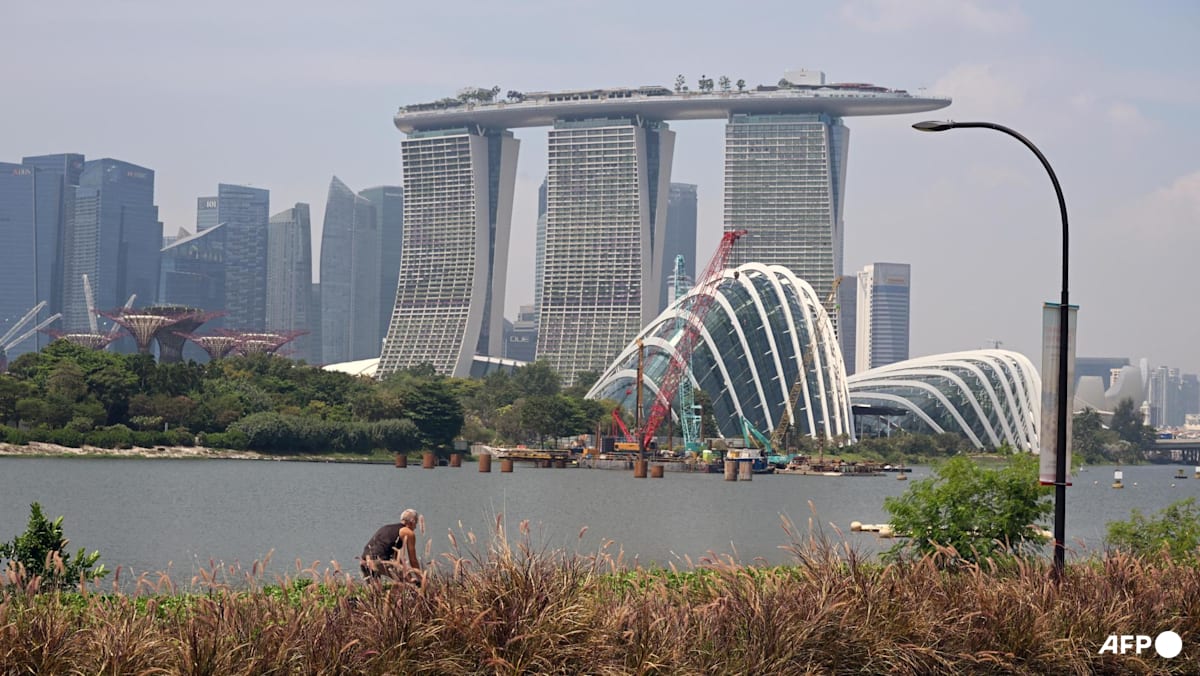
Commentary Recent disinformation campaigns that sought to portray Singapore’s hand in Indonesia’s affairs highlight the growing and evolving threat of foreign information manipulation and interference, says strategic consultancy managing director Nicholas Fang. The city skyline is seen through clear skies on Oct 27, 2026, as haze conditions improve in Singapore. (File photo: AFP/Roslan Rahman) New: You can now listen to articles. This audio is generated by an AI tool. SINGAPORE: Disinformation campaigns that occurred during the recent episode of transboundary haze have brought the threat of foreign information manipulation and interference (FIMI) to Singapore’s stability and security clearly into focus.FIMI is a term coined and used primarily by the European Union to describe coordinated, deceptive and manipulative behaviour by foreign state or non-state actors aimed at distorting the information environment and influencing a target country, government or society.A “FULL COURT PRESS” APPROACHAn article by CNA Verify last month highlighted hundreds of posts on social media and online which sought to portray Singapore’s hand in Indonesia’s affairs, at a time when the two countries were seeking to act against the haze problem.The online content which pushed or repeated false and unfounded claims about Singapore went beyond the issue of haze, illustrating how disinformation can involve a host of levers, such as different narratives and methods of amplification. The first of the false claims stemmed from Indonesia’s stock market rout after global index provider MSCI said it was considering downgrading Indonesia’s market status over governance concerns.Days later, former Indonesian trade minister Muhammad Lutfi alleged in videos posted online that Singapore’s state investors Temasek and GIC had influenced MSCI into the move – a claim denied by Indonesian stock exchange officials and Singaporean officials. In his other videos, Mr Lutfi also publicly criticised Singapore’s response to the haze.While there is no evidence linking Mr Lutfi’s comments to a coordinated disinformation campaign, the fact that Mr Lutfi is a former official and real person, as opposed to an anonymous or unverified online account, means his comments add a different complexion to the various narratives emerging around the time.Online narratives soon attempted to tie a subsequent announcement by Indonesia to reduce gas exports to Singapore with Mr Lutfi’s MSCI’s claim. There were also fictitious posts about a meeting between Singapore’s ambassador in Jakarta and a former Indonesian deputy foreign minister and local academic.These developments show how online and real-world content and actions can potentially have a combined effect on various segments of a society. This would be the case even if the individual activities are not centrally coordinated or planned. The falsehoods circulated included (left) a fabricated visit by prominent Indonesian figures to the home of the Singapore ambassador to Indonesia; and (right) warnings of Indonesia stopping gas exports to Singapore, while alluding to the latter's supposed role in Indonesia's market crisis. (Screengrabs: X) According to the same CNA Verify report, other efforts include the deployment of “buzzers”, or individuals who are paid to leverage social media to push messages, drown out other views, and repost and comment en masse to make a narrative look more popular than it is.What has emerged out of these various narratives and tools was – to use a sporting analogy – a “full court press” approach. This is a basketball term which describes a strategy where one team applies pressure and a range of tactics against its opponent across the entire length of the court, and can be seen as a change in disinformation tactics.It is not possible to confirm who directed these tactics nor the agenda of these efforts, but it does bear the hallmarks of FIMI campaigns that have been launched in other parts of the world, such as in the Ukraine war. And whether Singaporeans are the key target or collateral damage, the end effect of such a broad influence or interference campaign can still be troubling. IMPACT ON SINGAPOREFIMI operations typically seek to manipulate public perception, shape political decisions, and advance the strategic or national interests of malign state and non-state actors.Research has shown that such campaigns will often aim to erode public trust and international confidence in institutions including electoral systems, mainstream media and government processes in a target country.At the same time, they have sought to exploit existing social, ethnic, religious, or political divisions to create chaos, inflame tensions, and disrupt social cohesion.Eventually, this could lead to attempts to influence political outcomes, interfere in elections, sway public debate on major policy decisions or infrastructure projects, and discredit political candidates or figures.The effects of FIMI can be immediate, especially if deployed during times of crisis when people are already concerned and confused. But the long-term impact can be more significant if it undermines social compacts between citizens and government, or international trust and perception of a particular country. A small country like Singapore is not exempt nor immune from such potential threats. It is not clear if the recent disinformation campaigns were designed specifically to target Singapore or Singaporeans. In some cases, some of the messaging seemed targeted at a domestic Indonesian audience given the language used.But it is still possible to see how the various narratives deployed could potentially confuse Singaporeans when it came to their own government’s responses to the haze. There could also be impact to the country’s international reputation should the allegations of Singaporean manipulation of MSCI take root, resulting in a hit to Singapore’s credibility as a whole. Beyond the latest haze episode, the fact-checking team at Black Dot Research has also seen content claiming that China had outsized influence on Singapore, and others that have painted political and economic upheaval in Singapore after Mr Lawrence Wong took the helm as prime minister.The question then is what can be done to defend against such threats.INFORMATION RESILIENCE AS PART OF TOTAL DEFENCESingapore’s Total Defence strategy offers some hints as to what might be needed to guard against the rising FIMI threat.Introduced in 1984, Total Defence is a national concept consisting of six pillars – military, civil, economic, social, psychological and digital – in which every Singaporean has a part to play.Given that FIMI is often applied across all segments of a society, a holistic strategy like Total Defence would be an appropriate response. Of the six pillars, the focus on psychological defence and the most recent addition of digital defence would serve as the most relevant counters to potential FIMI attacks in the future. With what we know of FIMI’s evolution and how much of FIMI attacks are deployed in the information space and seek to impact target audiences at the cognitive level, a separate focus on building information resilience within Singapore’s Total Defence strategy may also be warranted.Information resilience is defined as the ability of individuals, organisations and systems to anticipate, absorb, adapt to, and recover from disruptions, manipulation, or failures in the information environment.Enhancing awareness and capabilities in this aspect will complement digital defence when it comes to combating disinformation and online falsehoods, while also supporting psychological defence when it comes to building collective will to defend our way of life, and the resolve to overcome crises together. Doing so would require Singapore to adopt a whole-of-nation approach that spans government actions such as legislation and regulation, public outreach and education, especially of younger and more digitally connected generations, and the development of critical thinking, media literacy and cognitive skills at all levels of society.The importance of a strong and credible media sector, and the development of other stakeholders such as fact-checkers and academic institutions specialising in the study of FIMI threats, will also be critical.Nicholas Fang is founder and managing director of market research consultancy Black Dot Research, which operates an independent fact-checking platform. He is also a former Nominated Member of Parliament, and currently chairs an expert panel on strategic communications for the Ministry of Defence. He writes a monthly column for CNA.
Commentary: Why information resilience matters more than ever for Singapore’s national security
Full Article
Original Source
Read the full article at Channelnewsasia →KhanList aggregates and links to publicly available news content. We do not host full articles from third-party sources. Always verify important information with original sources.