
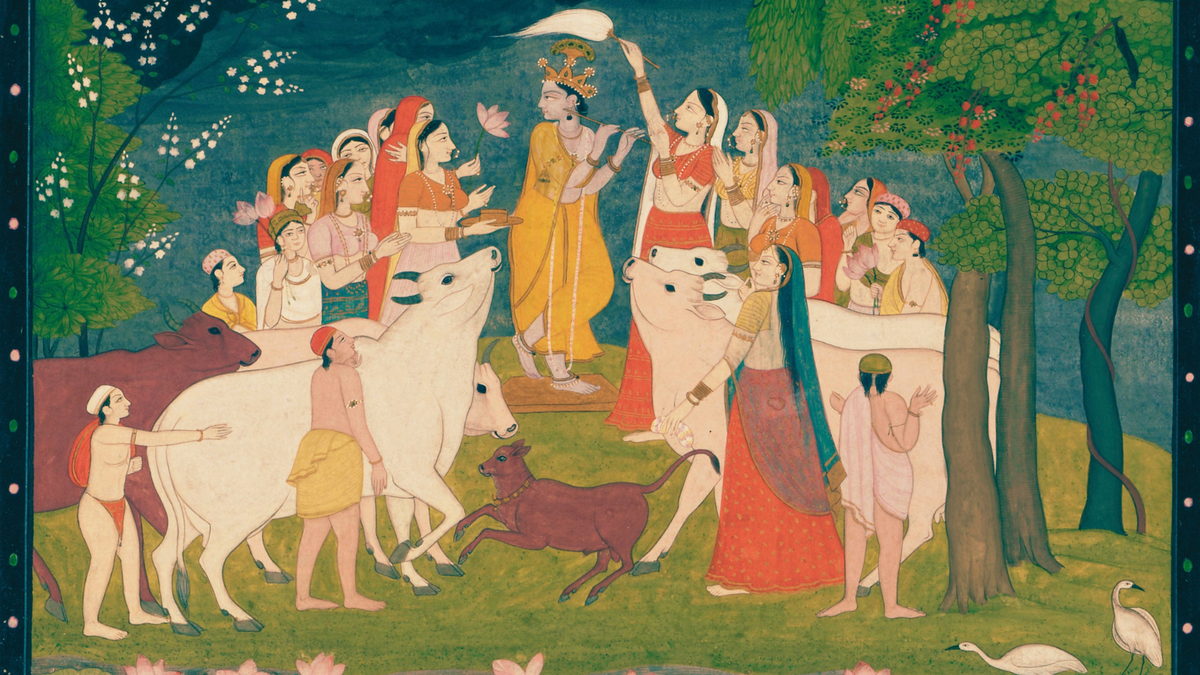
India does not have one Krishna, it has many. Each region, language, social class, and historical moment has shaped its own idea of who Krishna was, and what he meant.Medieval Bhakti saints worshipped Krishna but they also reinvented him, through poetry, song, philosophy, theatre, and ritual. These Krishnas reflect local anxieties, political pressures, caste negotiations, gender ideals, and spiritual aspirations. The Krishna avatar of Lord Vishnu at Sri Venkateshwara temple | Photo Credit: WikiCommons In Maharashtra, Chakradhar Swami (1194-1274 CE) offered perhaps the starkest Krishna. Founder of the Mahanubhava or Manobhava tradition, the Hindu philosopher rejected the playful, erotic Krishna of popular devotion. For Swami, he was a historical human incarnation, a perfected yogi, and a strict ethical exemplar. And Radha, the gopis, and the rasa-lila were all dismissed as corruptions. What remained was a severe Krishna and devotion meant obedience, moral rigour, celibacy, and mental restraint. This Krishna suited a community that valued renunciation, control of desire, and inward discipline in a time of political instability and social flux.From tender guide to beloved loverBarely a generation later, Marathi saint-poet Dnyaneshwar (1275-1296 CE) reimagined Krishna in radically different terms. In the book Dnyaneshwari, Krishna becomes cosmic consciousness and tender guide. An intimate companion and a metaphysical principle. The gap between saguna (having form) and nirguna (formless) collapses. This Krishna reflects a world less anxious about discipline and more interested in experience and poetic theology. The deity here is not a distant ruler.In Assam, Srimanta Sankardev (1449-1568 CE) shaped a Krishna of sovereignty and moral order. The polymath’s eka-sarana-nama-dharma emphasised surrender to a single supreme god. Krishna here is primarily Vishnu-Narayana, the cosmic ruler and creator. Radha is marginal; rasa-lila is restrained. The goal is ethical discipline and communal reform. Sankardev’s Krishna helped forge Assamese cultural identity through monasteries, theatre, music, and dance, offering stability in a frontier region marked by tribal diversity and political turbulence. Lord Krishna playing the flute | Photo Credit: WikiCommons In Bengal, saint Chaitanya Mahaprabhu (1486-1534 CE) created the most emotionally intense Krishna tradition. Here he becomes the beloved lover of Vrindavan, encountered through longing, separation, tears, ecstatic singing, and emotional collapse. Radha moves to the centre and the cosmic Vishnu retreats. What dominates is madhurya bhava, erotic mysticism, where devotion is intoxication and salvation is emotional union. This Krishna emerges from Bengal’s lush agrarian landscape, its musical culture, and its deep emotional expressiveness, transforming theology into aesthetic experience.When god walked among usLong before Mahaprabhu, the Tamil Alvars (the poet-saints from 600-900 CE) had already created an emotionally charged Krishna. Writing in the voice of women longing for their beloved, they turned him into lover, child, king, and cosmic god simultaneously. The Alvar Krishna is emotionally vulnerable, and Bhakti becomes a theatre of passion, where divine and human emotions mirror each other. Their poetry shaped temple ritual, iconography, and theology across south India, creating a Krishna who cries, hides, seduces, and abandons, only to return again.In the Braj region, devotional poet Surdas (1478-1583 CE) softened Krishna further, turning him into the mischievous child and tender cowherd. His poetry focuses on bal-lila, maternal affection, domestic intimacy, and playful charm. Krishna steals butter, breaks pots, teases gopis, and demands attention. Erotic mysticism exists but remains gentle and deeply affectionate. This Krishna enters kitchens and courtyards, and is emotionally accessible and human. He suits a devotional culture rooted in household piety rather than monastic withdrawal or philosophical abstraction. A Vatapatrashayi miniature of Krishna from Nathdwara, Rajasthan | Photo Credit: WikiCommons In Gujarat, Narsinh Mehta (1414-1481 CE) infused Krishna with social conscience. The poet’s Krishna stands with the poor and the marginalised. The divine walks among leather workers, widows, and the oppressed, and devotion becomes empathy and ethical responsibility. Bhakti here becomes a critique of caste arrogance and ritual pride. This Krishna reflects Gujarat’s mercantile world — its exposure to plural cultures and its concern with social harmony.Divinity was never singularAcross these traditions, Krishna moves along multiple emotional axes. Each answers a different human need. Swami’s Krishna restrains desire; Dnyaneshwar’s dissolves the self; Sankardev’s orders society; Mahaprabhu’s intoxicates emotion; the Alvars’ dramatises longing; Surdas’ comforts the household; and Mehta’s awakens compassion.The many Krishnas of medieval India reveal that divinity was never singular or fixed. God was not an absolute idea imposed from above. Each community carved its own Krishna, reflecting its fears, hopes, struggles, and dreams. In doing so, medieval saints turned theology into anthropology, using Krishna not to escape the world, but to understand it more deeply.Devdutt Pattanaik is the author of 50 books on mythology, art and culture.
Column by Devdutt Pattanaik | India has many Krishnas
Full Article
Original Source
Read the full article at Thehindu →KhanList aggregates and links to publicly available news content. We do not host full articles from third-party sources. Always verify important information with original sources.