
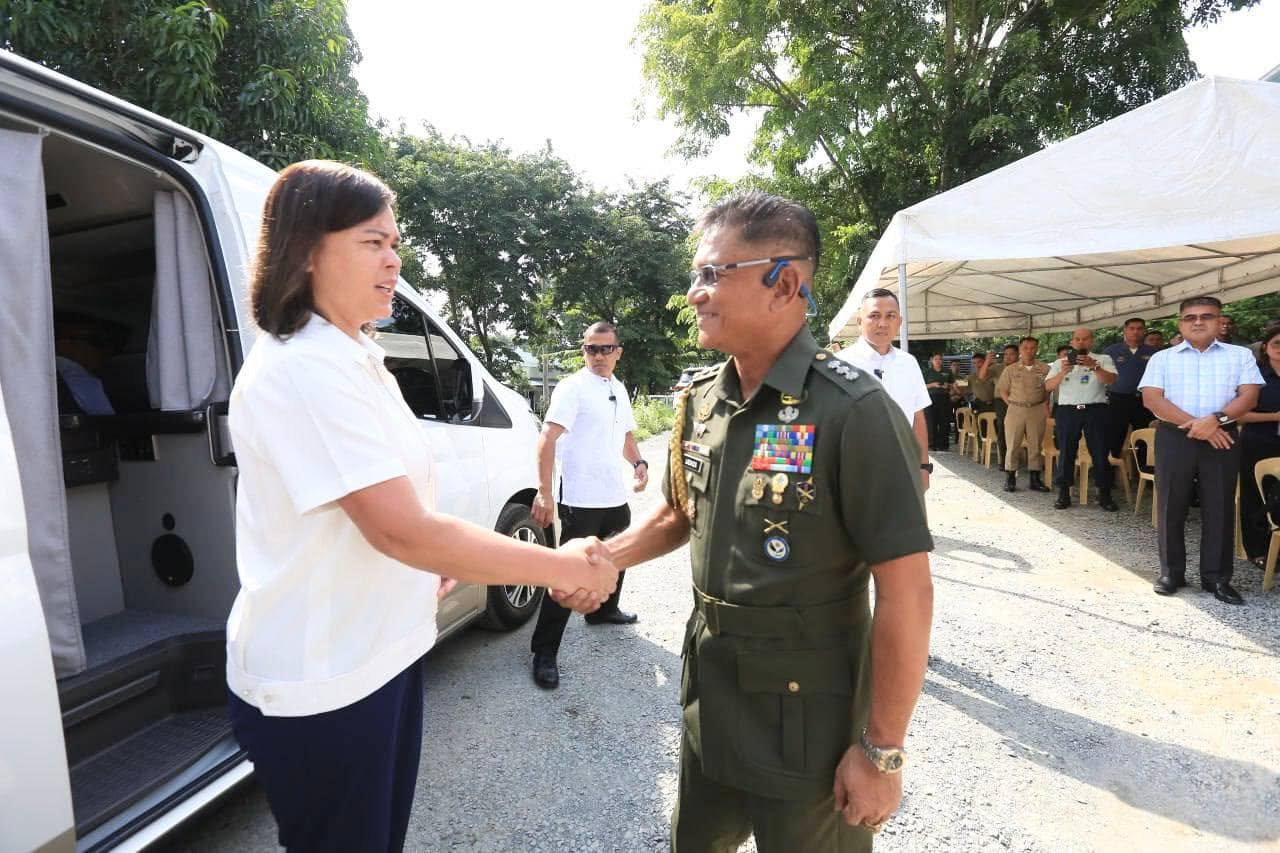
Colonel Raymund Lachica, a key figure in the impeachment trial of Vice President Sara Duterte, is accused of mismanaging confidential funds, but his potential testimony remains uncertain as neither the prosecution nor defense has requested his appearance. Lachica's background includes a long military career and direct involvement with the funds in question, raising concerns about the implications of his testimony for both sides in the trial. The prosecution is hesitant to call Lachica as a witness due to the unpredictability of his testimony, while the defense is also weighing the risks of bringing him forward, leaving the court's potential involvement as a possibility. This is AI-generated. Read the article for full context. Report any errors. Among the most frequently mentioned names in the impeachment trial of Vice President Sara Duterte is the military man who has yet to take the witness stand — and it is up in the air whether he will actually have his day in this televised court proceeding. Colonel Raymund Lachica, former security officer of the Vice President, is accused of unlawfully disbursing the confidential funds of the Office of the Vice President. The prosecution’s previous hostile witnesses — former OVP special disbursing officer (SDO) Gina Acosta and assistant chief of staff Lemuel Ortonio — confirmed that the secret funds worth half a billion pesos across four quarters in 2022 and 2023 were handed over to Lachica. Senator-judges have expressed interest in hearing Lachica’s side of the story, with Senator Erwin Tulfo describing Lachica as the “missing link” in the story of Duterte’s alleged misuse of public funds. Neither the prosecution nor the defense, however, has committed to making a request for the issuance of a court subpoena against him. Calling him to testify carries great risks for the opposing counsels, despite the potential of his testimony bolstering their cases before the court. The allegations against Lachica The 55-year-old Lachica hails from La Union, graduated from the Philippine Military Academy as part of the “Maalab” Class of 1993, and has built a decades-long career with the Philippine Army, holding various posts. Despite his roots in the north, he’s been familiar with southern Philippines. His LinkedIn profile says he had been “company commander from 1996 to 1999 and also a field station commander of an intelligence unit operating in the provinces of Davao del Norte, Compostela Valley, and Davao Oriental in Mindanao.” He was also chief of operations for the Western and Eastern Mindanao Commands, the latter covering the Davao region, the bailiwick of the Dutertes. His family currently resides in Tagum City. He became the commander of the Vice Presidential Security and Protection Group (VPSPG) in July 2022, and held the post until October 2025, when the Armed Forces of the Philippines reassigned Lachica back to the Army after he was linked to the confidential fund scandal. While the AFP said it later subjected him to an investigation, it ended the probe and passed the responsibility to the Ombudsman. Lachica’s role in the fiasco is crucial because he is alleged to have directly handled the funds turned over to him by Acosta, and exclusively liaised with supposed informants who were paid in cold cash on the ground. Lachica provided acknowledgment receipts that became the basis of the OVP’s submissions to the Commission on Audit (COA), which later slapped notices of disallowance against the agency. Even though Acosta was the SDO and Ortonio oversaw the financial services of the OVP, Lachica did not report to them about the confidential activities of the agency, which implies that the only other person who knew how the money was spent was Duterte herself. Prosecution’s reluctance Lachica’s testimony could offer a fresh perspective on the longstanding allegations of confidential fund misuse by the Vice President. Such accusations have been hurled against her as early as 2023, but despite piling evidence, she remains the most trusted official in government. But the prosecution team appears to stick to a talking point: downplay the importance of Lachica in building its case against the Vice President. “I am more inclined not to present Lachica and (Colonel Dennis) Nolasco,” lead prosecutor Jinky Luistro said. “But this is just my personal position. As a matter of practice, we always decide as a team.” Here’s the problem for the prosecution: Lachica is a wildcard whose unpredictable testimony could be a make-or-break move for Luistro’s team. Unlike Acosta and Ortonio who already faced the House good government inquiry in 2024 and made on-record statements about the scandal, Lachica has not. Should the prosecution present Lachica as a hostile witness, it cannot know in advance what he will say before the court. He could simply not tell the truth, and should he do that, there will be no prior testimony that the prosecution can compare to. “He’s a military man, and these are wily characters. They are used to lying when necessary…. I think this kind of character can lie by concealment more efficiently and competently than anyone else. If I were in the prosecution, I will not call him to the witness stand,” constitutional lawyer Lulu Reyes told Rappler. He could also say the truth, but the prosecution has to be prepared to counter whatever damaging information that Lachica would provide outside the scope of its questions. The prosecution asserts that the evidence it has presented so far is sufficient to establish that Duterte abused her powers and defied the joint circular that governs confidential spending when she allowed the handover of the important secret funds to a person other than her SDO. Worse, Lachica is not covered by a fidelity bond, and is not even from the OVP, but from the AFP. “I think they’re building a case on misuse and abuse of funds. So far, they have been succeeding in building that case, that story. I think they are building a case towards making it unavoidable for the defense to be the one to call Lachica. They want the defense to call Lachica,” constitutional lawyer John Molo told Rappler. Burden shifts? So if the prosecution won’t call him, maybe the defense will? Duterte’s legal counsel Michael Poa said it’s not yet in their plans, as they will have to evaluate whether Lachica will be integral to the Vice President’s defense. By letting the defense take the lead in calling Lachica to the witness stand, the prosecution gets to avoid the tradeoffs that come with examining a hostile witness, such as giving the defense a free preview of its theory, and a chance to rehabilitate the witness through its own follow-up questions. “(The prosecution can be like) ‘Ask the defense, because our job is to prove the misuse of funds. Once that is established, the burden of evidence shifts. The senators will be asking, maybe Lachica should be called to testify,” Molo said. Lachica was listed as a potential witness by the prosecution in its pre-trial brief, while the defense didn’t. But should the defense team change its mind, there’s nothing stopping them from requesting the court for a subpoena against Lachica. If that happens, the move comes with the risk of giving the prosecution a chance to pounce on the credibility of Lachica’s claims. “If the defense calls him to the witness stand, that will subject him to cross-examination by the prosecution. If by that time, the prosecution has additional information regarding the actual usage of the P500 million, he will not be able to deny or refute anymore,” Reyes said. Lachica has expressed willingness to take part in the trial and set the record straight. If neither the prosecution nor defense avails of the opportunity, the court has the residual power to call him only after both camps have presented their respective evidence. – Rappler.com
Colonel Raymund Lachica: The ‘missing link,’ and the trial’s wildcard
Full Article
Original Source
Read the full article at Rappler →KhanList aggregates and links to publicly available news content. We do not host full articles from third-party sources. Always verify important information with original sources.