
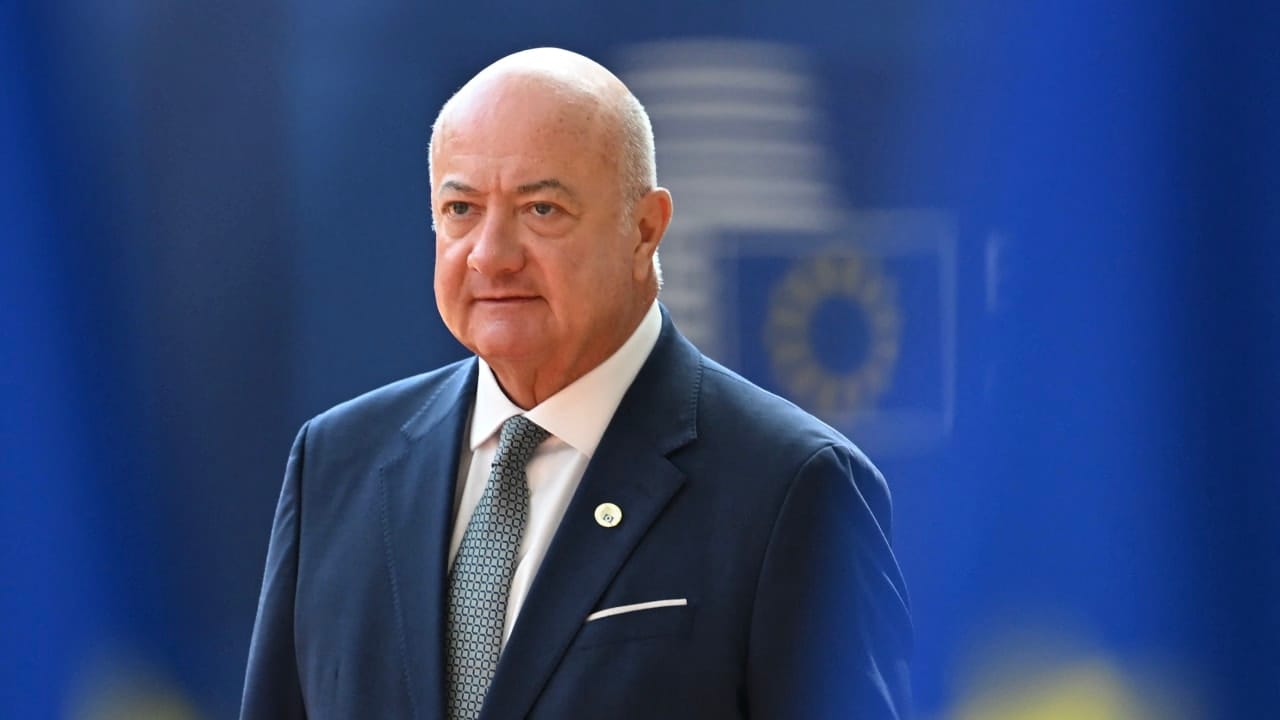
Stocker said religious freedom must be protected, but argued it ends when believers and nonbelievers are treated differently, women lack equal rights, or state institutions are not respected.Follow us on GoogleAustria's Chancellor Christian Stocker arrives to attend the EU Summit at the EU headquarters in Brussels, on June 19, 2026.(photo credit: NICOLAS TUCAT / AFP via Getty Images)SEPTEMBER 1, 2026 17:20Austria’s government is beginning to work on a proposal to constitutionally ban “political Islam,” after Chancellor Christian Stocker called for the legislation and Integration and Europe Minister Claudia Bauer said she would draw up a proposal for the coalition partners.ORF first reported on August 30 that Bauer is preparing the proposal and intends to send an outline to SPÖ and NEOS. This was then confirmed by Bauer on social media.Stocker first raised the possible legislation in an interview with Heute on August 28. The chancellor expressed his intention to implement a constitutional law on political Islam, which he called “incompatible with democracy and Western values.”In a statement, Stocker said, “I do not want our children and grandchildren to grow up in an Islamic state.”Stocker argued that everyone in Austria is free to believe whatever they want and to have whatever faith they choose, “But where believers and non-believers are treated differently, where men and women do not have equal rights, and where our institutions, authorities, and courts are not respected, that freedom ends.”Pro-Palestine demonstrators attend a rally against Israeli aggression called by Amnesty International and others near the Bundestag on February 15, 2025 in Berlin, Germany. (credit: Guy Smallman/Getty Images)Stoker: “It cannot be allowed to happen...that a preacher dictates things rather than Parliament”He then claimed that there is a relative majority of Muslim students in Viennese schools, but “The crucial question is: Will these students become democrats who accept and abide by our legal system and live alongside our society? Or will they become Islamists and be politically influenced?”Here, Stocker cited a recent figure that pupils with an Islamic religious affiliation represented 41.2% in Vienna’s primary and middle schools, constituting a relative majority.“It cannot be allowed to happen in this country that a preacher dictates things rather than Parliament,” Stocker added. “It must not be the case that morality police in schools determine what girls should wear or how they should behave. Nor can we ignore the foundations of an ‘honor killing’ while punishing only the act itself. That is why I am in favor of regulating this at the constitutional level as well.”Bauer reposted the statement, adding, “We will fight political Islam with all means available.”This follows an earlier proposal by the Freedom Party (FPÖ) in March 2026. The proposal would prohibit activity in support of political Islam or its objectives, dissolve mosques and organizations deemed part of political Islam, confiscate their assets, and potentially revoke Austrian citizenship from members/supporters.Political Islam in AustriaAustria has long been concerned about political Islam, even launching the Documentation Center for Political Islam (Dokumentationsstelle Politischer Islam) in 2020.The Center defines political Islam as “an ideology of supremacy that aims at influencing or changing society, culture, state, policy, politics, and/or polity according to such values and norms that are declared as Islamic by the actors of Political Islam, but are not shared by the majority of Muslims and are in clear contradiction to the rule of law, democracy, and human rights.”The aim of the Center is to research, document, and report on possible foreign influences on Islamist associations active in Austria.Its research has examined the role of the Muslim Brotherhood in Austria, the influence of Turkey’s Directorate of Religious Affairs (the Diyanet), and even the presence of Hezbollah and Hamas.When the Center was established, then-integration minister Susanne Raab stressed that Austria wanted to distinguish Islam as a religion from what she described as the extremist ideology of political Islam. She specifically said the government was not placing Muslim institutions or Muslims generally under suspicion.The Austrian Federal Chancellery’s 2025 National Situation Report discusses “Political Islam” as a security threat and distinguishes between violent/hard-power Islamism and “soft power” Islamism, which it describes as attempts to advance Islamist agendas through legal and political means.Follow us on Google
Austrian gov’t begins work on constitutional ban of ‘Political Islam'
Full Article
Original Source
Read the full article at Jpost →KhanList aggregates and links to publicly available news content. We do not host full articles from third-party sources. Always verify important information with original sources.