
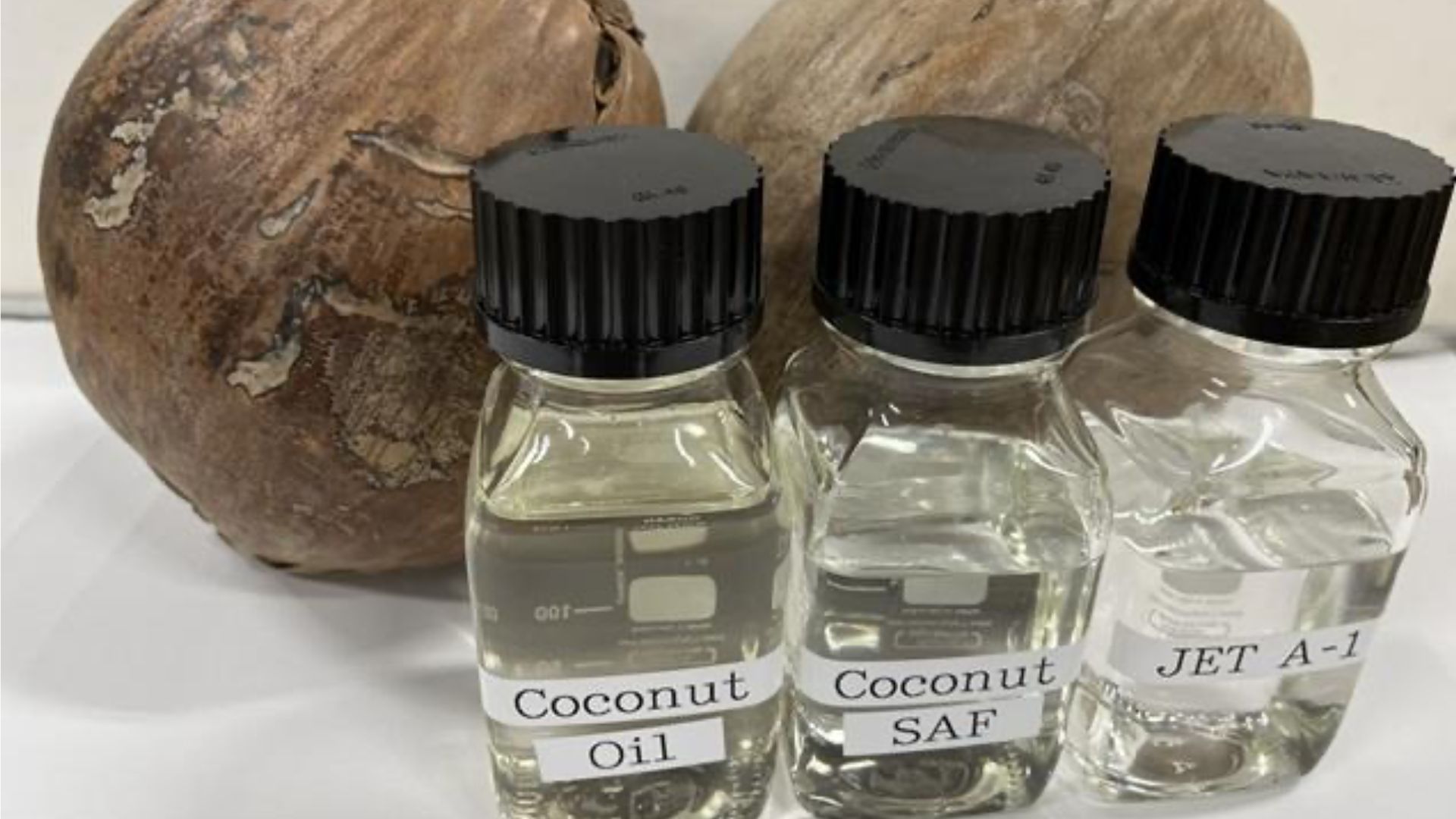
Researchers at Osaka Metropolitan University have developed a coconut oil-based biofuel blend that works with regular jet fuel and keeps engine efficiency high. They used a new cosolvent method to make the fuel at room temperature and normal pressure, which could lower the energy needed for production. The study examined how coconut-derived biofuels perform when blended with Jet A-1, a widely used aviation fuel. The researchers tested the blends in a small turbojet engine to assess fuel consumption, thermal efficiency, and exhaust emissions. A simpler way to produce aviation biofuel Coconut oil has attracted interest as an aviation fuel feedstock because its fatty acid chains are similar in length to those needed for jet-fuel hydrocarbons. This could allow coconut-derived fuel to be produced with relatively limited processing. The team at Osaka Metropolitan University used a cosolvent process that mixes coconut oil extracts with acetone and alcohol. This method works at ambient temperature and normal pressure, which lowers the energy needed and helps keep the fuel pure. The researchers produced two types of biofuel. Fatty acid methyl ester (FAME) was made using methanol, while fatty acid ethyl ester (FAEE) was produced using ethanol. Blending coconut fuel with Jet A-1 The team then mixed different amounts of FAME and FAEE with Jet A-1. The team tested these blends in a small turbojet engine to determine how the added biofuel affected its operation. Fuel consumption increased as the biofuel proportion rose. The researchers attributed this mainly to differences in the heating values of the biofuels compared with conventional Jet A-1. Despite the higher fuel consumption, thermal efficiency stayed at a level comparable to Jet A-1. This suggests the coconut-based blends could operate without causing a major reduction in how effectively the engine converts fuel energy into useful output. Hydrocarbon emissions show a decline The engine tests also revealed a reduction in hydrocarbon emissions as the biofuel blend increased. At the same time, the researchers found no significant changes in carbon dioxide or nitrogen oxide emissions. These results indicate that the coconut-based fuel could reduce some exhaust pollutants while preserving engine performance. “The experiments showed that our fuel blend can operate in existing gas turbine engines without major loss of efficiency or engine performance, and without increasing emissions,” Dr. Huynh Phuong Uyen Nguyen of the Graduate School of Sustainable System Sciences said in the press release. Discarded coconuts could supply fuel The approach could be particularly valuable in Southeast Asia, where large quantities of coconuts are grown. Around 30 percent of harvested coconuts are reportedly discarded because they fail to meet commercial standards. Such waste could provide a feedstock for aviation biofuel production. The researchers also see the technology as a possible way to improve fuel security in regions vulnerable to disruptions in conventional fuel supplies. “In the future, we want to improve fuel consumption performance and establish technologies for operating engines on 100 percent biofuel,” Dr. Shinichiro Ogawa added. “Looking ahead, we also want to advance the practical application of this fuel by improving its long-term storage stability, material compatibility and environmental impacts through life cycle assessment.” The study was published in the journal Fuel.Get the latest in engineering, tech, space & science - delivered daily to your inbox.A versatile writer, Sujita has worked with Mashable Middle East and News Daily 24. When she isn't writing, you can find her glued to the latest web series and movies.
Coconut-derived biofuel could run turbojet engines without hurting performance
Full Article
Original Source
Read the full article at Interestingengineering →KhanList aggregates and links to publicly available news content. We do not host full articles from third-party sources. Always verify important information with original sources.