
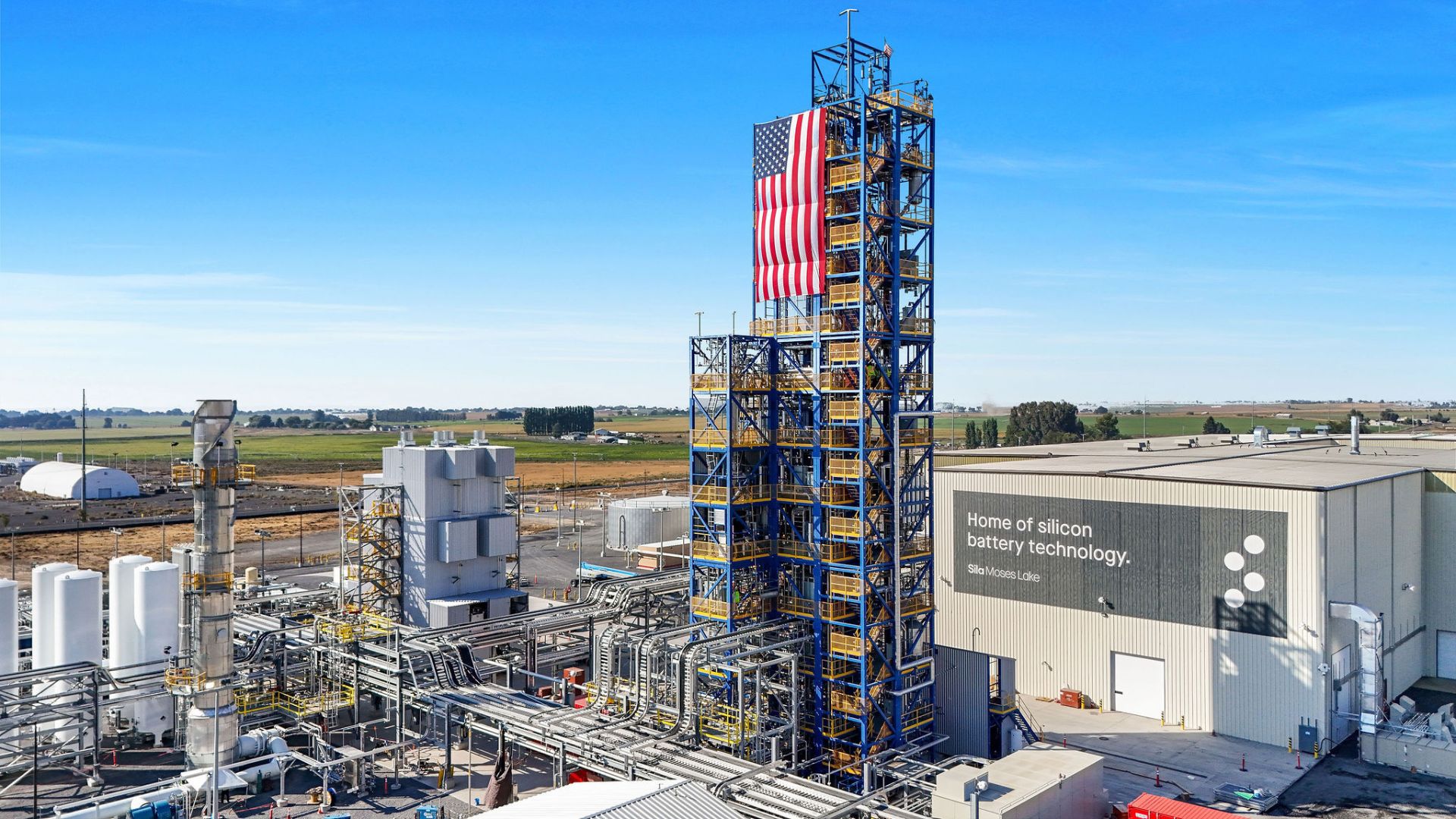
Producing an advanced battery material in a laboratory is one challenge. Manufacturing the same material reliably at industrial scale presents another. Sila has reached a manufacturing milestone for its silicon-carbon anode technology. Its Moses Lake, Washington facility earned ISO 9001:2015 certification as production moves toward commercial scale. The certification focuses on the quality systems behind the factory. For silicon-based anodes, maintaining consistent production could prove as important as developing the material itself. Silicon can store far more lithium than conventional graphite. Yet its tendency to expand during charging and discharging has limited its wider use. Scaling silicon anodes Battery developers have pursued silicon anodes for years because of their energy-storage potential. Most lithium-ion batteries still rely primarily on graphite anodes. Silicon can store substantially more lithium than graphite. However, repeated expansion and contraction can damage the anode and reduce battery life. Solving that engineering problem represents only part of the challenge. Manufacturers must also reproduce the material consistently across increasingly large production runs. Even small changes in raw materials or processing conditions can affect battery performance. Scaling production therefore requires strict control over manufacturing processes. Sila’s Moses Lake plant will manufacture Titan Silicon, its silicon-carbon anode material. The facility is designed to increase production for transportation and other advanced technologies. Automation drives consistency The facility relies heavily on automated production systems. That approach aims to reduce variations that can emerge from manual manufacturing processes. Sila’s manufacturing execution system manages production recipes and raw material requirements. It also checks reactor readiness before processing begins. Material traceability forms another part of the system. The company can follow materials from their arrival through processing, analysis and final output. Such controls matter because battery manufacturers need predictable materials for cell production. Variations in an anode could affect performance across large numbers of battery cells. Automated controls can help maintain consistent conditions during repeated production cycles. Sila also uses redundant systems designed to support reliable material output. The company now faces the larger test of maintaining those standards as production volumes grow. Commercial manufacturing can expose challenges that remain hidden at smaller scales. Sila also plans to pursue IATF 16949 certification. The automotive standard would prepare Moses Lake for stricter requirements from vehicle manufacturers. Funding backs expansion Sila already produces Titan Silicon at its Alameda, California facility. According to the company, that plant has operated continuously for more than seven years and maintained yields above 95 percent. Moses Lake represents a larger manufacturing test for the technology. The Washington facility could show whether silicon-carbon anodes can scale into significantly greater production volumes. Federal financing could help accelerate that effort. Sila recently received a conditional loan commitment worth up to $1.4 billion through the Department of War’s Office of Strategic Capital. The funding would support additional capacity at Moses Lake. Greater domestic production could also reduce US dependence on overseas suppliers for advanced battery materials.The certification does not guarantee commercial success. It does show that Sila has established quality controls before entering its next production phase.Get the latest in engineering, tech, space & science - delivered daily to your inbox.Aamir is a seasoned tech journalist with experience at Exhibit Magazine, Republic World, and PR Newswire. With a deep love for all things tech and science, he has spent years decoding the latest innovations and exploring how they shape industries, lifestyles, and the future of humanity.
Washington plant wins key certification to unlock mass silicon battery anode production
Full Article
Original Source
Read the full article at Interestingengineering →KhanList aggregates and links to publicly available news content. We do not host full articles from third-party sources. Always verify important information with original sources.