
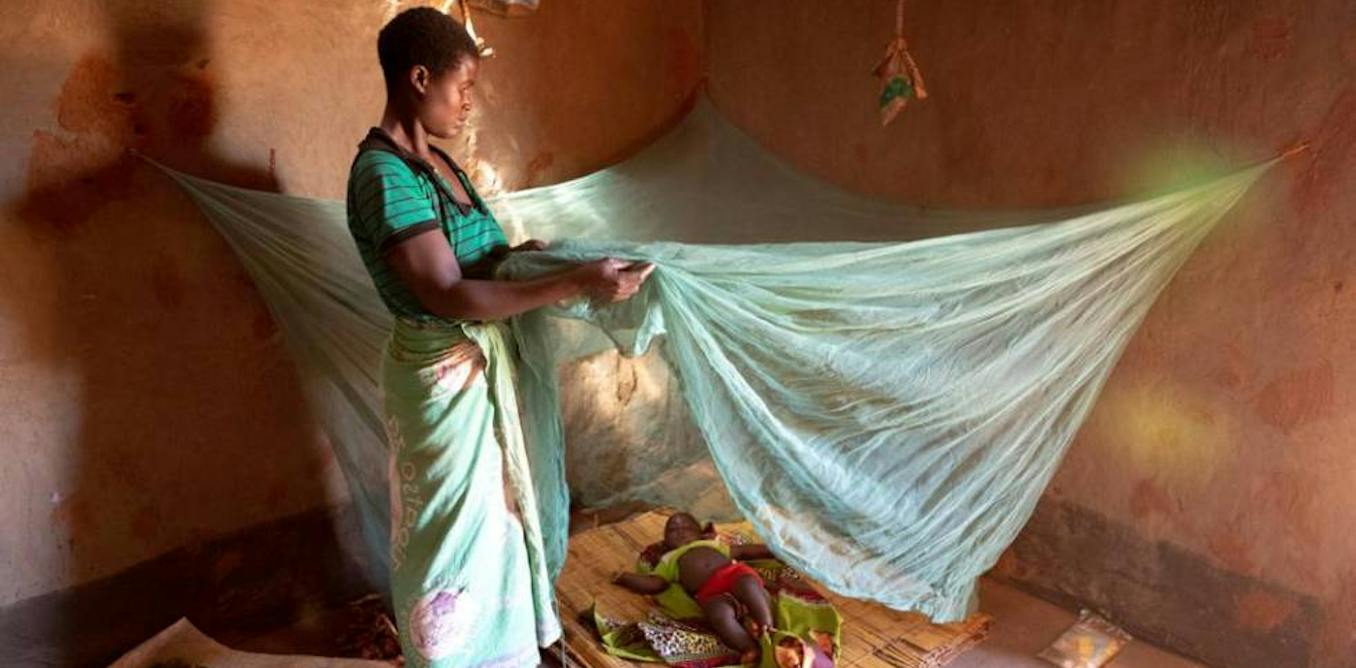
Malaria control and elimination efforts across the Southern African Development Community (SADC) are at a critical point. Over the past two years, case numbers have increased in the region. Several countries have reported reversals in hard-earned gains. People living in malaria-prone areas are at a higher risk than before. Four countries in the region, the Democratic Republic of Congo, Mozambique, Angola and Tanzania, have some of the world’s greatest malaria burdens. This is calculated by the number of new malaria cases per 1,000 people at risk annually. Combined, these countries account for 22.9% of the global malaria burden. The World Health Organization’s (WHO) target to eliminate malaria by 2030 are now harder to reach. Getting the SADC region back on track is going to take a huge effort, with people working together. Multiple threats are occurring at the same time here and all demand prompt, effective responses. National malaria programmes are overstretched and under-resourced. An unpredictable, rapidly evolving global health funding landscape is making this worse. African malaria programmes have largely depended on donor funding. South Africa is one of the few exceptions: the country funds almost all of its programme. I head the Laboratory for Antimalarial Resistance Monitoring and Malaria Operational Research at the South African National Institute for Communicable Diseases. We monitor antimalarial drug resistance in malaria endemic districts in South Africa and neighbouring countries. Based on what we are seeing, I believe that African governments should be investing more in their own countries’ malaria control and elimination efforts. Extreme weather events have also become more frequent in the region. This has increased the risk of infectious diseases spreading. Countries need to prepare and make plans to respond to the impact of extreme weather events. Adding to the problem is the persistence of drug and insecticide resistance. Malaria treatments are not working as well as before because the parasite has adapted. The region needs genomics hubs that can help monitor how parasites respond to prevention interventions and treatment. Funding cuts The sudden end of US government funding to support essential malaria control activities in 2025 has made it more difficult for the Global Fund to meet its replenishment target of US$18 billion for Grant Cycle 8. Every three years countries around the word are called upon to contribute to The Global Fund to Fight Aids, Tuberculosis and Malaria. Country allocations for the grant cycle running from 2026-2028 are on average 18% lower than previous allocations. As a result, countries that receive grants must make difficult choices about who to protect, how, and where. It’s no longer possible to do everything everywhere. This is on top of already having to scale back activities such as distributing insecticide treated bednets, carrying out malaria indicator surveys and using drugs to prevent malaria infections. Interventions with a proven record of protecting the most vulnerable and at-risk populations are put first, ahead of less cost-effective interventions. This creates a gap in the protection of less vulnerable populations. And funding activities that focus on elimination is no longer a priority. As a result, case numbers have increased in several countries, including Mozambique, Nigeria and Uganda. These sudden, unexpected shifts in donor priorities highlight the vulnerabilities of country programmes. They are over-reliant on donor funding for core activities. Impact of climate change The La Niña weather system in early 2026 caused severe flooding in several SADC countries. It damaged essential infrastructure, displacing local communities. The floods have driven up malaria numbers in several countries, including Zimbabwe, Mozambique and South Africa. Mozambique saw a 55% increase in cases in the first six weeks of 2026 compared to the same period in 2025. Zimbabwe reported 65,399 cases during the first quarter of 2026, almost twice as many as reported in quarter one of 2025. Displaced populations, like the region’s mobile and migrant populations, frequently cross borders to get essential services in neighbouring countries or regions. This increases the strain on over-burdened healthcare facilities, and the risk of drug stockouts. In 2025 the International Organization for Migration and the United Nations High Commissioner for Refugees estimated there were around 11.4 million forcibly displaced individuals in the SADC region. That is a 35% increase from 2023. All SADC countries need effective early warning systems and plans to respond to extreme weather events, unexpected influxes of displaced people and increases in infectious diseases. These must be supported by prompt data sharing and strong regional coordination and cooperation. While the “super” El Nino weather system is expected to bring hot, dry conditions to southern Africa, heavy rain and flooding are predicted for east and central Africa. This could potentially mean increased movement of displaced populations and diseases into the SADC region. Fully funded regional preparedness and response plans, supported by well-functioning regional coordination mechanisms, are essential in this context. Persisting challenges Scientists have confirmed that in some areas the recommended malaria treatments are not as effective as before. Genetic changes in the malaria parasite are the reason. But not all SADC countries have the capacity to find and analyse this kind of genetic evidence. Establishing regional hubs for genomic surveillance would enable prompt detection of emerging resistance signals. Without this proactive surveillance, there is an elevated risk of drug-resistant outbreaks and increases in malaria-related deaths. Despite numerous training initiatives such as the E8 entomological fellowship, skilled entomologists (scientists who study insects) remain scarce within national malaria programmes. This limits the options for monitoring mosquito populations and determining whether they are becoming resistant to insecticides. It’s then harder to select the most appropriate vector control measures based on available evidence. In the current environment of limited resources, establishing new training programmes will be challenging. Getting back on track If the SADC region is committed to eliminating malaria by 2030, domestic funding must fill intervention gaps and support critical elimination activities. If nothing is done, cases will probably increase in some areas and populations. Countries should consider using existing mosquito specialists within the region for peer-to-peer learning and capacity building. The genomic hubs established for drug resistance monitoring should also support surveillance of insecticide resistance in the region. The high degree of interconnectedness across the region, combined with shrinking health budgets, strongly suggests malaria elimination will not be achieved without sustained regional collaboration and coordination.
Climate change and funding cuts threaten malaria targets: what SADC countries can do
Full Article
Original Source
Read the full article at Theconversation →KhanList aggregates and links to publicly available news content. We do not host full articles from third-party sources. Always verify important information with original sources.