
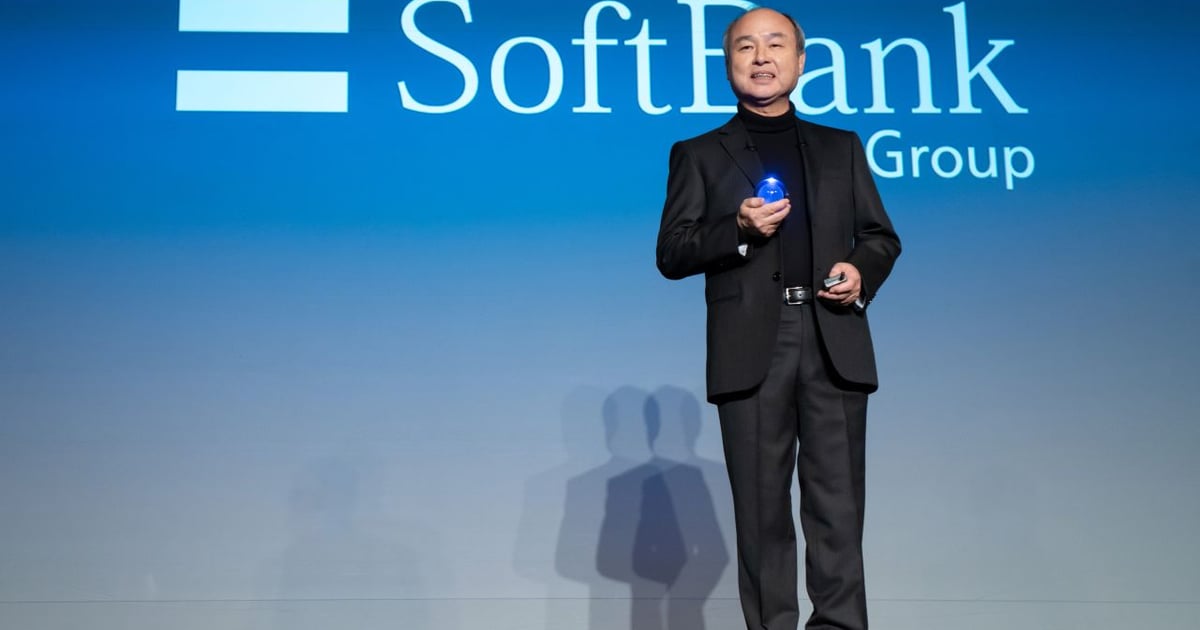
SoftBank Group CEO Masayoshi Son at the "Transforming Business through AI" event in Tokyo February 03, 2025. Tomohiro Ohsumi / Stringer via Getty ImagesChina blocked SoftBank’s planned $5.4 billion acquisition of the robotics arm of ABB, a Swiss-Swedish electrification and automation technology firm. The move highlights the growing effects of geopolitical tensions on supply chain strategy.The news was confirmed in a statement from ABB, which said the Office of the Working Mechanism for Foreign Investment Security Review in China prohibited the deal.The decision, disclosed last week, derails SoftBank’s expansion into physical AI, which CEO Masayoshi Son previously called the company’s “next frontier.”Samantha Mou, analyst at Interact Analysis, told TechTarget that data security was likely a motivating factor in blocking the deal.“As one of China’s top three industrial robot suppliers by revenue, ABB serves major automotive OEMs and electronics manufacturers, giving its robots access to sensitive production processes and client data across key industries,” she said. “Concerns may be amplified by SoftBank’s broader AI ambitions, including its investment in OpenAI, as well as heightened China-Japan diplomatic tensions.”Related:Baidu’s new world model highlights value, challenge of physical AIThe move highlights China's growing concerns about data security, technology ownership and the potential transfer of robotics data overseas for AI training, said Linda Sui, founder and principal of Smart Analytics Global.“China is a leading global robotics manufacturing and supply-chain hub, but it does not dominate all critical components,” she said. “Japan and Europe remain strong in several key technologies, particularly for industrial robots. It is also important to distinguish traditional industrial robots from emerging humanoid robots, as their technologies, supply chains and market dynamics are quite different.”China's importance to ABB's robotics businessAccording to Mou, China accounts for about half of ABB Robotics’ global industrial robot shipments. Excluding the country from an acquisition would significantly undermine the deal’s value.China’s increasing role in component production also complicates efforts to diversify supply chains.ABB and KUKA, a major German automation and robotics company, largely use Western suppliers for motors and drives, while top Japanese manufacturers tend to produce these components in-house, Mou said. Japanese suppliers remain dominant in reducers, although Chinese vendors are rapidly gaining share, she said.“Western robotics manufacturers generally have well-established supply chains that predate the rise of Chinese component suppliers,” Mou noted. Chinese components are increasingly used by international robot makers, particularly for their China operations, but remain largely replaceable, she said. Integrated actuators for collaborative robots could, however, be an exception.Related:Humanoid bottlenecks emerge amid US-China tensionsThe distinction is important as manufacturers weigh the benefits of diversifying supply chains against the cost and complexity of replacing established suppliers.Robotics supply chains face growing fragmentationChina’s move joins other recent instances of governments prioritizing national security and technological sovereignty in cross-border deals, particularly in advanced manufacturing.“We see this as part of a broader shift, with national security and technological sovereignty playing an increasingly important role in cross-border technology M&A,” Mou said.Another example was in April this year, when Japan blocked South Korea-based MBK Partners’ acquisition of machine-tool manufacturer Markino Milling Machine on national security grounds.Mou also pointed to the U.S. Committee on Foreign Investment, which operates a long-established screening mechanism for foreign investments with national security implications.“The case highlights a broader trend: as robotics becomes a strategic asset, geopolitical and regulatory fragmentation is pushing global suppliers to rethink localization strategies, strengthening local manufacturing, R&D and operational independence in key markets,” Mou said.Related:Physical AI moves beyond traditional roboticsMore fragmentation is expected as manufacturers strengthen local supply chains and emphasize locally made products. Smart Analytics Global's Sui also said she expects increasing regionalization, particularly for data, AI technology and manufacturing.“However,” she cautioned, “a complete separation of Chinese and Western robotics supply chains is unlikely in the near term.”About the AuthorContributing WriterScarlett Evans is a freelance writer with a focus on emerging technologies and the minerals industry. Previously, she served as assistant editor at IoT World Today, where she specialized in robotics and smart city technologies. Scarlett also has a background in the mining and resources sector, with experience at Mine Australia, Mine Technology and Power Technology. She joined Informa in April 2022 before transitioning to freelance work.
China’s block of SoftBank’s ABB purchase raises supply-chain questions
Full Article
Original Source
Read the full article at Aibusiness →KhanList aggregates and links to publicly available news content. We do not host full articles from third-party sources. Always verify important information with original sources.