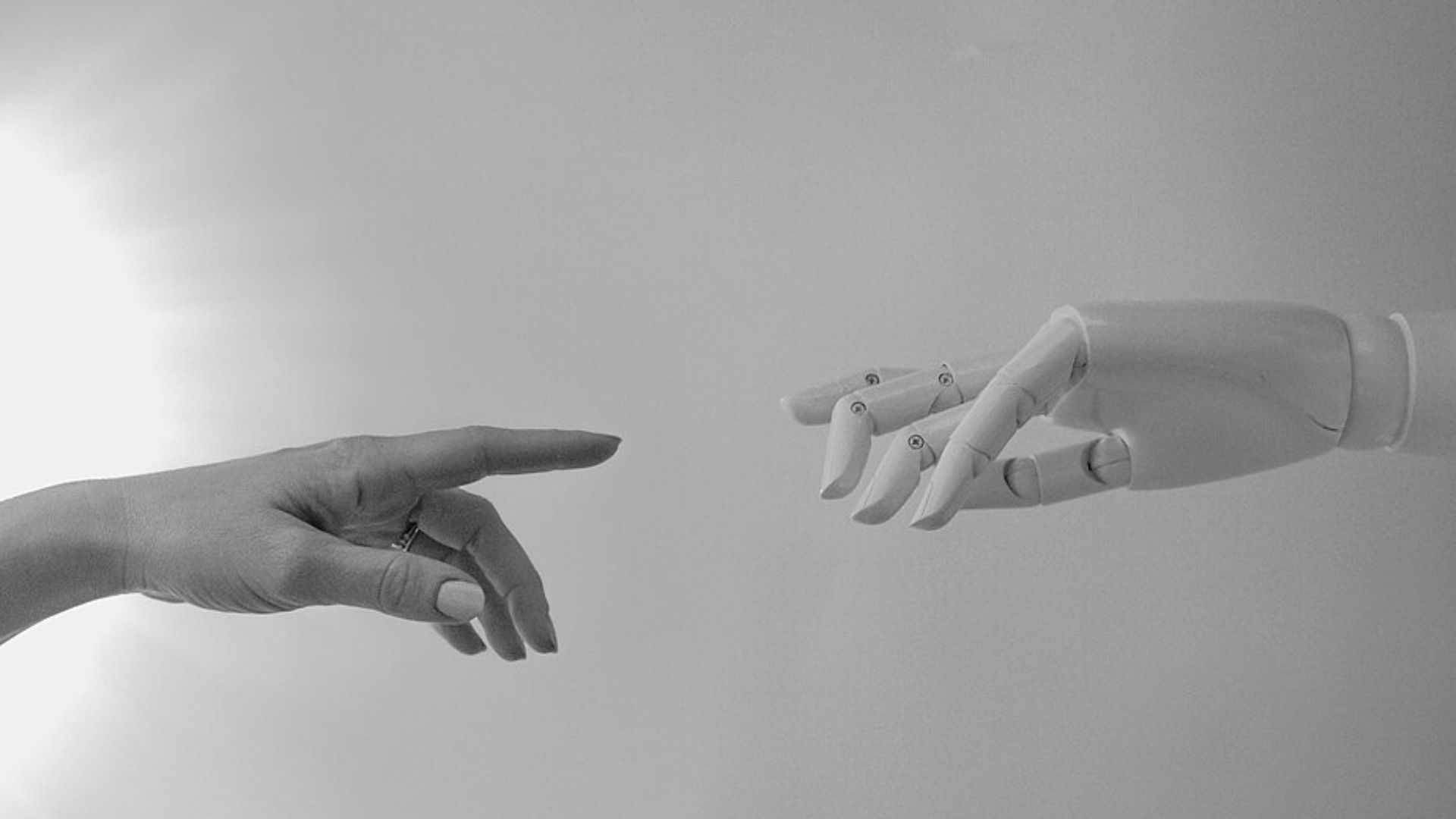
China has revealed a robotic hand that can thread an acupuncture needle, operate a pipette, and twist a bottle cap nearly four times farther than a human hand, all without copying the hand’s complicated anatomy. Named BioflexBot, it uses a coiled spring, a constraining shell, and compressed air to achieve dexterous movement through a strikingly simple design. The prototype, revealed in a study done by researchers, was built to perform precise manipulation while lowering the hardware and control costs associated with conventional robotic hands. With only two pneumatic inputs, it can pinch, rotate, hook, and grasp objects for potential use in laboratories, aircraft inspection, humanoid robots, and confined environments. Simplicity replaces complex hand anatomy Roboticists traditionally recreate human dexterity by reproducing biological features such as fingers, joints, tendons, and muscles. Although these systems can perform sophisticated movements, their mechanical complexity often makes them expensive and difficult to control. The team behind BioflexBot took a function-first approach. Rather than reproducing the shape of a hand, the researchers identified its essential movements and recreated them using structural flexibility and basic pneumatic control. “By harnessing structural and physical intelligence, we pursued a simple design capable of both cross-scale grasping and complex human-like manipulation,” said senior author Yingtian Li, PhD, currently of the Chinese University of Hong Kong in Shenzhen. The researchers optimized the spring-based structure to provide both precision and a wide range of motion. Supplying compressed air through two inputs causes the mechanism to bend, extend, contract, or rotate according to the task. During testing, BioflexBot successfully manipulated an acupuncture needle and transferred liquid with a pipette, demonstrating the fine control needed in healthcare and laboratory settings. It also opened a bottle cap by rotating nearly four times farther than a human hand can. The robotic hand hooked and carried objects including goggles and a toolbox. It could also securely grasp items of different dimensions, including objects almost 13 times larger than those handled by comparable robotic systems, according to the study. BioflexBot extended and contracted 3.5 times more than a human hand. This flexibility could allow it to retrieve distant objects, operate within narrow spaces, accommodate irregular shapes, and transport multiple items sequentially without requiring a complex array of actuators. Potential uses extend across multiple industries To demonstrate practical applications, the team deployed BioflexBot in three scenarios. The robot inspected aeroengine blades, performed everyday activities while integrated with a humanoid platform, and carried out a chemistry experiment involving delicate equipment and materials. Its combination of low cost, broad reach, and cross-scale grasping could make the technology useful in manufacturing, maintenance, research, healthcare, and hazardous environments. Its ability to perform multiple types of manipulation with minimal control inputs may also simplify integration with existing robotic platforms. BioflexBot remains a prototype, however, and further development is needed before it can operate independently outside controlled demonstrations. The researchers now plan to transform the concept into a fully automated platform capable of sensing its surroundings, selecting suitable movements, and completing complex tasks without continuous human control. The study was published in the journal Advanced Science. Get the latest in engineering, tech, space & science - delivered daily to your inbox.Atharva is a full-time content writer with a post-graduate degree in media & amp; entertainment and a graduate degree in electronics & telecommunications. He has written in the sports and technology domains respectively. In his leisure time, Atharva loves learning about digital marketing and watching soccer matches. His main goal behind joining Interesting Engineering is to learn more about how the recent technological advancements are helping human beings on both societal and individual levels in their daily lives.
China’s BioflexBot stretches 3.5 times more than human hands to reach confined spaces
Full Article
Original Source
Read the full article at Interestingengineering →KhanList aggregates and links to publicly available news content. We do not host full articles from third-party sources. Always verify important information with original sources.