
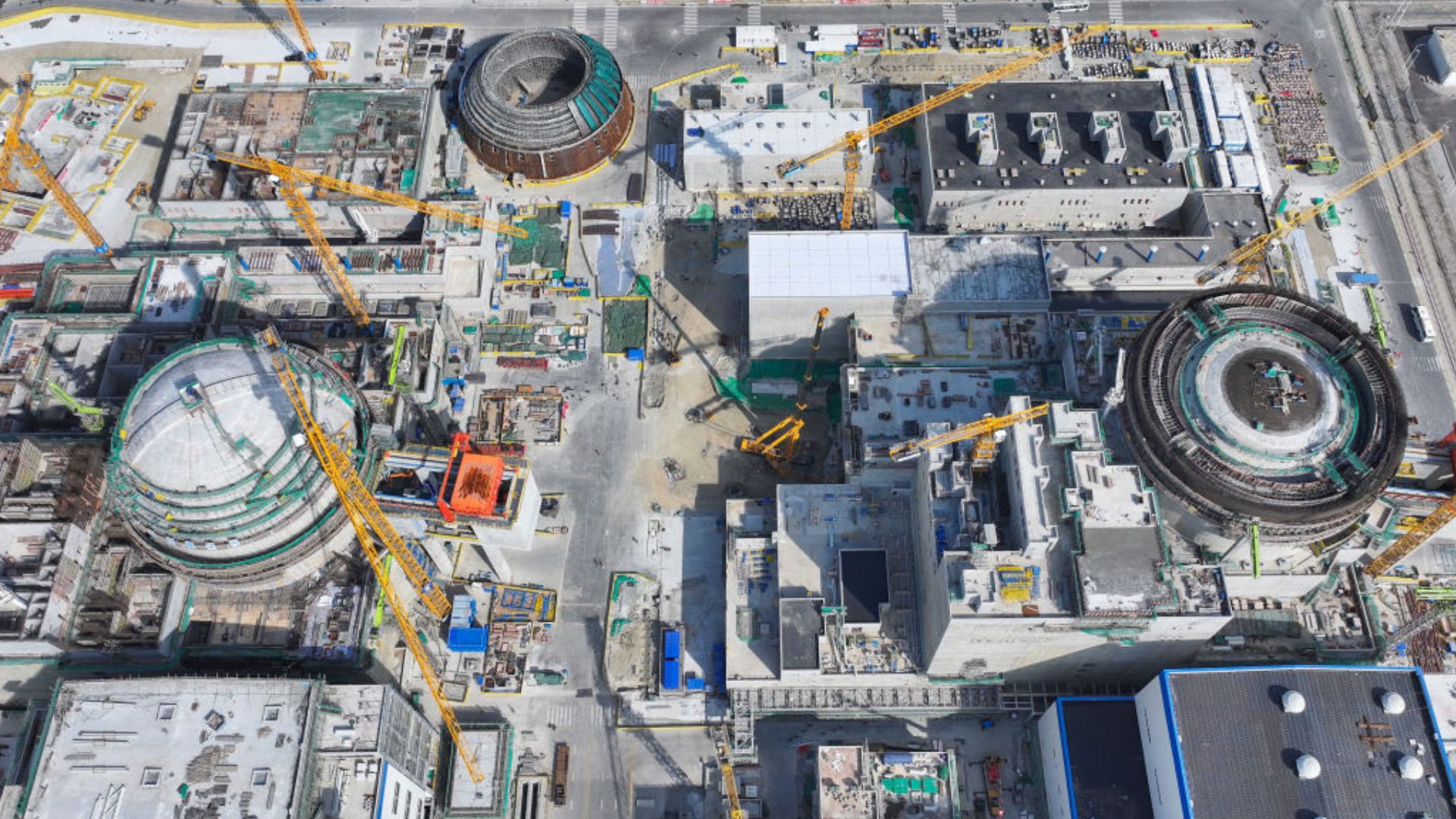
Operators at China’s Tianwan Nuclear Power Plant have started loading nuclear fuel into Unit 7. The step marks the transition from heavy construction to nuclear commissioning. Unit 7 uses a Russian-designed VVER-1200 third-generation pressurized water reactor. This is the first time engineers in China are loading fuel into this specific reactor model. The core of the VVER-1200 reactor requires 163 fuel assemblies to operate. “A total of 163 fuel assemblies need to be loaded, and the process is divided into three parts: fuel assembly transfer, fuel loading into the reactor core, and verification of the loading’s correctness,” according to a report from People’s Daily. First, workers move the fuel assemblies into the containment building. Thereafter, an automated remote-control handling system lowers each assembly into the reactor core. At last, engineers verify that every component sits in its correct position. “As a crucial milestone in the entire nuclear power plant construction cycle, the initial fuel loading is the core process of implanting the ‘energy heart’ into the nuclear reactor and a critical starting point for the nuclear power unit’s nuclear commissioning,” added the report. Long-term grid contributions Safety guidelines require high precision during core installation. Operators work inside a control room located 30 meters above the reactor floor. From there, they monitor the automated equipment as it positions each assembly within millimeter-level tolerances. Once all 163 assemblies are inside, Unit 7 will begin its nuclear testing phase. This phase leads directly to initial reactor criticality and power generation. The fuel loading at Unit 7 follows another major engineering test at the site. In early August, operators completed cold functional testing on Unit 8. Cold testing checks the physical strength of the primary cooling circuit before nuclear material enters the plant. The primary loop includes three main components: the reactor pressure vessel, the pressurizer, and the main circulation piping. “The No.8 unit of the Tianwan nuclear power plant completed its cold functional test on Monday in east China’s Jiangsu Province, fully entering its debugging stage,” noted China Science at that time. Expanding the capacity The Tianwan facility sits in Jiangsu Province and remains the largest operating nuclear base under construction worldwide. Units 1 through 6 are already online, having supplied nearly 500 billion kilowatt-hours of power to the grid. Units 7 and 8 will expand that capacity. Each new unit has an electrical output capacity of over 1.2 million kilowatts. Unit 7 should start commercial operations in 2026, followed by Unit 8 in 2027. “Once all units at the Tianwan Nuclear Power Base are put into operation, the total installed capacity will exceed 9 million kilowatts, with an annual clean power supply of over 70 billion kilowatt-hours, reducing carbon dioxide emissions by 57.4 million tons annually, which will further optimize the energy structure of East China,” said a relevant person in charge of Tianwan Nuclear Power, as concluded by People’s Daily. Get the latest in engineering, tech, space & science - delivered daily to your inbox.An active and versatile journalist and news editor. He has covered regular and breaking news for several leading publications and news media, including The Hindu, Economic Times, Tomorrow Makers, and many more. Aman holds expertise in politics, travel, and tech news, especially in AI, advanced algorithms, and blockchain, with a strong curiosity about all things that fall under science and tech.
China loads first fuel into new 1.2GW reactor at world’s largest nuclear plant
Full Article
Original Source
Read the full article at Interestingengineering →KhanList aggregates and links to publicly available news content. We do not host full articles from third-party sources. Always verify important information with original sources.